Are there still bellwether ridings in Quebec election campaigns?
Advertisement
Read this article for free:
or
Already have an account? Log in here »
To continue reading, please subscribe:

Digital Subscription
One year of digital access for only $205*
- Enjoy unlimited reading on winnipegfreepress.com
- Read the E-Edition, our digital replica newspaper
- Access News Break, our award-winning app
- Play interactive puzzles
*First annual payment billed as $205.00 + GST for one year. This annual subscription will automatically renew at $233.00 + GST every 52 weeks (10% off the regular annual price of $259.35). Offer available to new and qualified returning subscribers only. Cancel any time.
To continue reading, please subscribe:
Add Free Press access to your Brandon Sun subscription for only an additional
$1 for the first 4 weeks*
- Enjoy unlimited reading on winnipegfreepress.com
- Read the E-Edition, our digital replica newspaper
- Access News Break, our award-winning app
- Play interactive puzzles
*Your next Brandon Sun subscription payment will increase by $1.00 and you will be charged $17.95 plus GST for four weeks. After four weeks, your payment will increase to $24.95 plus GST every four weeks.
Read unlimited articles for free today:
or
Already have an account? Log in here »
MONTREAL – A handful of Quebec ridings have been known for almost consistently electing a member of the party that goes on to form the government in general elections. But with multiple parties appearing to be neck-in-neck in the current provincial campaign, some experts are questioning whether the era of so-called Quebec bellwether ridings is over.
Éric Montigny, professor in the political science department at Laval University, said the trend in the bellwether ridings was consistent until the mid-2000s, when Quebec’s electoral map was dominated by a two major parties, the Quebec Liberals and the Parti Québécois.
But the rise of the Action démocratique du Québec — which later merged with the Coalition Avenir Québec — and the emergence of Québec solidaire subsequently marked the shift toward a multiparty system, he said in an interview.
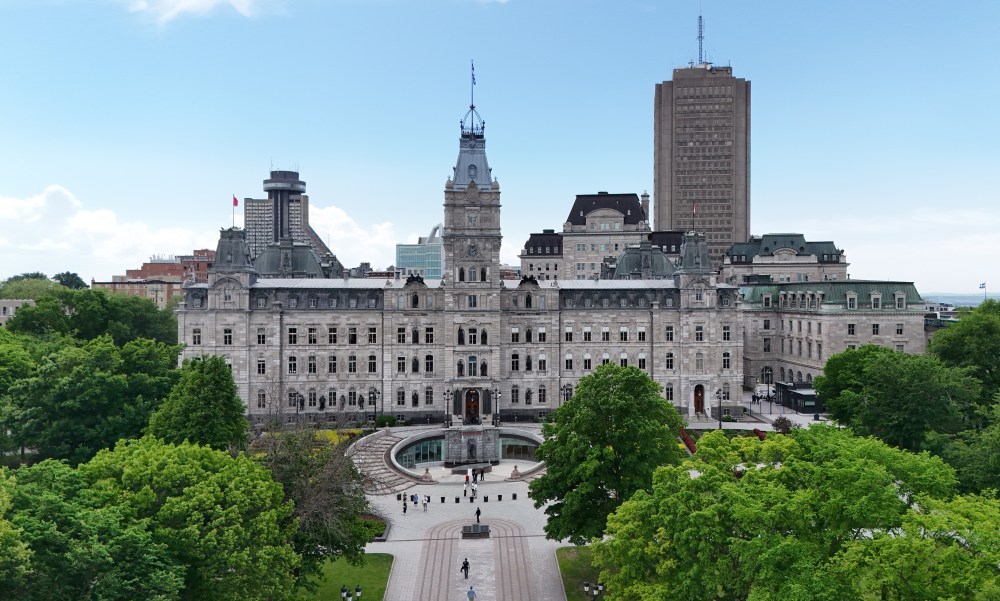
“The very concept of a bellwether riding has taken a hit. … When there are only two dominant parties, it’s easier to identify bellwether ridings,” said Montigny.
This fall’s provincial general election has the potential of being a three-way race, with the Coalition Avenir Québec, the Parti Québécois and the Quebec Liberal Party battling it out in the polls ahead of the Oct. 5 vote.
The Conservative Party of Quebec has never won a seat in an election, but it earned nearly 13 per cent of the popular vote in the 2022 election. Québec solidaire received over 15 per cent of the vote and elected 11 members to the provincial legislature in 2022.
Simon Dabin, a lecturer in political science at the Université du Québec à Montréal and the Université de Montréal, questioned whether bellwether ridings have ever actually existed in Quebec. In Quebec literature on electoral behaviour, the concept is “very rarely used,” he said.
The term “bellwether riding” is primarily used in the media and has “no scientific basis or predictive value,” according to the provincial National Assembly’s website.
The Quebec expression may have been inspired by the U.S. term “bellwether counties,” which refers to areas whose results have historically mirrored those of the country as a whole, reads the website.
This concept fits better with the American reality, where two major parties compete for power, said Dabin.
The Saint-Jean riding, in the Montérégie region, is the one that most closely fits the definition of a bellwether riding. From 1897 to 1936 and from 1944 to 2003, voters consistently elected a representative from the party that went on to form the government.
Analyst Philippe J. Fournier, of the poll aggregator Qc125, said determining the status of a bellwether riding goes beyond whether the riding has consistently voted for the ruling party.
“There are key ridings that could indicate whether a party is outperforming expectations,” said Fournier.
He will be closely monitoring Sherbrooke, currently held by Québec solidaire. If the party manages “to salvage the situation” in the capital of the Estrie region, it could indicate a strong performance by their provincial election campaign, despite less favourable polls, he said.
And if the Parti Québécois wins the riding, “it’s probably because they have a majority in Quebec City,” he said.
“Why? Because it’s not a natural riding (for the Parti Québécois). If they perform well in Sherbrooke, it means they’ve likely performed well across Quebec,” said Fournier.
Traditionally, bellwether ridings represented “a sort of microcosm of Quebec with a large francophone population, but also ethnocultural diversity, an industrial base, and service sector jobs,” said Marc André Bodet, a professor of political science at Laval University.
This type of riding is gradually disappearing, he said.
The ridings that traditionally sent a signal for all of Quebec no longer exist, according to Bodet.
“Quebec is becoming more regionally divided electorally,” no longer relying on “a single pan-Quebec electoral market,” he said.
From one region to another, the races are shaping up differently, Montigny said. All five major parties will face important duels or three-way battles.
“This makes the election even more interesting and unpredictable,” said Montigny.
The electorate is less attached to a single party, and its diversity makes elections more unpredictable and makes it more difficult to identify bellwether ridings, several of the experts pointed out.
“The loyalty to political parties that we saw in the past has essentially disappeared. So there is a great deal of volatility,” said Bodet.
The emergence of a more fragmented political system “where there may be surprises in various districts” is ultimately a reminder that “every vote counts,” as was the case in Terrebonne during the 2025 federal election, said Montigny.
This report by The Canadian Press was first published Aug. 28, 2026.