Flock surveillance cameras become midterm campaign target as voters balk at tech companies’ power
Advertisement
Read this article for free:
or
Already have an account? Log in here »
To continue reading, please subscribe:

Digital Subscription
One year of digital access for only $205*
- Enjoy unlimited reading on winnipegfreepress.com
- Read the E-Edition, our digital replica newspaper
- Access News Break, our award-winning app
- Play interactive puzzles
*First annual payment billed as $205.00 + GST for one year. This annual subscription will automatically renew at $233.00 + GST every 52 weeks (10% off the regular annual price of $259.35). Offer available to new and qualified returning subscribers only. Cancel any time.
To continue reading, please subscribe:
Add Free Press access to your Brandon Sun subscription for only an additional
$1 for the first 4 weeks*
- Enjoy unlimited reading on winnipegfreepress.com
- Read the E-Edition, our digital replica newspaper
- Access News Break, our award-winning app
- Play interactive puzzles
*Your next Brandon Sun subscription payment will increase by $1.00 and you will be charged $17.95 plus GST for four weeks. After four weeks, your payment will increase to $24.95 plus GST every four weeks.
Read unlimited articles for free today:
or
Already have an account? Log in here »
RICHMOND, Va. (AP) — Wisconsin’s candidates for governor want to limit them, while Pennsylvania’s say they support a ban. A Michigan congressional candidate called them “un-American.” A Florida Senate candidate is selling merch opposing them.
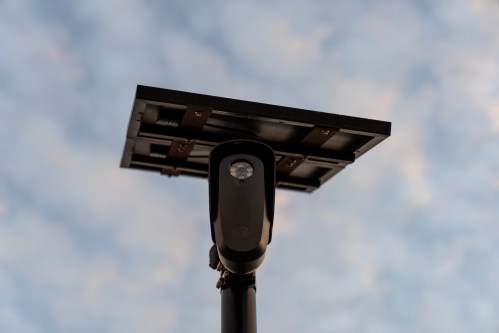
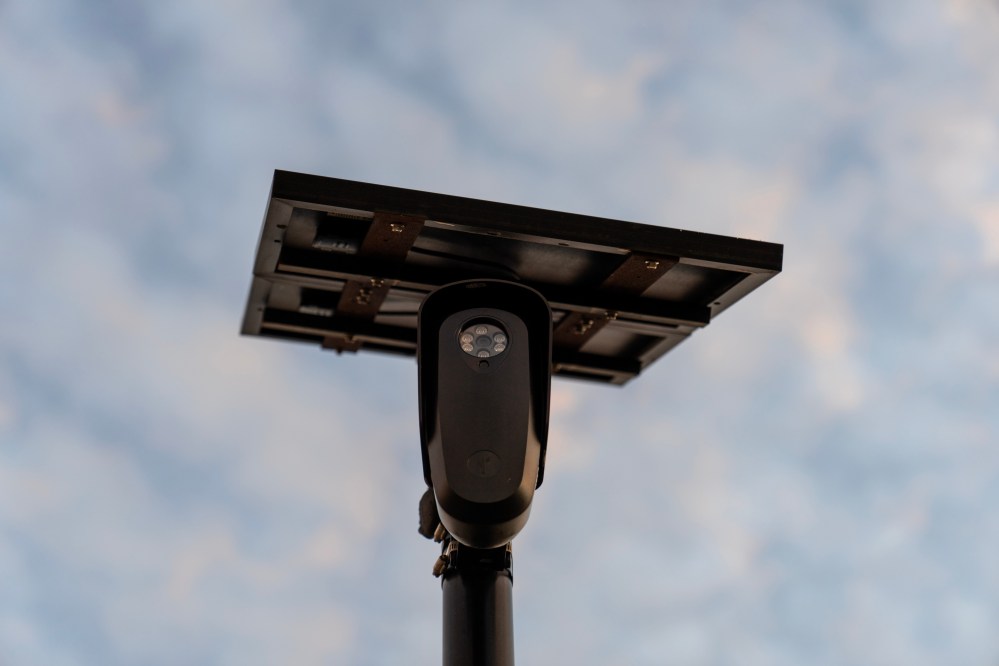
Across the country and up and down ballots, candidates from both parties are increasingly on the attack over Flock cameras, the AI-powered nationwide network of automated cameras that record license plates and other characteristics of all passing vehicles, allowing law enforcement agencies to search and share that data. Although police say the cameras are an invaluable crime-fighting tool, some critics say their pervasiveness amounts to unconstitutional warrantless mass surveillance.
The cameras sold by Atlanta-based Flock Safety, which the company has said are running in 6,000 communities in every state but Alaska, have become a new campaign issue that candidates and strategists see as part of a backlash against powerful technology companies, connected to broader debates over the future of artificial intelligence and the associated boom in data center construction.
“We’ve seen candidates running on banning them, cutting off funding, or requiring warrants. That’s a credit to activists across the country who have raised concerns about their use,” Michael Soyfer, an attorney for the Institute for Justice, a public interest law firm litigating over the technology, said in a statement.
In response to questions about the cameras as a campaign theme, a Flock spokeswoman emphasized the company’s claims about the power of its technology, saying it helped “solve approximately one million crimes and helped reunite roughly 10,000 missing people with their families.”
“We ask anyone weighing in on this issue to engage with the facts and the record: the crimes solved, the families reunited, the safeguards already in place, and what our technology actually does,” said MoMo Zhou, the company’s vice president of communications. “We ask them to work with the communities using this technology to decide what rules should govern it and not to spread misinformation or ban a critical public safety tool outright that is helping to make communities safer.”
Flock opponents cite privacy concerns
License plate reader technology is decades old, and Flock was founded in 2017. But the company has faced a growing backlash this year — one that’s crescendoed in recent weeks. It has come as awareness has grown about the sweeping reach of Flock’s network, litigation has unfolded over constitutional questions related to the use of the cameras, and news media have documented cases of officers misusing the technology to stalk personal connections.
James Talarico, the Democratic candidate for U.S. Senate in Texas, recently declared, “Flock cameras have no place in Texas.” His Republican opponent Ken Paxton’s campaign didn’t respond to a request for comment.
Josh Shapiro, the Democratic Pennsylvania governor seeking reelection and considered a potential contender for the White House in 2028, said this week he would support a statewide ban. His Republican opponent, Pennsylvania Treasurer Stacy Garrity, said in a statement, “Flock cameras are an intrusive invasion of privacy and they should be banned.”
In Wisconsin, the issue dominated the governor’s race this week.
Democratic nominee David Crowley, who is taking hits over his past comments in support of making Wisconsin a global AI and data hub, highlighted that he had issued an order limiting the use of Flock cameras in Milwaukee County, where he serves as county executive. He said that as governor he would “implement strict transparency and accountability laws that ensure Wisconsinites are not spied on.”
His Republican opponent, U.S. Rep. Tom Tiffany, said in a statement that he would pause state funding for Flock cameras and create a task force to establish stronger privacy protections, penalties for misuse, limits on data retention and sharing and “safeguards against Communist China and foreign adversaries.”
The Wisconsin Democratic Party responded by posting a clip of Tiffany in April saying in response to a question about Flock cameras that he didn’t know what they were. Then the state Republican Party hit back, saying “Big Brother Crowley” had a long record of previously supporting police surveillance technologies.
The issue has also infiltrated Rhode Island’s gubernatorial race, where Democratic Gov. Dan McKee paused the installation of new cameras just weeks before the state’s Sept. 9 primary, citing privacy and transparency concerns. His primary opponent, former CVS executive Helena Foulkes, has questioned McKee’s motives for stopping the rollout so close to the election but agreed a review of how the data is being used was needed.
In Michigan, self-described democratic socialist William Lawrence, a Democratic nominee for the U.S. House, recently addressed the cameras by calling them “the most un-American thing I can imagine.” A spokesman for his opponent, incumbent Rep. Tom Barrett, noted that Barrett is a co-sponsor of legislation intended to ban federal agencies from using Flock cameras or other surveillance technology and to prevent state and local governments from using federal funds to buy them.
In Florida, where outgoing Republican Gov. Ron DeSantis’s administration this week ordered the removal of automated license plate readers from state highway rights-of-way, Democratic Senate nominee Angie Nixon’s campaign is selling a T-shirt that reads, “FLORIDA NEEDS TO GET THE FLOCK OUT.”
Law enforcement groups support the technology
While calls for bans or restrictions have mounted, other candidates have expressed more supportive or nuanced views, and policing groups have reiterated their strong backing for the company and its tech.
Mitchell Davis III, chief of police in Hazel Crest, Illinois, and the president of the National Organization of Black Law Enforcement Executives, said in an interview that technology like Flock’s is “invaluable” and that the conversations around it have become “disturbing.”
“The disturbing thing for me right now is I’m seeing these communities that are telling their police departments that we’re no longer using these (automated license plate readers) in our communities, and that, I believe, that’s a huge mistake. Talk about the proverbial throwing the baby out with the bathwater,” he said. “Instead of focusing on eliminating the cameras, make sure that there’s proper guidelines and proper accountability for misuse of the cameras.”
President Donald Trump said recently at an Oval Office event that his administration was studying the issue and would have more to say soon.
Cayce Myers, an attorney who teaches courses that touch on public relations, political communications and privacy issues at Virginia Tech University, said Americans are increasingly living in a world where they are interfacing with new technologies like Flock cameras whether they want to or not.
“I think there’s a real synergy between the camera systems that we’re talking about and also this greater societal discomfort with AI and technology in general,” he said, adding that it seems obvious that new surveillance technologies will continue to become a major political issue.
For Josh Chavez, Flock cameras are one of his concerns about the intersection of emerging technologies and civil liberties in his stretch of West Texas where data center projects are proliferating. Chavez, an HVAC installer, is outspoken enough on data centers that he was invited to participate in a recent roundtable on the subject with Democratic gubernatorial candidate Gina Hinojosa, who is also a Flock critic.
“This is the government seeking more power, right?” Chavez said of the cameras. “In a partnership with Big Tech, who is seeking more money, all at the expense of us.”
___
Associated Press reporters Scott Bauer in Madison, Wisconsin; Marc Levy in Harrisburg, Pennsylvania; Kimberlee Kruesi in Providence, Rhode Island; and Gary Fields in Washington contributed to this report.