The perks and drawbacks of using your personal cell as a work phone
Advertisement
Read this article for free:
or
Already have an account? Log in here »
To continue reading, please subscribe:

Digital Subscription
One year of digital access for only $205*
- Enjoy unlimited reading on winnipegfreepress.com
- Read the E-Edition, our digital replica newspaper
- Access News Break, our award-winning app
- Play interactive puzzles
*First annual payment billed as $205.00 + GST for one year. This annual subscription will automatically renew at $233.00 + GST every 52 weeks (10% off the regular annual price of $259.35). Offer available to new and qualified returning subscribers only. Cancel any time.
To continue reading, please subscribe:
Add Free Press access to your Brandon Sun subscription for only an additional
$1 for the first 4 weeks*
- Enjoy unlimited reading on winnipegfreepress.com
- Read the E-Edition, our digital replica newspaper
- Access News Break, our award-winning app
- Play interactive puzzles
*Your next Brandon Sun subscription payment will increase by $1.00 and you will be charged $17.95 plus GST for four weeks. After four weeks, your payment will increase to $24.95 plus GST every four weeks.
Read unlimited articles for free today:
or
Already have an account? Log in here »
Leaving your work cellphone behind as you embark on a days-long hike or head out for dinner at your favourite restaurant is a clear indication: you’re off the clock.
But that separation of devices also means you have to carry both your personal and work phones during work hours — juggling texts from your child’s daycare on your personal phone while taking calls from clients on your work device. And sometimes, work obligations could mean carrying both devices outside of business hours.
For some, separating work and personal lives with two cellphones seems like a necessity and to others, a hassle. But experts say it comes down to your profession, life priorities and comfort level with your company’s data privacy policies.
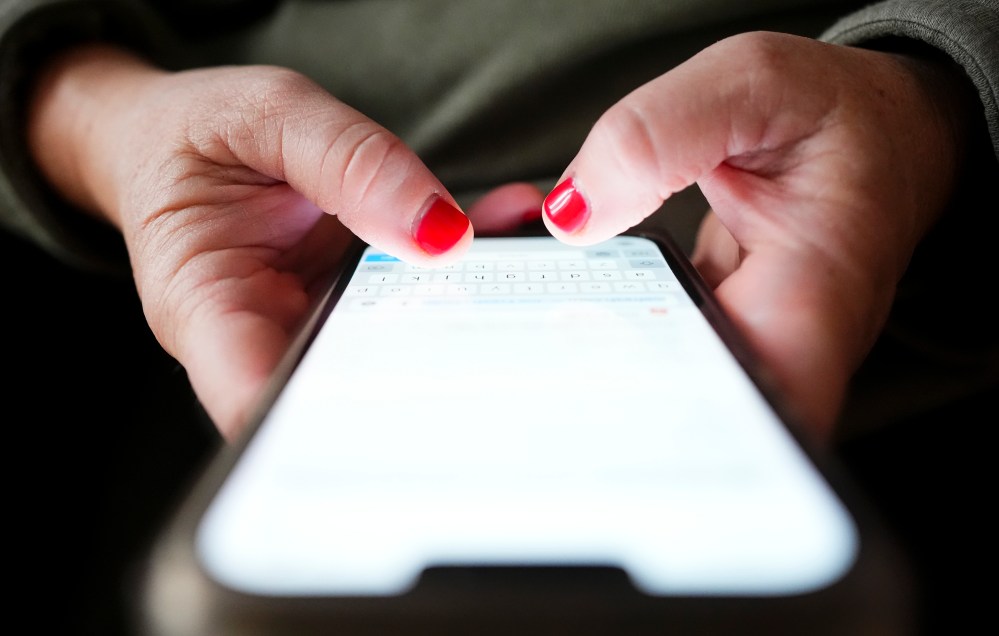
A professional in banking or health care, for instance, would typically carry both a personal and work cellphone for data security and personal safety reasons, said Lisa Stam, managing partner and owner of employment law firm Spring Law.
Meanwhile, a small-business owner would likely assume that employees use their own phones at work, she said.
At her law firm, Stam said employees use their personal phones on the job, but there are policies to safeguard work data and privacy while laying out expectations about job-related data on the device.
She says employers need to think through bring-your-own-phones policies: whether workers are expected to work after hours, if employers contribute to the phone plan and what happens to data on those phones if a worker resigns.
Stam recommended employers pay a portion of their workers’ phone plan if they use their personal device for their jobs.
“If you’re asking the employee to use their device but you’re asking them to put on some of your applications, your apps, then in that case, contributing to the data plan gives you a seat at the table about what to do with that phone and the data that’s on that phone,” she said.
Many companies have been using security measures such as multi-factor authentication or ring-fencing, which virtually separate apps and safeguard the company’s data on a worker’s personal phone. It allows companies to remotely erase work-related data from an employee’s phone without affecting personal information when that worker leaves.
Jane Arnett, cybersecurity expert at Check Point Software, said these security layers often work like a container, protecting work-related apps inside it, holding files, emails and work chats.
“Your employer is very concerned that their data is protected, and their customers’ data is protected,” Arnett said. “If your device has been compromised and you … connect into where their data resides, their data is now compromised.”
She said if a personal phone is broken into, it could make the company susceptible to hackers stealing work data or impersonating an employee.
But no matter which device management service a company uses, Arnett said these tools can see some basic information about your phone, such as your location and web traffic. But it cannot read emails or see passwords.
Arnett said if your biggest concern is an embarrassing web search on your phone, then you don’t really need two phones. But if you’re doing something outside your work that you don’t want the employer to find out, then opt to keep your devices separate.
There are benefits to either choice. For those with two phones, she said there are clearer boundaries between work life and personal life, as well as better control over your personal device.
Those with one phone have the convenience of checking work emails anywhere, get additional security guardrails installed on their phones and the perk of not having to pay for all or part of their phone plan.
For Arnett, carrying one cellphone is a choice grounded in convenience.
“I’m not myself concerned that my cybersecurity team has the time and energy available to just randomly see what I’m up to and what I am searching on the internet because they’re extremely busy,” she said.
Many companies, including Arnett’s, block access to risky websites on work devices and would alert the cybersecurity team if those sites are accessed, or block them altogether.
Arnett said those security aspects supersede her concerns about privacy and that she can freely access sensitive data on her device, such as banking.
The ergonomics of carrying two phones can also be a hassle for some, Arnett said.
“I’m short. I’m small,” Arnett said. “I’m travelling a lot for work and every ounce counts.”
But the rules flip when an employer offers a separate phone for work.
“You’ve made it very clear that this second device is the workplace one and that we as the employer have all the rights to look at this,” Stam said.
She said it could also be difficult for an employee to argue rights to privacy if they use a work phone for personal reasons and get in trouble.
“If you have really clear workplace policies that say, ‘Hey everybody, you’re getting a workplace device, you have no expectation of privacy on that, that is only for work,’ don’t use it for personal stuff.”
This report by The Canadian Press was first published Sept. 14, 2026.