UK air traffic controller blames a millisecond-software glitch for flight cancellations
Advertisement
Read this article for free:
or
Already have an account? Log in here »
To continue reading, please subscribe:

Digital Subscription
One year of digital access for only $205*
- Enjoy unlimited reading on winnipegfreepress.com
- Read the E-Edition, our digital replica newspaper
- Access News Break, our award-winning app
- Play interactive puzzles
*First annual payment billed as $205.00 + GST for one year. This annual subscription will automatically renew at $233.00 + GST every 52 weeks (10% off the regular annual price of $259.35). Offer available to new and qualified returning subscribers only. Cancel any time.
To continue reading, please subscribe:
Add Free Press access to your Brandon Sun subscription for only an additional
$1 for the first 4 weeks*
- Enjoy unlimited reading on winnipegfreepress.com
- Read the E-Edition, our digital replica newspaper
- Access News Break, our award-winning app
- Play interactive puzzles
*Your next Brandon Sun subscription payment will increase by $1.00 and you will be charged $17.95 plus GST for four weeks. After four weeks, your payment will increase to $24.95 plus GST every four weeks.
Read unlimited articles for free today:
or
Already have an account? Log in here »
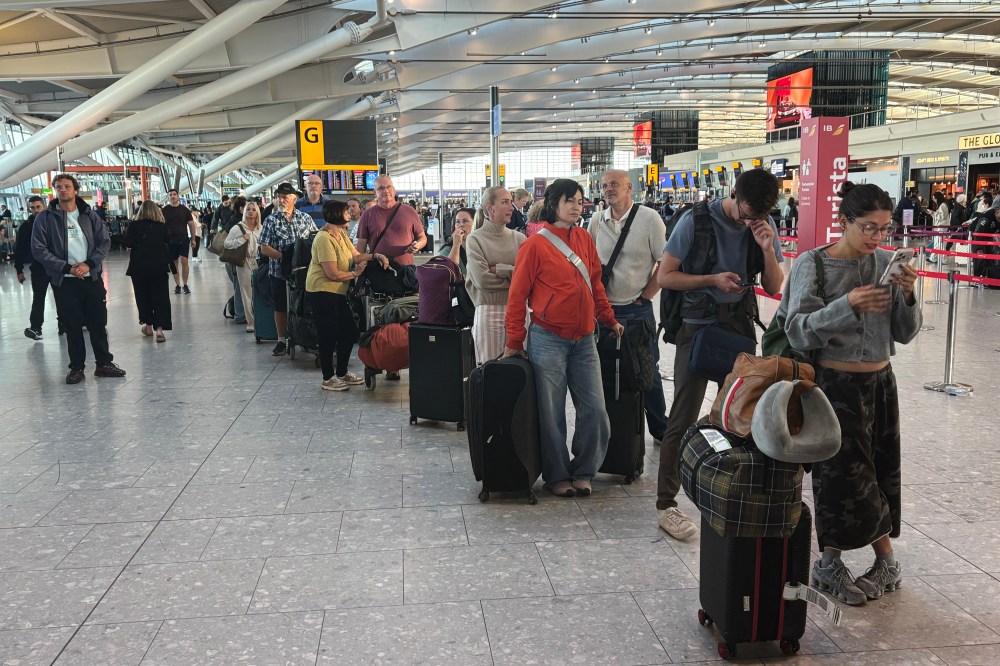
LONDON (AP) — A preliminary report Friday blamed a millisecond-software defect for the cancellation of over 2,000 flights in and out of the United Kingdom last week.
NATS, formerly known as National Air Traffic Services, said Friday that the glitch on Sept. 8 was behind the mayhem at British airports and beyond, rather than any human failings — as many had speculated at the time.
It said a software defect in the National Airspace System, which allocates codes so air traffic controllers can identify flights on radar, was behind the decision to ax the flights. The move impacted hundreds of thousands of travelers.
“This happened in the space of a millisecond,” the report said.
The chaos, which stranded passengers for hours on airport runways and in terminals and took days to clear up, was the latest embarrassment to afflict NATS, which operates the U.K. air traffic control system. It prompted mounting calls for its chief executive Martin Rolfe to stand down.
“This was a software issue in a specific part of our flight data system, that we have traced to a small subsection of coding,” he said, adding that mitigation measures are in place while a permanent fix is tested and deployed.
Apologizing once again for the chaos, Rolfe said it was not a result of “any incorrect actions by either military or civil operators.”
Rolfe also said the latest incident was not connected to a previous outage in 2023 or a radar issue in July last year.
U.K. Transport Secretary Heidi Alexander met with Rolfe in the aftermath of the flight chaos and ordered his organization to complete a full investigation into the incident to make sure lessons are learned.
“I have now received NATS’ report and, while I am pleased to see that the safety of passengers was protected, it’s clear we need to urgently understand why this issue was not discovered and fixed before it caused chaos,” she said.
Alexander said she has tasked the Civil Aviation Authority to conduct an independent review to check NATS’ findings and investigate their investment plans to enhance resilience in the future, along with regulatory accountability.
The U.K. government owns 49% of NATS, making it the largest shareholder and giving it a veto over key decisions. Airlines, airports, investors and employees own the remaining shares in the public-private partnership.