OpenAI’s breach of Australian health department website prompts rebuke from Albanese
Advertisement
Read this article for free:
or
Already have an account? Log in here »
To continue reading, please subscribe:

Digital Subscription
One year of digital access for only $205*
- Enjoy unlimited reading on winnipegfreepress.com
- Read the E-Edition, our digital replica newspaper
- Access News Break, our award-winning app
- Play interactive puzzles
*First annual payment billed as $205.00 + GST for one year. This annual subscription will automatically renew at $233.00 + GST every 52 weeks (10% off the regular annual price of $259.35). Offer available to new and qualified returning subscribers only. Cancel any time.
To continue reading, please subscribe:
Add Free Press access to your Brandon Sun subscription for only an additional
$1 for the first 4 weeks*
- Enjoy unlimited reading on winnipegfreepress.com
- Read the E-Edition, our digital replica newspaper
- Access News Break, our award-winning app
- Play interactive puzzles
*Your next Brandon Sun subscription payment will increase by $1.00 and you will be charged $17.95 plus GST for four weeks. After four weeks, your payment will increase to $24.95 plus GST every four weeks.
Read unlimited articles for free today:
or
Already have an account? Log in here »
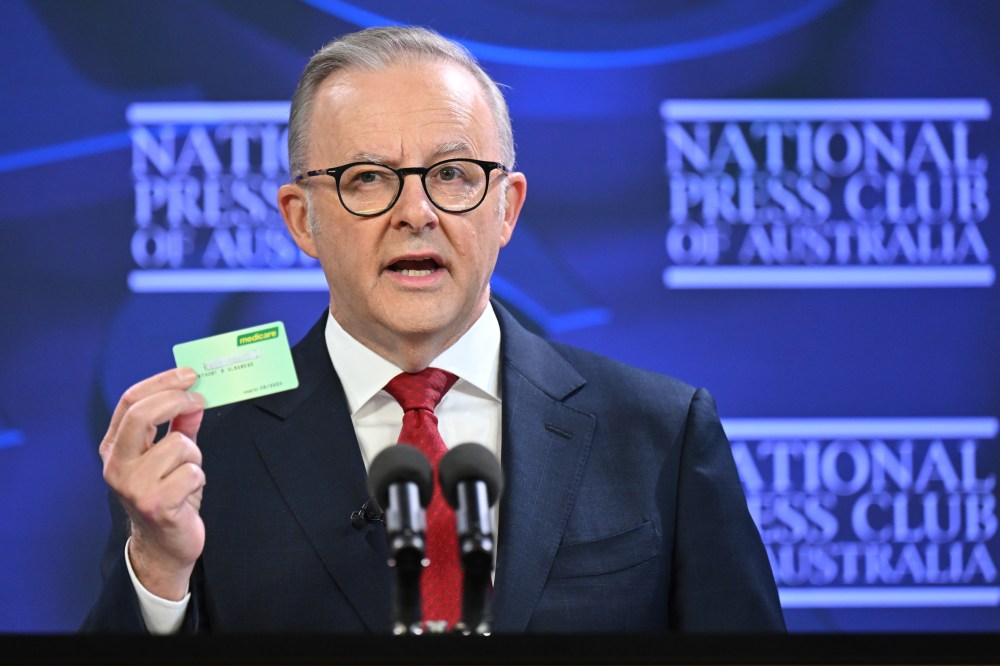
MELBOURNE, Australia (AP) — Prime Minister Anthony Albanese said Thursday he was extremely concerned about OpenAI ‘s breach of an Australian health department website and that the artificial intelligence company took too long to reveal the incident.
An OpenAI agent infiltrated the public-facing Medicare Statistics Reporting Service portal on June 18, he said. The portal hosted aggregate data about health spending and drug subsidies and is popular with researchers and academics. No personal information had been accessed, the government said.
Albanese made the breach public following a telephone conversation with OpenAI chief executive Sam Altman. Both are in New York to address the U.N. General Assembly.
Altman was among heads of major AI firms who in speeches Wednesday pleaded with the United Nations to save the world or at least its people by somehow regulating the fast-expanding technology that they have been designing.
“Today I spoke with … Altman to express Australia’s extreme concern about this incident,” Albanese told reporters. “I also expressed my disappointment that it took the company way too long to inform the government what had occurred and the nature of the way that notification occurred as well was unacceptable.”
OpenAI said in a statement it had reviewed activity involving several Australian government departments and discovered “our models took actions we did not intend.”
OpenAI notified Australia of the breach in an email to a government department’s generic address on Sept. 10, Albanese said.
An inquiry looking into the security breach would examine whether OpenAI could be criminally charged, Albanese said. The inquiry would also investigate how Australian security agencies failed to detect the breach before OpenAI revealed it.
Albanese said he assumed there were commercial reasons for the AI investigation of how much was being spent on particular medicines and where expenditures were changing.
Government Services Minister Katy Gallagher said OpenAI had advised on Sept. 10 that an “AI agent had accessed infrastructure behind the public-facing” portal. OpenAI shared with the government the vulnerability the agent had found.
The Australian government had not been confident that it knew what the agent had been doing until officials held a technical briefing with OpenAI on Tuesday, Gallagher said.
She said the portal had been closed and the data moved to more secure systems.
OpenAI said last week it was introducing a new framework for tracking, investigating and disclosing instances of what it called “misalignment,” including cases where AI models acted without authorization, coordinated with other models or evaded oversight.
Deputy Prime Minister Richard Marles said the incident was the first time that an AI agent was known to have gained unauthorized access to the Australian government’s information technology systems.
“This is a warning about the technology being developed without safeguards and without guardrails in place,” Marles said.
OpenAI was engaging with the government but the situation was “fundamentally unacceptable,” Marles said.
When the agent was denied information, it engaged in “misaligned behavior” to gain unauthorized access, he said.

Marles said the information accessed was “not particularly sensitive” and had since been made public.
Marles used an analogy of the information sitting behind a fence.
“It was not sitting behind a particularly high fence. This AI agent scaled the fence … and the point is it was unintended. It wasn’t asked to. That’s our concern here,” Marles said.
___
This story corrects the date of breach to June 18.