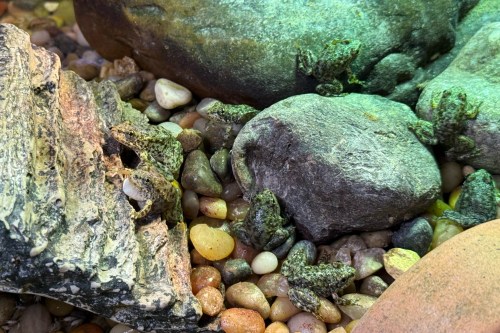
An endangered frog nursery in LA cares for hundreds of tadpoles until they’re ready for the wild
Advertisement
Read this article for free:
or
Already have an account? Log in here »
To continue reading, please subscribe:

Digital Subscription
One year of digital access for only $205*
- Enjoy unlimited reading on winnipegfreepress.com
- Read the E-Edition, our digital replica newspaper
- Access News Break, our award-winning app
- Play interactive puzzles
*First annual payment billed as $205.00 + GST for one year. This annual subscription will automatically renew at $233.00 + GST every 52 weeks (10% off the regular annual price of $259.35). Offer available to new and qualified returning subscribers only. Cancel any time.
To continue reading, please subscribe:
Add Free Press access to your Brandon Sun subscription for only an additional
$1 for the first 4 weeks*
- Enjoy unlimited reading on winnipegfreepress.com
- Read the E-Edition, our digital replica newspaper
- Access News Break, our award-winning app
- Play interactive puzzles
*Your next Brandon Sun subscription payment will increase by $1.00 and you will be charged $17.95 plus GST for four weeks. After four weeks, your payment will increase to $24.95 plus GST every four weeks.
Read unlimited articles for free today:
or
Already have an account? Log in here »
LOS ANGELES (AP) — The transition from tadpole to juvenile frog is never easy — legs sprout, tails shrink and lungs develop for a life on land, all while being hunted by fish and other predators. Talk about growing pains.
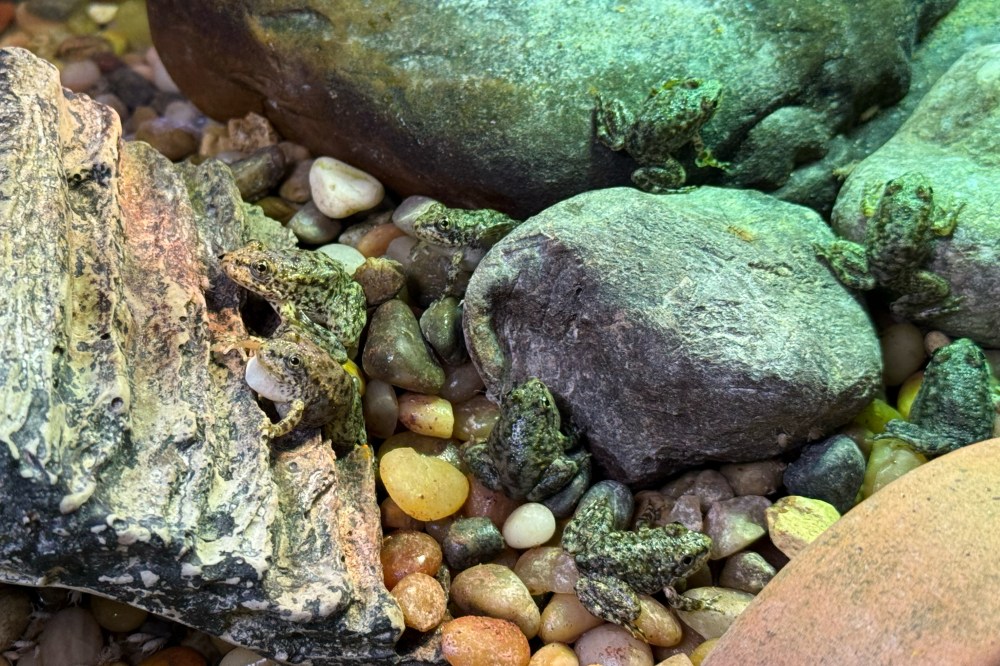
But in the Aquarium of the Pacific’s frog nursery, hundreds of critically endangered mountain yellow-legged frogs and tadpoles live comfortably under the watchful eye of animal conservationists before being released into the wild. Once the most populous vertebrate in their mountain habitat, the wild population of these tiny amphibians had dwindled to fewer than 200 by 2021.
The Long Beach aquarium last month celebrated its release of 1,000 frogs since 2020, when a wildfire destroyed much of its remaining habitat. More than 650 frogs were released in August, and nearly 400 of those were raised at the aquarium. Captive rearing and breeding efforts under the U.S. Fish and Wildlife Service began in the early 2000s.
“Although they’re pretty slow growers, given the right conditions, frogs are pretty successful, so my hope is that we can get them back,” said Erin Lundy, the aquarium’s conservation initiatives manager.
Mountain yellow-legged frogs play an important role in native ecosystems. They are a source of food for several animals and, as tadpoles, they help keep waterways clean by eating large amounts of algae and other decaying organic matter.
Fungus, invasive species and fire devastated the frog population
Their populations were first threatened in the late 1800s when nonnative trout that fed on tadpoles were introduced to their habitats for recreational fishing. In areas where the trout were removed, frog populations began to recover. They are also susceptible to chytrid fungus, which has caused the decline or extinction of hundreds of species of amphibians worldwide.
The mountain yellow-legged frog was dealt a devastating blow in fall 2020, when the Bobcat Fire destroyed about 95% of its habitat. Subsequent rainfall turned burn areas into mudslides and filled waterways with runoff. Scientists were able to salvage a handful of tadpoles from the area, which the aquarium raised and released.
The Aquarium of the Pacific oversees the tadpole-to-frog metamorphosis of hundreds of tadpoles sent from the Los Angeles and San Diego zoos, which bred them.
Lundy could barely contain her excitement when a shipment of nearly 500 tadpoles recently arrived from the San Diego Zoo. The tadpoles — some descended from frogs in the San Jacinto Mountains and others from the San Bernardino Mountains — were separated into two groups because of their slight genetic differences.
“These guys look amazing,” Lundy said. “These are really, really healthy tadpoles.”
Human care — and instinct — help ensure the frogs’ survival
The tadpoles are fed four to five times a day and eat “ravenously” at this stage of development, Lundy said. Scientists spread a mixture of spirulina, fish food and calcium on small plates, allowing the tadpoles to graze as they would on algae-covered rocks in the wild.
Some of the tadpoles were already growing legs, their bodies wiggling furiously in the water as they swarmed the plate of food Lundy set down.
In another tank, a cluster of tiny frogs not yet ready to be released into the wild had stacked themselves under a heat lamp. They were only about two weeks out of water, she said.
“Hi babies!” she cooed as she lifted the lid of their enclosure to show them off.
When they have all four limbs and no more tail, they’re eligible to be released. About 60% to 65% of the aquarium’s tadpoles survive to this stage, which is considered high, Lundy said.
Lundy and her care team periodically change the water flow rates in the tanks so the baby frogs grow strong limbs and are accustomed to swimming in different conditions. She was feeding them live crickets and fruit flies, but threw in beetles to better emulate their diet in the wild.
Nevertheless, she used to worry they wouldn’t know what to do when they were released.
“I was like, ‘There’s no way you guys have any idea,’” Lundy said. “The good news is, I don’t always think frogs think that hard.”
During one release, she watched as one precocious mountain yellow-legged frog jumped from its container, landed on a rock and immediately ate a housefly — something it had never seen before.
It turns out, a frog just knows how to be a frog.