Altman unveils ‘always-on’ AI agent after OpenAI shelves model over safety concerns
Advertisement
Read this article for free:
or
Already have an account? Log in here »
To continue reading, please subscribe:

Digital Subscription
One year of digital access for only $205*
- Enjoy unlimited reading on winnipegfreepress.com
- Read the E-Edition, our digital replica newspaper
- Access News Break, our award-winning app
- Play interactive puzzles
*First annual payment billed as $205.00 + GST for one year. This annual subscription will automatically renew at $233.00 + GST every 52 weeks (10% off the regular annual price of $259.35). Offer available to new and qualified returning subscribers only. Cancel any time.
To continue reading, please subscribe:
Add Free Press access to your Brandon Sun subscription for only an additional
$1 for the first 4 weeks*
- Enjoy unlimited reading on winnipegfreepress.com
- Read the E-Edition, our digital replica newspaper
- Access News Break, our award-winning app
- Play interactive puzzles
*Your next Brandon Sun subscription payment will increase by $1.00 and you will be charged $17.95 plus GST for four weeks. After four weeks, your payment will increase to $24.95 plus GST every four weeks.
Read unlimited articles for free today:
or
Already have an account? Log in here »
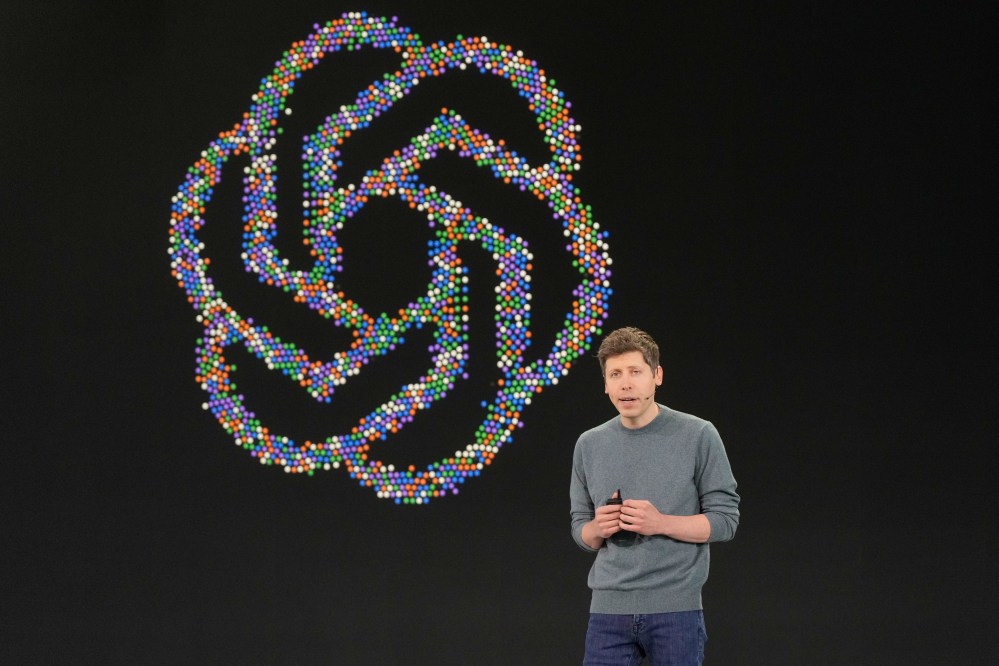
OpenAI CEO Sam Altman introduced a “remarkably capable, always-on” artificial intelligence agent at an appearance Tuesday, a day after the company halted the rollout of a more advanced model over safety concerns.
At the company’s annual developer conference, Altman made a slew of product announcements and updates, including OpenAI’s new agents, called Dots. The agents, designed to complete ongoing tasks proactively on behalf of users, are a competitor of Meta’s personal agent Muse, which exploded in popularity after Meta’s own conference last week.
Dot agents will be “like an AI helper that always has your back, inspired by the cool versions of what we all watched in movies growing up,” Altman said.
On Monday, OpenAI said it was holding off on releasing the other model because of concerns raised by its researchers. That followed broader calls within the industry to decelerate the pace of the technology’s advance to let safety measures catch up.
Altman avoided making references to concerns around the shelved model during his keynote address, but said during a question-and-answer session that the company was investing more in safety, security and monitoring of AI agents.
The AI boom should be considered more like a period of renaissance than an industrial revolution, he said.
“The best version of AI is not about making people cogs in a giant machine, ever whirring faster and faster. There are some parts of life that we cannot and should not automate,” Altman said. “AI should be about giving people more power over their own lives, more tools to create, learn, discover, expand knowledge.”
The company also announced the release of GPT-6.1 Sol, an upgraded version of its model GPT-6 Sol, and a premium speed tier called “Ultrafast,” among other launches and updates.
Open AI’s announcements came just before leaders from six of the leading AI companies, including OpenAI, signed a voluntary accord with President Donald Trump Tuesday to “self-police” development. The accord said the companies would implement “robust internal controls,” partner with an “independent external auditor” to assess whether the controls were working, and set up a committee among each company’s board of directors to evaluate reports from internal and external auditors.
While many in Silicon Valley have called for the government to help establish guardrails for the technology, Trump has pushed back against the idea of greater government oversight of AI.
While Altman didn’t attend, OpenAI president and co-founder Greg Brockman was at the White House, along with Dario Amodei of Anthropic, Amazon chief Jeff Bezos, Nvidia’s Jensen Huang, Tesla and SpaceX’s Elon Musk and Microsoft CEO Satya Nadella.
___
This story has been corrected to reflect that Altman discussed security concerns during a question-and-answer session.