US designates helium as a critical material, citing its importance for semiconductors
Advertisement
Read this article for free:
or
Already have an account? Log in here »
To continue reading, please subscribe:
Digital Subscription
One year of digital access for only $1.44 a week*
- Enjoy unlimited reading on winnipegfreepress.com
- Read the E-Edition, our digital replica newspaper
- Access News Break, our award-winning app
- Play interactive puzzles
*Billed as $5.77 plus GST every four weeks. After 52 weeks, price increases to the regular rate of $19.95 plus GST every four weeks. Offer available to new and qualified returning subscribers only. Cancel any time.
To continue reading, please subscribe:
Add Free Press access to your Brandon Sun subscription for only an additional
$1 for the first 4 weeks*
- Enjoy unlimited reading on winnipegfreepress.com
- Read the E-Edition, our digital replica newspaper
- Access News Break, our award-winning app
- Play interactive puzzles
*Your next Brandon Sun subscription payment will increase by $1.00 and you will be charged $17.95 plus GST for four weeks. After four weeks, your payment will increase to $24.95 plus GST every four weeks.
Read unlimited articles for free today:
or
Already have an account? Log in here »
The U.S. designated helium as a critical material on Friday because it’s indispensable for making semiconductors that are essential to energy generation, and the global supply is at risk of disruption, according to the Energy Department.
The designation by the Energy Department means that more federal financing will be available for helium producers and that the government will monitor it more closely. Helium is primarily produced as a byproduct of natural gas processing. The United States is the world’s largest producer of natural gas and of helium. Qatar and Russia are the other top helium producers.
Exports of Qatar’s helium supply have been severely curtailed by Iran’s closure of the Strait of Hormuz as a result of its war with Israel and the U.S. Iranian strikes on Qatar’s infrastructure have also impacted supply. Russia imposed temporary export controls on helium in April to protect its domestic supply.
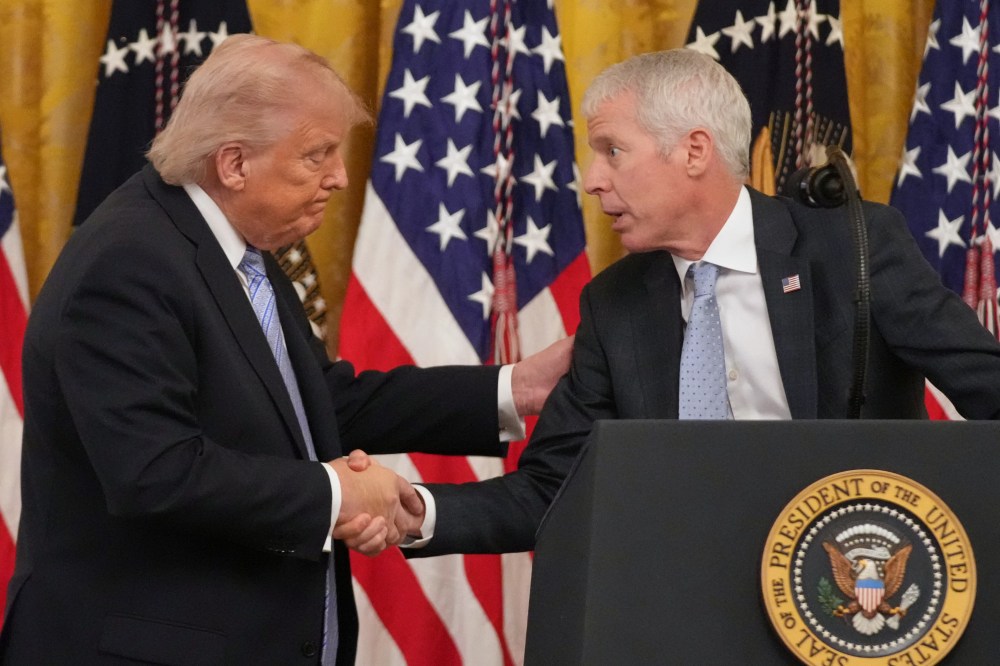
Energy Secretary Chris Wright said the Trump administration is freeing America from reliance on foreign sources of critical materials, strengthening domestic manufacturing, supporting American jobs and securing the materials essential to U.S. economic and national security.
“President Trump is bringing back America’s manufacturing industry, and that means making sure we have the materials needed to build things in America again,” Wright said in a statement.
Helium is the 20th critical material identified by DOE
Metallurgical coal used for steelmaking was the last one to be added, in 2025. The only other gas on the list is fluorine.
To make the critical materials list, a non-fuel mineral element or substance must serve an essential function in one or more energy technologies and there must be a high risk of disruption to the supply chain.
Helium makes balloons rise, but that’s not why the DOE is interested in it. Helium plays an important role in wind, solar and nuclear energy production, space exploration, medical imaging and research.
Assistant Secretary of Energy Audrey Robertson said helium’s unique properties make it irreplaceable, such as the fact that it’s non-combustible and has the lowest boiling point of any gas. The nation needs an ample supply for semiconductors, quantum and super computing, and superconducting magnets, added Robertson, who oversees the Office of Critical Minerals and Energy Innovation.
“We need to make sure that we can build those here. And helium is one of those components that could be a single point of failure, where we cannot let that happen. That’s why we’re designating it within our statutory authority, but I think why it’s important is not necessarily for our birthday parties,” Robertson said in an interview. “It’s really towards the future of American competitiveness and energy security, which we believe is national security.”
David Isaacs, vice president of the Semiconductor Industry Association trade group, noted helium plays an essential role in the industry’s cooling, photolithography, leak detection and more.
“We look forward to continuing to work with government and industry leaders in the U.S. and across the world to strengthen semiconductor supply chain resilience,” Isaacs said.
The United States designates both critical minerals and critical materials, and there is some crossover between them. The U.S. Geological Survey included helium on a 2018 list of critical minerals, but later lists omitted it because the domestic supply of helium was considered secure.
Despite environmental concerns with recovering helium from natural gas, there are also opportunities, said Greeshma Gadikota, director of the Lenfast Center for Sustainable Energy at Columbia University.
“If we burn the natural gas, there are a lot of CO2 emissions associated with that,” Gadikota said. “But if you just extract the helium and use it, the uses of it don’t contribute necessarily to greenhouse gas emissions.
“So from a climate standpoint, if we are going to continue down the line of extracting natural gas and recovering helium,” she added, “I would prefer to see natural gas being used in a form where we directly produce hydrogen and we produce solid carbon.” Hydrogen is a clean burning fuel, and solid carbon can provide permanent carbon sequestration and can be used widely in industrial applications, including rubber and pigments.
U.S. production of helium is constrained
There used to be a strategic national stockpile in Texas for helium, much like America’s Strategic Petroleum Reserve. Congress mandated in 2013 that it be privatized. The Bureau of Land Management completed the sale of the federal helium system to the industrial gas company Messer in 2024.
The U.S. produced 81 million cubic meters of helium in 2025, or 43% of the global supply. Of that, 38 million cubic meters of helium was exported. The U.S. has produced roughly 80 million cubic meters of helium annually since 2021.
There are large helium reserves in Wyoming, Kansas, Texas, Oklahoma, Colorado and Utah. Though there are abundant helium resources, helium extraction plants are at their limits and it takes years to permit and build new ones, which continues to constrain U.S. production, according to DOE.
The plants extracting the most helium, as of 2023, were located in Kansas, Texas, Colorado, New Mexico, Arizona and Oklahoma, according to federal data.
Some in the helium industry have urged the U.S. government to formally designate helium as a critical resource. The North American gas exploration company Avanti Helium Corp. says it’s urgent, and an increase in North American supply is needed to avoid becoming dependent on foreign sources.
“We are very pleased to have helium recognized as a critical material,” said Avanti Helium CEO Chris Bakker. “The U.S. has the potential to remain self-sufficient in helium. However, this will require investment in exploration for new reserves and inclusion on the critical materials list will bring significant support to these efforts.”
___
The Associated Press’ climate and environmental coverage receives financial support from multiple private foundations. AP is solely responsible for all content. Find AP’s standards for working with philanthropies, a list of supporters and funded coverage areas at AP.org.