London man seems to be free of HIV in second such case
Advertisement
Read this article for free:
or
Already have an account? Log in here »
To continue reading, please subscribe:

Digital Subscription
One year of digital access for only $205*
- Enjoy unlimited reading on winnipegfreepress.com
- Read the E-Edition, our digital replica newspaper
- Access News Break, our award-winning app
- Play interactive puzzles
*First annual payment billed as $205.00 + GST for one year. This annual subscription will automatically renew at $233.00 + GST every 52 weeks (10% off the regular annual price of $259.35). Offer available to new and qualified returning subscribers only. Cancel any time.
To continue reading, please subscribe:
Add Free Press access to your Brandon Sun subscription for only an additional
$1 for the first 4 weeks*
- Enjoy unlimited reading on winnipegfreepress.com
- Read the E-Edition, our digital replica newspaper
- Access News Break, our award-winning app
- Play interactive puzzles
*Your next Brandon Sun subscription payment will increase by $1.00 and you will be charged $17.95 plus GST for four weeks. After four weeks, your payment will increase to $24.95 plus GST every four weeks.
Read unlimited articles for free today:
or
Already have an account? Log in here »
Hey there, time traveller!
This article was published 04/03/2019 (2721 days ago), so information in it may no longer be current.
SEATTLE – A London man appears to be free of the virus that causes AIDS after a stem cell transplant, the second success including the “Berlin patient,” doctors reported.
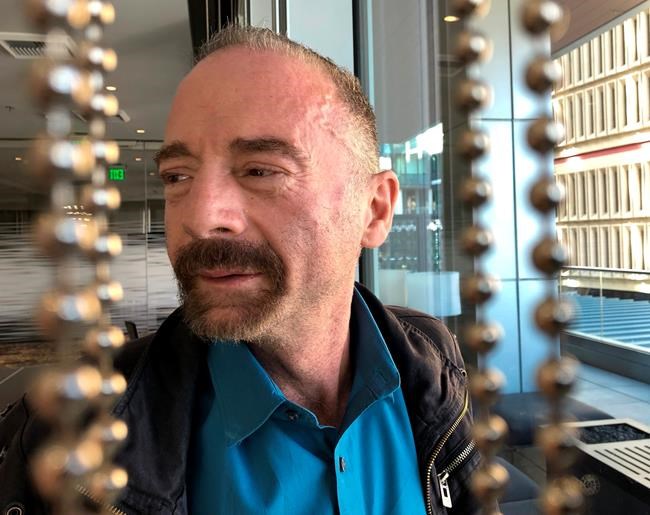
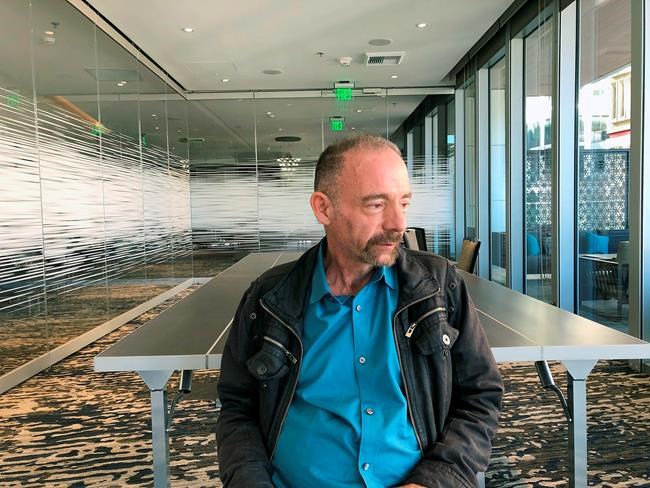
The therapy had an early success with Timothy Ray Brown, a U.S. man treated in Germany who is 12 years post-transplant and still free of HIV. Until now, Brown is the only person thought to have been cured of infection with HIV, the virus that causes AIDS.
Such transplants are dangerous and have failed in other patients. They’re also impractical to try to cure the millions already infected.
The latest case “shows the cure of Timothy Brown was not a fluke and can be recreated,” said Dr. Keith Jerome of Fred Hutchinson Cancer Research Center in Seattle who had no role. He added that it could lead to a simpler approach that could be used more widely.
The case, published online Monday by the journal Nature, was presented Tuesday at an HIV conference in Seattle.
Brown sat in the front row, stood for a round of applause and shook hands with lead researcher Ravindra Gupta of University College London after Gupta presented details on the London patient.
The patient has not been identified. He was diagnosed with HIV in 2003 and started taking drugs to control the infection in 2012. It’s unclear why he waited that long. He developed Hodgkin lymphoma that year and agreed to a stem cell transplant to treat the cancer in 2016.
With the right kind of donor, his doctors figured, the London patient might get a bonus beyond treating his cancer: a possible HIV cure.
Doctors found a donor with a gene mutation that confers natural resistance to HIV. About 1 per cent of people descended from northern Europeans have inherited the mutation from both parents and are immune to most HIV. The donor had this double copy of the mutation.
That was “an improbable event,” said Gupta. “That’s why this has not been observed more frequently.”
The transplant changed the London patient’s immune system, giving him the donor’s mutation and HIV resistance.
The patient voluntarily stopped taking HIV drugs to see if the virus would come back.
Usually, HIV patients expect to stay on daily pills for life to suppress the virus. When drugs are stopped, the virus roars back, usually in two to three weeks.
That didn’t happen with the London patient. There is still no trace of the virus after 18 months off the drugs.
Researchers from eight countries are tracking 45 patients with cancer and HIV who have or will soon have stem cell transplants. One of them, a Dusseldorf, Germany, man, is showing no signs of HIV several months after stopping treatment drugs, but it is too soon to tell if he, too, could be in remission.
Calling the London patient “cured” is tricky, Gupta said, because there is no standard definition for how long someone must remain free of virus and off treatment drugs. “We are being cautious” to call it remission for now, he said.
Brown said he would like to meet the London patient and would encourage him to go public because “it’s been very useful for science and for giving hope to HIV-positive people, to people living with HIV,” he told The Associated Press Monday.
Stem cell transplants typically are harsh procedures which start with radiation or chemotherapy to damage the body’s existing immune system and make room for a new one. There are complications too. Brown had to have a second stem cell transplant when his leukemia returned.
Compared to Brown, the London patient had a less punishing form of chemotherapy to get ready for the transplant, didn’t have radiation and had only a mild reaction to the transplant.
Dr. Gero Hutter, the German doctor who treated Brown, called the new case “great news” and “one piece in the HIV cure puzzle.”
___
AP video journalists Manuel Valdes in Seattle and Havovi Todd in London contributed.
___
The Associated Press Health and Science Department receives support from the Howard Hughes Medical Institute’s Department of Science Education. The AP is solely responsible for all content.