Textiles evolving to meet demand for sustainable materials
Advertisement
Read this article for free:
or
Already have an account? Log in here »
To continue reading, please subscribe:
Digital Subscription
One year of digital access for only $1.44 a week*
- Enjoy unlimited reading on winnipegfreepress.com
- Read the E-Edition, our digital replica newspaper
- Access News Break, our award-winning app
- Play interactive puzzles
*Billed as $5.77 plus GST every four weeks. After 52 weeks, price increases to the regular rate of $19.95 plus GST every four weeks. Offer available to new and qualified returning subscribers only. Cancel any time.
To continue reading, please subscribe:
Add Free Press access to your Brandon Sun subscription for only an additional
$1 for the first 4 weeks*
- Enjoy unlimited reading on winnipegfreepress.com
- Read the E-Edition, our digital replica newspaper
- Access News Break, our award-winning app
- Play interactive puzzles
*Your next Brandon Sun subscription payment will increase by $1.00 and you will be charged $17.95 plus GST for four weeks. After four weeks, your payment will increase to $24.95 plus GST every four weeks.
Read unlimited articles for free today:
or
Already have an account? Log in here »
Hey there, time traveller!
This article was published 08/08/2019 (2634 days ago), so information in it may no longer be current.
Whether it’s how they’re made or what they’re made of, textiles are evolving to meet consumer demand for sustainability.
“There’s a real push for sustainability now, and the home textiles industry is waking up to that consumer call,” says Shannon Maher, chair of Home Products Development at the Fashion Institute of Technology, in New York.
It’s about reducing waste during textile production, she said, and reusing or recycling waste to produce other products.

“Zero Waste has definitely become a watchword,” she said.
Consumers today have a heightened awareness of the harm plastic does to the environment, and “are willing to pay 5 or 10% more for a sustainable product as a way of contributing to the circular economy, and helping the environment,” she says.
Rugs and outdoor fabrics, for instance, are increasingly being made with recycled materials instead of new plastics.
A lot is happening on the fashion-design front, too, to explore new, sustainably sourced and even compostable types of textiles.
“Companies like Adidas and Nike are at the cutting edge of some of these innovations, and their work — and innovations in textiles used for apparel — does trickle down to textiles in other realms,” Maher says.
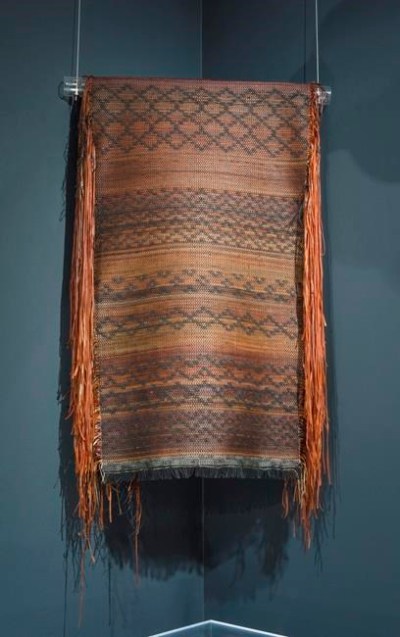
An exhibit of textile innovations at the Cooper Hewitt Design Museum in New York City, on view through Jan. 20, includes a dress made by a Japanese design team that features naturally glowing silk, made from silkworms injected with a green fluorescent protein derived from jellyfish. There’s a prototype for Adidas sneakers made entirely of ocean plastic; another prototype of sneakers that would be entirely compostable; and a textile made from algae.
“There’s a level of optimism when you look around and see designers really taking on the challenge of all this,” says Andrea Lipps, a curator at the Cooper Hewitt who helped organize the exhibit. “There’s a groundswell of creativity that’s continuing to reverberate.”
At the Fashion Institute of Technology, students have been experimenting with using milkweed and flax to create luxurious “fur” from 100% plant material. That won them the Stella McCartney Prize for Sustainable Fashion at the Biodesign Challenge Summit earlier this summer.
Another student design team there came up with the idea for a Spandex-type elastic fabric using a protein found in oysters.

To help companies get the word out about steps they’re taking, and help consumers identify environmentally responsible companies, the Sustainable Furnishing Council provides an online list.

“We have about 400 member companies, and they each have made their own public and verifiable commitment to sustainability,” says Susan Inglis, executive director of the council.
Look up, say, garden furniture, and see what best practices various manufacturers have put in place.
Another effort to help consumers reliably identify more eco-friendly companies is a new level of Oeko-TEX certification, called “Made in Green,” certifying that no harmful chemicals have been used in the manufacture of a certain product.
“People are talking more these days about ‘the value chain,’ showing that not only are you certified as being environmentally responsible, but all of the factories in your production process are certified. It’s a level of transparency that includes aspects like using clean energy sources,” explains Maher.
“Sustainability is complex,” she says. From a factory standpoint, it’s also a matter of asking whether they’re solar-powered, and how much water they use.