WEATHER ALERT

US experts: Medicines for opioid addiction vastly underused

Advertisement

Advertise with us

WASHINGTON - Medicines proven to treat opioid addiction remain vastly underused in the U.S., the nation's top medical advisers said Wednesday.

Read this article for free:

or

Already have an account? Log in here »

To continue reading, please subscribe:

Subscribe and receive a limited-edition Free Press branded hat or tote.

Digital Subscription

One year of digital access for only $205*

  • Enjoy unlimited reading on winnipegfreepress.com
  • Read the E-Edition, our digital replica newspaper
  • Access News Break, our award-winning app
  • Play interactive puzzles

*First annual payment billed as $205.00 + GST for one year. This annual subscription will automatically renew at $233.00 + GST every 52 weeks (10% off the regular annual price of $259.35). Offer available to new and qualified returning subscribers only. Cancel any time.

To continue reading, please subscribe:

Add Free Press access to your Brandon Sun subscription for only an additional

$1 for the first 4 weeks*

  • Enjoy unlimited reading on winnipegfreepress.com
  • Read the E-Edition, our digital replica newspaper
  • Access News Break, our award-winning app
  • Play interactive puzzles
Start now

*Your next Brandon Sun subscription payment will increase by $1.00 and you will be charged $17.95 plus GST for four weeks. After four weeks, your payment will increase to $24.95 plus GST every four weeks.

Hey there, time traveller!
This article was published 20/03/2019 (2688 days ago), so information in it may no longer be current.

WASHINGTON – Medicines proven to treat opioid addiction remain vastly underused in the U.S., the nation’s top medical advisers said Wednesday.

Only a fraction of the estimated 2 million people addicted to opioids are getting the medications, according to a report by the National Academies of Sciences, Engineering and Medicine. The influential group, which advises the federal government, called for increased prescribing of the drugs and other changes to reduce barriers to their use.

In 2017, opioids were involved in nearly 48,000 deaths — a record. In recent years, there have been more deaths involving illicit opioids, including heroin and fentanyl, than the prescription forms of the drugs, which include oxycodone and codeine.
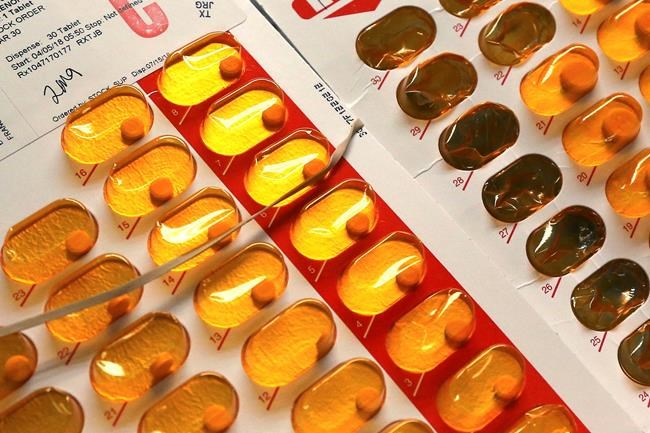
FILE - This July 23, 2018 file photo shows packets of buprenorphine, a drug which controls heroin and opioid cravings, in Greenfield, Mass. On Wednesday, March 20, 2019, the nation’s top medical advisers said medications which are proven to successfully treat opioid addiction remain vastly underused in the U.S., despite an epidemic of fatal overdoses tied to heroin, painkillers and related drugs. (AP Photo/Elise Amendola)

Government-approved medications, which include methadone, buprenorphine and naltrexone, help control cravings and withdrawal symptoms like nausea, muscle aches and pain. Their use is backed by most doctors and medical groups. Yet they still have skeptics, especially among supporters of 12-step programs that favour abstinence-only approaches.

The report concludes that patients taking the medicines fare better over the long term and are 50 per cent less likely to die than if they weren’t on them. An “all hands on deck” response is needed — including doctors, law enforcement and family members — to expand access to treatment, it said.

The group’s conclusions echo similar reports from the U.S. Surgeon General and a presidential commission appointed to President Donald Trump to make recommendations for curbing the opioid epidemic.

The 14-member panel, which included addiction and rehabilitation specialists, summed up several reasons behind the low use:

STIGMA

Stigma and misunderstanding about the nature of addiction remains one of the biggest barriers to treatment in part because two of the medications used to treat opioid addiction — methadone and buprenorphine — are themselves opioids. The panel said this contributes to the mistaken belief that it’s “just substituting one drug for another.”

Experts said the medications are given at doses big enough to fend off withdrawal, but too small to produce a euphoric high. Patients can drive, rebuild relationships and get back to work.

RULES

The medicines are subject to restrictions that limit their use. For example, methadone can only be given at government-regulated clinics, which can require patients to commute. Buprenorphine can only be prescribed by certified health professionals who must complete eight hours of training. Federal rules also cap the number of patients that these physicians can treat to 275.

The authors also note that medications are often not available to prison inmates. The report concludes there’s no scientific basis for such limitations.

LACK OF TRAINING

Addiction treatment has long been separate from mainstream medical training, the report notes, which means many doctors, nurses and social workers don’t receive training on treating drug addiction. The report calls for combining addiction programs into standard medical education.

___

The Associated Press Health & Science Department receives support from the Howard Hughes Medical Institute’s Department of Science Education. The AP is solely responsible for all content.
Report Error Submit a Tip

More Stories

Students continue to criticize handling of MITT’s closure

Morgan Modjeski 5 minute read Preview

Students continue to criticize handling of MITT’s closure

Morgan Modjeski 5 minute read Monday, Jul. 27, 2026

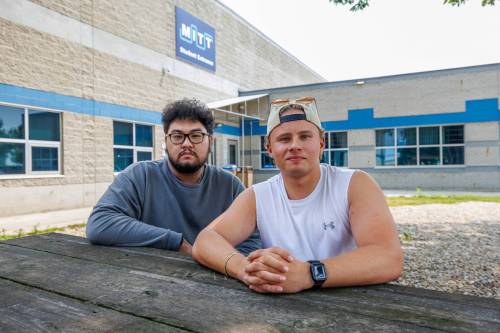
Students at a Manitoba trade college say their education has been hampered as a result of its impending closure and they blame government for a poor transition.

The provincial government announced in January it would close the Manitoba Institute of Trades and Technology because it was no longer financially viable following the federal government’s decision to cut the number of international students allowed to study in Canada.

Officials have said students would remain the top priority as 19 programs from MITT are set to be absorbed by Red River College Polytech.

Kieran Smith, an electrical applications student at MITT, said it feels like those in charge “don’t really care.”

Read
Monday, Jul. 27, 2026

Men’s title turning into two-horse race between clubmates Fanning and Doyle

Mike McIntyre 6 minute read Preview

Men’s title turning into two-horse race between clubmates Fanning and Doyle

Mike McIntyre 6 minute read Yesterday at 8:11 PM CDT

Angela Martens was once a rising star on the Manitoba golf scene, with the 1999 provincial amateur title serving as Exhibit A.

But life eventually took precedence over sport as she faded from the competitive spotlight, with a runner-up finish at the Amateur in 2010 marking her most recent appearance near the top of the leaderboard.

Now, all these years later, Martens is back — and on the cusp of another championship.

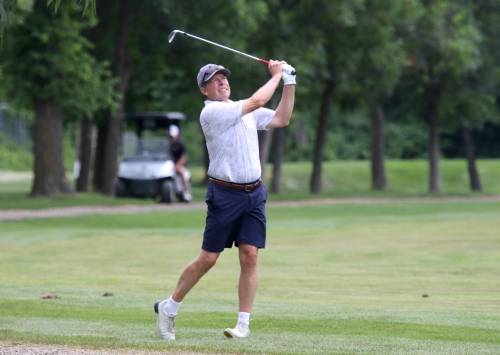
The Elmhurst member takes a one-shot lead into Wednesday’s final round of the 2026 Hodson Financial Women’s Senior Championship at Breezy Bend after posting rounds of 80 and 79.

Read
Yesterday at 8:11 PM CDT

Ex’s stubborn persistence no laughing matter

Maureen Scurfield 4 minute read Yesterday at 2:00 AM CDT

DEAR MISS LONELYHEARTS: When I got into a bank lineup recently, I had no idea who queued up behind me, because I was too busy checking my phone. Then I heard this guy say down my neck, “Just as beautiful as ever!”

I whirled around and saw my ex-boyfriend grinning at me. I waited for him to finish at the bank, so we could go for coffee at a breakfast place and catch up. But that was it for me — coffee and a chat! Unfortunately, he wants more of “us” and he’s been calling me every night since. The guy’s in sales now, and he’s using his new techniques, but he’s going overboard and really annoying me now!

How do you tell a past boyfriend to cease and desist? To be fair, he’s said nothing overly inappropriate, except how he’s really loving my new look and that he wants to see me again. Why isn’t he getting the hint when I refuse all his suggestions to do more together?

— Getting Fed Up, East Kildonan

US experts: Medicines for opioid addiction vastly underused

Matthew Perrone, The Associated Press 3 minute read Preview

US experts: Medicines for opioid addiction vastly underused

Matthew Perrone, The Associated Press 3 minute read Wednesday, Mar. 20, 2019

WASHINGTON - Medicines proven to treat opioid addiction remain vastly underused in the U.S., the nation's top medical advisers said Wednesday.

Only a fraction of the estimated 2 million people addicted to opioids are getting the medications, according to a report by the National Academies of Sciences, Engineering and Medicine. The influential group, which advises the federal government, called for increased prescribing of the drugs and other changes to reduce barriers to their use.

In 2017, opioids were involved in nearly 48,000 deaths — a record. In recent years, there have been more deaths involving illicit opioids, including heroin and fentanyl, than the prescription forms of the drugs, which include oxycodone and codeine.

Government-approved medications, which include methadone, buprenorphine and naltrexone, help control cravings and withdrawal symptoms like nausea, muscle aches and pain. Their use is backed by most doctors and medical groups. Yet they still have skeptics, especially among supporters of 12-step programs that favour abstinence-only approaches.

Read
Wednesday, Mar. 20, 2019

Puzzles Palace

1 minute read Monday, Jul. 27, 2026

To solve our puzzles, please subscribe with this special offer: |

The Manitoba government is taking more time to evaluate and select a preferred corridor for the twinning of a 16-kilometre section of the Trans-Canada Highway near the Ontario boundary.

An earlier timeline indicated Manitoba Transportation and Infrastructure expected to choose an alignment by the fall of 2025. A provincial spokesperson told the Free Press a decision is now expected this winter.

“The department continues to evaluate corridor alternatives and will undertake additional geotechnical, environmental and design work as part of the (functional design study) to support the selection of a preferred corridor,” the spokesperson said in a statement.

The study, which will include Crown-Indigenous and public consultation, is expected to be completed in late 2027, with a detailed design to follow.