US medical marketing reaches $30 billion, drug ads top surge

Advertisement

Advertise with us

Ads for prescription drugs appeared 5 million times in just one year, capping a recent surge in U.S. medical marketing, a new analysis found.

Read this article for free:


or

Already have an account? Log in here »

To continue reading, please subscribe:

Subscribe and receive a limited-edition Free Press branded hat or tote.

Digital Subscription

One year of digital access for only $205*

  • Enjoy unlimited reading on winnipegfreepress.com
  • Read the E-Edition, our digital replica newspaper
  • Access News Break, our award-winning app
  • Play interactive puzzles

*First annual payment billed as $205.00 + GST for one year. This annual subscription will automatically renew at $233.00 + GST every 52 weeks (10% off the regular annual price of $259.35). Offer available to new and qualified returning subscribers only. Cancel any time.

To continue reading, please subscribe:

Add Free Press access to your Brandon Sun subscription for only an additional

$1 for the first 4 weeks*

  • Enjoy unlimited reading on winnipegfreepress.com
  • Read the E-Edition, our digital replica newspaper
  • Access News Break, our award-winning app
  • Play interactive puzzles
Start now

*Your next Brandon Sun subscription payment will increase by $1.00 and you will be charged $17.95 plus GST for four weeks. After four weeks, your payment will increase to $24.95 plus GST every four weeks.

Hey there, time traveller!
This article was published 08/01/2019 (2820 days ago), so information in it may no longer be current.

Ads for prescription drugs appeared 5 million times in just one year, capping a recent surge in U.S. medical marketing, a new analysis found.

The advertisements for various medicines showed up on TV, newspapers, online sites and elsewhere in 2016. Their numbers soared over 20 years as part of broad health industry efforts to promote drugs, devices, lab tests and even hospitals.

The researchers estimated that medical marketing reached $30 billion in 2016, up from $18 billion in 1997. Spending on consumer-focused ads climbed fastest. But marketing to doctors and other health professionals still grabbed the biggest share with the bulk of it paying for free drug samples.
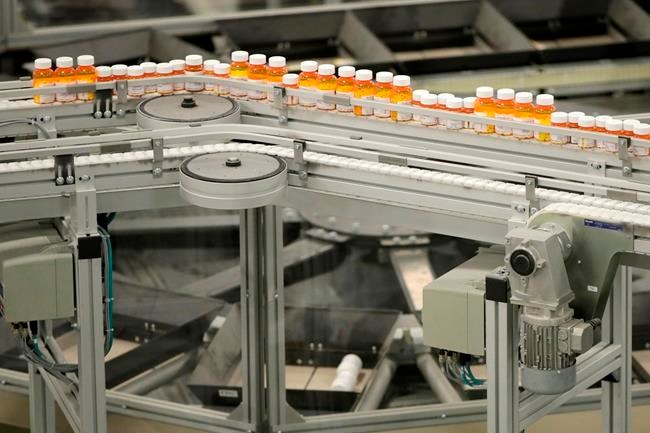
FILE - In this July 10, 2018 file photo, bottles of prescription medicines ride on a conveyor belt at a pharmacy warehouse in Florence, N.J. According to a report released on Tuesday, Jan. 8, 2018, annual spending by the U.S. health industry on ads and promotions has reached $30 billion. That includes advertisements for prescription drugs that were shown 5 million times on TV and elsewhere in 2016. That’s a huge increase in 20 years and just part of broad health industry efforts to promote drugs, devices, lab tests and even new hospitals. (AP Photo/Julio Cortez, File)

“Marketing drives more treatments, more testing” that patients don’t always need, said Dr. Steven Woloshin, a Dartmouth College health policy expert. Woloshin wrote the report with his wife, Dr. Lisa Schwartz, both longtime critics of overdiagnosis and overtreatment. She died in November.

They analyzed marketing data from the U.S. Food and Drug Administration, Medicare, other federal and state agencies, private companies and medical research. The report covers 1997, when the FDA eased rules for TV ads, through 2016. Although some types of spending waxed and waned during those years, Woloshin said the upward trend is concerning and suggests consumers need to be increasingly skeptical about marketing claims.

The report was published Tuesday in the Journal of the American Medical Association. All marketing spending was adjusted to 2016 dollars.

A journal editorial notes that medical marketing has survived legal challenges and “needs no apologist.” It has helped make patients more informed consumers and it’s up to doctors to help their patients understand product claims, although some physicians need more education themselves about deceptive marketing, the editorial suggests.

CONSUMER-FOCUSED MARKETING

Spending on direct-to-consumer marketing climbed fastest, from $2 billion or 12 per cent of total marketing to almost $10 billion and one-third of overall spending. Only the U.S. and New Zealand allow prescription drug advertising, which in the U.S. went from just over $1 billion and 79,000 ads to $6 billion and 5 million ads in 2016.

The category also includes TV ads and other marketing for hospitals, which skyrocketed to almost $3 billion.

Spending on disease-awareness ads more than doubled, to $430 million spent on 401 campaigns. Woloshin said this was among the most disturbing trends. Drug names aren’t mentioned, but manufacturers often use these to “sell” diseases that can be treated by costly new drugs, he said.

DOCTOR-FOCUSED MARKETING

Marketing aimed at doctors, nurses and other health professionals went from $16 billion to $20 billion, about two-thirds of all spending. About $12 billion went for free drug samples, although that spending has dropped recently. Spending on personal pitches from drug company sales reps was mostly unchanged at $5 billion after an early increase.

The government’s Open Payments website lists doctors with financial ties to drug and medical device makers and in 2022 it will expand to include physician assistants and nurses with advanced training.

REGULATORY OVERSIGHT

Federal law says advertising must be truthful, not deceptive and backed by scientific evidence. The FDA oversees prescription drug and device advertising; the Federal Trade Commission regulates over-the-counter products. The analysis suggests that the surge in medical marketing has led to spotty oversight by both agencies. It notes that while company submissions more than doubled over the two decades, reaching nearly 100,000, FDA violation letters for misleading drug marketing dropped from 156 to 11. That could mean drug companies are doing a better job of self-policing but Woloshin said it’s more likely regulators are overwhelmed by the volume and can’t keep up.

Still, the report notes an increase in FDA violation letters about marketing of unapproved genetic tests. And off-label or deceptive marketing practices have resulted in $11 billion in fines and 103 settlements between drug companies and federal and state regulators since 1997.

WHAT DOCTORS SAY

The American Medical Association in 2015 supported banning direct-to-consumer ads for prescription drugs and says doctors should not accept medical industry payments or gifts intended to influence prescribing habits. “The vast majority of physicians prescribe drugs and treatments they believe are in the best interest of their patients,” the AMA said in a response to the new analysis.

WHAT INDUSTRY SAYS

Holly Campbell, spokeswoman for the Pharmaceutical Research and Manufacturers of America, defended industry marketing practices and said direct-to-consumer ads can make patients better informed about their health and treatment options. She said these ads also “increase awareness of the benefits and risks of new medicines and encourage appropriate use of medicines.”

___

AP Medical Writer Lindsey Tanner is on Twitter at @LindseyTanner.

___

The Associated Press Health & Science Department receives support from the Howard Hughes Medical Institute’s Department of Science Education. The AP is solely responsible for all content.

Report Error Submit a Tip

More Stories

Today’s horoscope

Georgia Nicols 4 minute read Preview

Today’s horoscope

Georgia Nicols 4 minute read Yesterday at 2:00 AM CDT

MOON ALERT: There are no restrictions to shopping or important decisions. The moon is in Aries.

ARIES (March 21-April 19)

This is a wonderful, energetic day. The moon in your sign is dancing with lucky Jupiter promoting domestic peace and happiness. It’s a great day for business. But your top choice will be to socialize, enjoy fun activities with kids, check out sporting events or slip away on a vacation. .

TAURUS (April 20-May 20)

Read
Yesterday at 2:00 AM CDT

Winnipeg Police Service recognizes, honours residential school survivors as Orange Shirt Day approaches

Malak Abas 3 minute read Preview

Winnipeg Police Service recognizes, honours residential school survivors as Orange Shirt Day approaches

Malak Abas 3 minute read Yesterday at 7:27 PM CDT

Winnipeg Police Service members lit a sacred fire outside of their North District Station in recognition of residential school survivors ahead of the upcoming Orange Shirt Day.

“We know that the relationship between policing and Indigenous communities has not always been one of trust,” WPS Chief Gene Bowers told visitors at a gathering outside of the station Sunday afternoon.

“We cannot change that history, but we can acknowledge it, we can learn from it, and we can take responsibility for how we move forward.”

The sacred fire, guided by elder Mike Calder, will burn for 24 hours at the Sinclair Street station, and then be allowed to extinguish naturally. It’s the second year the WPS has lit a sacred fire in recognition of residential school survivors — last year, the fire was lit outside of WPS headquarters on Smith Street.

Read
Yesterday at 7:27 PM CDT

What’s open, what’s closed, what’s up in Winnipeg on National Day of Truth and Reconciliation Sept. 30, 2026

Free Press staff 4 minute read Preview

What’s open, what’s closed, what’s up in Winnipeg on National Day of Truth and Reconciliation Sept. 30, 2026

Free Press staff 4 minute read Yesterday at 10:38 AM CDT

The National Day of Truth and Reconciliation, or Orange Shirt Day, as it's known in Manitoba, happens Sept. 30 with many commemorative community events scheduled.

Read
Yesterday at 10:38 AM CDT

Signs of local neo-Nazi recruiting efforts spark concern

Conrad Sweatman 7 minute read Preview

Signs of local neo-Nazi recruiting efforts spark concern

Conrad Sweatman 7 minute read Saturday, Sep. 26, 2026

A far-right canvassing push in Manitoba this month is raising concerns among Winnipeg residents.

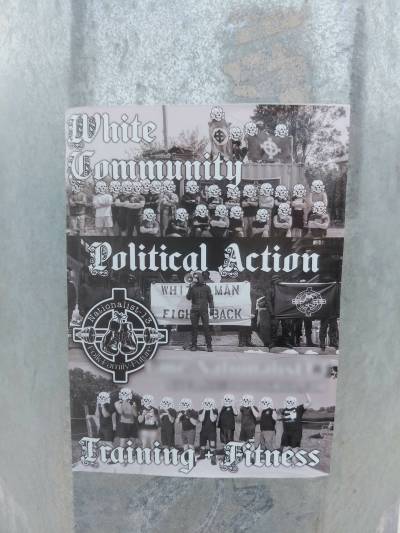
Stickers promoting Nationalist-13, a men’s-only neo-Nazi group also known as NS-13 based primarily in Hamilton, Ont., have appeared in Winnipeg and parts of southern Manitoba. The stickers bear national socialist branding and messages such as “White Man, Fight Back” and “White Community, Political Action, Training and Fitness.”

Winnipeg writer Jess Woolford recently encountered an NS-13 poster on Pembina Highway.

“It was appalling,” Woolford said. “It has the Nazi death heads covering people’s faces. It was pretty disturbing to come across this … I just didn’t expect to see it so blatantly displayed in my neighbourhood.”

Read
Saturday, Sep. 26, 2026

Local Muslims, Indigenous people hold interfaith event

Malak Abas 3 minute read Preview

Local Muslims, Indigenous people hold interfaith event

Malak Abas 3 minute read Yesterday at 6:42 PM CDT

Bannock with wild rice and samosas with halal beef stew were served in equal measure as Indigenous and Muslim Winnipeggers sought common ground at an interfaith event discussing truth and reconciliation Sunday.

The Islamic Social Services Association’s second annual Muslim-Indigenous Solidarity event recognized Orange Shirt Day through conversations with elders, shared prayers and crafting.

Organizer Shahina Siddiqui said many of the people attending the gathering, held at Canadian Mennonite University, share the traumatic impacts of colonialism.

Siddiqui said she herself had attended a Catholic day school in her home country of Pakistan, where she and other students were forced to speak English, and were hurt if they didn’t. Many Muslim-majority countries, she said, have been harmed by colonialism.

Read
Yesterday at 6:42 PM CDT

Positive anticipation is growing about major housing developments underway in Winnipeg’s downtown

Gabrielle Piché 10 minute read Preview

Positive anticipation is growing about major housing developments underway in Winnipeg’s downtown

Gabrielle Piché 10 minute read Friday, Sep. 25, 2026

If traffic is light and the wind is down, Somia Sadiq is able to hear the roar of Winnipeg Jets fans twice: first through her window, then on TV.

From her apartment view high above downtown, she can look out at Graham Avenue’s painted pedestrian landscape, see construction cranes and hear the heavy equipment at work as massive housing projects take shape at The Forks, at what used to be Portage Place shopping centre and at the former Hudson’s Bay building.

Sadiq has lived at 300 Main for 2 1/2 years, a few steps from the city’s famous, windy and reopened-to-pedestrians Portage Avenue intersection. At 42 storeys, it’s the tallest building in Winnipeg.

She is among 18,000 downtown residents who will soon be joined by thousands of others attracted to the city’s core by the new wave of major construction projects.

Read
Friday, Sep. 25, 2026