Village loses its voice
Osborne has undergone character change, pricing it out of reach for many

Advertisement
Read this article for free:
or
Already have an account? Log in here »
To continue reading, please subscribe:

Digital Subscription
One year of digital access for only $205*
- Enjoy unlimited reading on winnipegfreepress.com
- Read the E-Edition, our digital replica newspaper
- Access News Break, our award-winning app
- Play interactive puzzles
*First annual payment billed as $205.00 + GST for one year. This annual subscription will automatically renew at $233.00 + GST every 52 weeks (10% off the regular annual price of $259.35). Offer available to new and qualified returning subscribers only. Cancel any time.
To continue reading, please subscribe:
Add Free Press access to your Brandon Sun subscription for only an additional
$1 for the first 4 weeks*
- Enjoy unlimited reading on winnipegfreepress.com
- Read the E-Edition, our digital replica newspaper
- Access News Break, our award-winning app
- Play interactive puzzles
*Your next Brandon Sun subscription payment will increase by $1.00 and you will be charged $17.95 plus GST for four weeks. After four weeks, your payment will increase to $24.95 plus GST every four weeks.
Read unlimited articles for free today:
or
Already have an account? Log in here »
Hey there, time traveller!
This article was published 21/04/2018 (3004 days ago), so information in it may no longer be current.
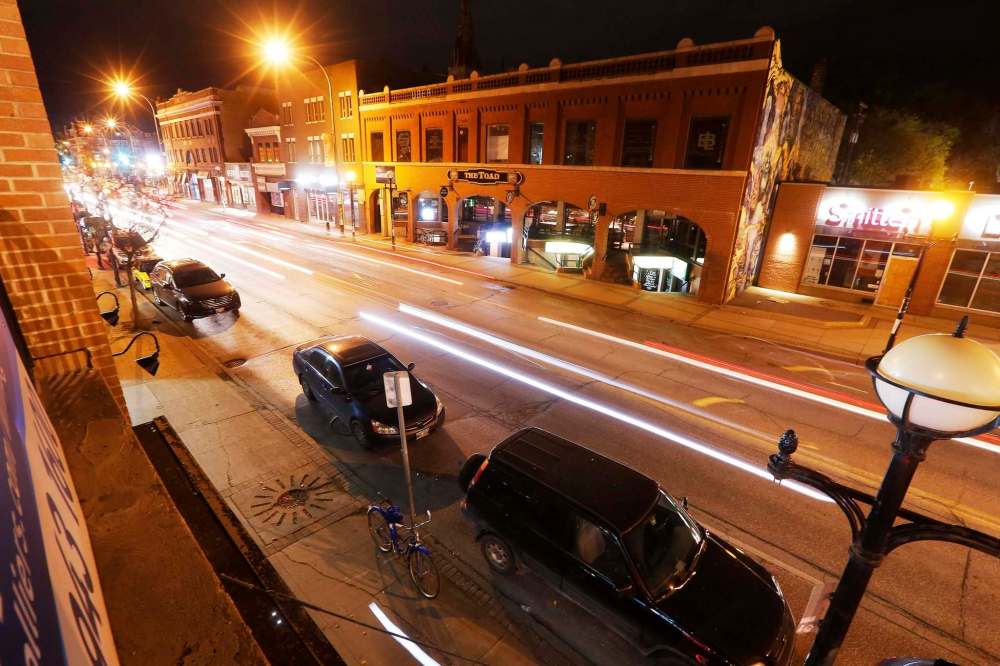
After dark, in the crisp midnight breeze of a criminally late spring, Osborne Village still sounds the same as it did five years or a decade ago. Raucous voices. Liquid laughter — the music of what remains of the entertainment quarter.
If the tune of that music has not changed, it has become quieter. Everyone who lives or works here, in what was long Winnipeg’s most vivid example of a mixed-use urban village, knows that to be true: we are in hibernation.
Yet even outside of Winnipeg, the area’s reputation still glistens from the days when it was wide awake. Last month, while on a work trip in North Bay, Ont., a journalist from Ontario asked me where in Winnipeg I lived.
And then: “I love the Village!” he exclaimed, though it’s been some years since he last visited.
I smiled, and turned my cocktail glass in my hands, and wondered what he would think of it now. What would he think, when the street he remembers as so vibrant has settled into an uneasy quiet, and a sense of pause?
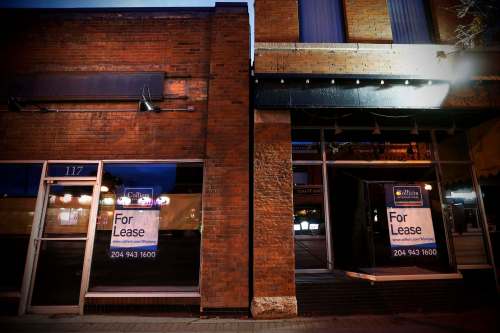
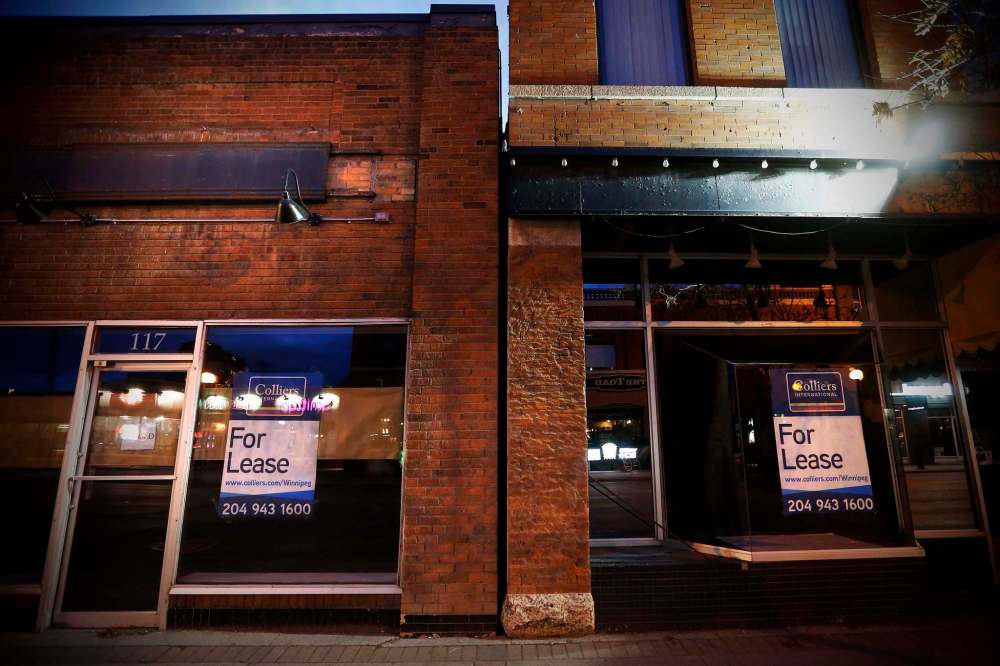
Look, it’s been a difficult couple of years for the Village, and now a difficult spring. One by one, the region lost some of its most famous anchors: the Osborne Village Inn, for one, and a few of its most stalwart businesses.
In their absence, big ideas flashed through, burned and crashed. A plan for “micro-apartments” in the old Osborne Village Inn never got off the ground; an ambitious Cajun restaurant closed weeks after it opened.
The rest of the city began to notice. The headlines of recent months wrung worried hands over the vacant spaces that now dot Osborne Street, followed by a flurry of expert opinions and pledges of what’s to come.
It’s true that, on first glance, it seems paradoxical that Osborne Village should be ebbing. The area remains the most densely packed in Winnipeg, and populated largely by people who want to live there for its convenience.
That has, in fact, only increased since the days of Osborne’s past glories. Over the past five years, a slew of aging houses have been replaced by glossy new apartment or condo buildings; people still want to live here.
Yet that trajectory has not been reflected in the neighbourhood’s street-level life. Vacant windows. Some spots — particularly ones that depend more on foot traffic than reservations — have noticed a slow decline in business.
There are plans. Landlords are reportedly close to finding tenants for languishing spaces. A cannabis dispensary is slated to open in the husk of the former TD Bank and, whatever you think of that, it is a good fit for the area.
Meanwhile, the Osborne Village BIZ has scheduled a public feedback event on May 12, at the corner of Stradbrook and Osborne. Among its ideas is to put a 15-metre-high “lookout” platform in that spot’s bell tower.
But, I’m going to toss this out: it’s not new businesses, or a novelty observation deck or yet another raising of new condos, that will reverse the cultural decline of Osborne Village. We will not buy our way out of the bind.
There is something more fundamental that must be addressed, if the Village as a whole is to thrive again.
I’ve said this before, but the observation remains: when I moved to Osborne Village in 2000, it seemed that the area was full of people who looked like me. Young, broke and all aflame — and always awake after midnight.
Eighteen years later, the area still holds me fast. But it has changed. I live now just a couple of hundred metres away from where my first Osborne apartment — a labyrinthean old house, divided into two units — once stood.
That old house was razed four years ago. In its place, a developer erected sleek new condominiums. Two of the units in that building are up for sale now; the cheaper of the two, a one-bedroom, rings in at nearly $350,000.
Now, it seems again that many people here look like me: 30-something, double income, no kids. The type of people who can afford to borrow up to half a million bucks on a loft-style box where only two people can live.
Or consider this: rent, in my first solo Osborne apartment, was $450 a month. Most of my friends’ rents hovered in a similar range. Accounting for 15 years of inflation, that amounts to about $600 to $700 in 2018 dollars.
There aren’t many suites available for rent in the Village for that amount. A quick browse of Osborne apartment rental ads finds a handful in the $800 range; most are now going for well above $1,000 a month.
Faced by those prices, the diverse array of characters that once populated the Village — students, artists and young creatives — have slowly been squeezed out, landing instead in places such as nearby West Broadway.
That strip of Sherbrook Street has been bustling lately, if you haven’t noticed. Meanwhile, the speed of Osborne Village development, brokered by its desirability as a place to live, has changed its character.
Can’t stop the march of progress, so we’re told. But the energy the Village once held belonged not just to its density, but in how it sat at a confluence of demographics, a colourful jumble of varied people and situations.
At the time, denizens of prized Wellington Crescent condos and the stately houses east of Osborne rubbed shoulders with young musicians in creaky character apartments. The mix worked; it kept the area vibrant.
That is the one thing we have lost, as the Village turned. Not density or cool spaces, not geographic convenience. What we lost is some of the flexibility as to who can live here, and help create it anew.
As I look over Osborne Village now — the only neighbourhood in the city I have ever truly loved, or truly considered home — it occurs to me that the buzz about new shops or lookouts won’t change this factor.
The past is gone for the Village. It will not be recreated. But there is still a lot of life here, in these cosy old streets, and a lot of living to be done. To nurture it, we must attract not just development, but new people.
Or, I guess we could say — let’s find a way to make Osborne Village colourful again.
melissa.martin@freepress.mb.ca
Melissa Martin
Reporter-at-large
Melissa Martin reports and opines for the Winnipeg Free Press.
Every piece of reporting Melissa produces is reviewed by an editing team before it is posted online or published in print — part of the Free Press‘s tradition, since 1872, of producing reliable independent journalism. Read more about Free Press’s history and mandate, and learn how our newsroom operates.
Our newsroom depends on a growing audience of readers to power our journalism. If you are not a paid reader, please consider becoming a subscriber.
Our newsroom depends on its audience of readers to power our journalism. Thank you for your support.
Melissa Martin
Reporter-at-large
Melissa Martin reports and opines for the Winnipeg Free Press.
Every piece of reporting Melissa produces is reviewed by an editing team before it is posted online or published in print — part of the Free Press‘s tradition, since 1872, of producing reliable independent journalism. Read more about Free Press’s history and mandate, and learn how our newsroom operates.
Our newsroom depends on a growing audience of readers to power our journalism. If you are not a paid reader, please consider becoming a subscriber.
Our newsroom depends on its audience of readers to power our journalism. Thank you for your support.
Advertisement Advertise With Us
Advertisement Advertise With Us