

Human rights lawyer opposes McClung statue
Backed forced sterilization for some

Advertisement
Read this article for free:
or
Already have an account? Log in here »
To continue reading, please subscribe:

Digital Subscription
One year of digital access for only $205*
- Enjoy unlimited reading on winnipegfreepress.com
- Read the E-Edition, our digital replica newspaper
- Access News Break, our award-winning app
- Play interactive puzzles
*First annual payment billed as $205.00 + GST for one year. This annual subscription will automatically renew at $233.00 + GST every 52 weeks (10% off the regular annual price of $259.35). Offer available to new and qualified returning subscribers only. Cancel any time.
To continue reading, please subscribe:
Add Free Press access to your Brandon Sun subscription for only an additional
$1 for the first 4 weeks*
- Enjoy unlimited reading on winnipegfreepress.com
- Read the E-Edition, our digital replica newspaper
- Access News Break, our award-winning app
- Play interactive puzzles
*Your next Brandon Sun subscription payment will increase by $1.00 and you will be charged $17.95 plus GST for four weeks. After four weeks, your payment will increase to $24.95 plus GST every four weeks.
Read unlimited articles for free today:
or
Already have an account? Log in here »
Hey there, time traveller!
This article was published 23/04/2010 (5981 days ago), so information in it may no longer be current.
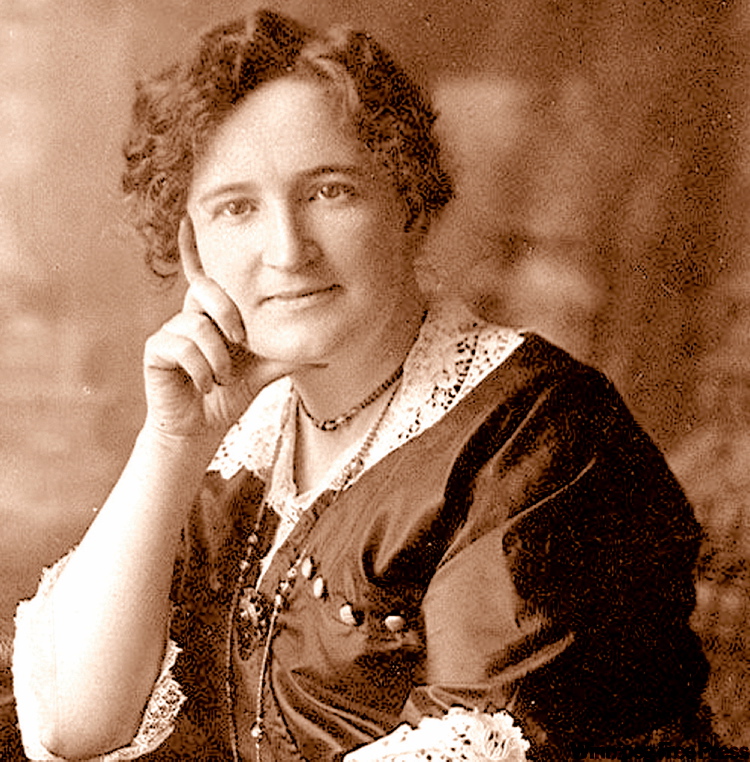
Almost a century after Nellie McClung went to the Manitoba legislature to fight for women’s right to vote, her arrival there still sparks controversy.
While work is underway on the west side of the legislature grounds to erect a statue honouring the famous suffragette, and a local group continues to raise funds to pay for it, a noted human rights activist says plans for a McClung statue should be scrapped.
Human-rights lawyer David Matas said while McClung did many good things, including helping make Manitoba the first province to give women the vote and to run for public office, she also advocated for the compulsory sterilization of people with special needs.
"It’s problematic," Matas said.
"You have a person with a good legacy in one area and not in another… it will be a controversial decision. "If it was up to me, I wouldn’t put it up. What’s a statue for Nellie McClung going to do? The adverse impact, in my mind, on disability rights weighs more than the positive impact on gender rights."
McClung, who was born in 1873 and died in 1951, was a key reason the province in 1916 became the first to give women the right to vote and to run for public office.
McClung was also one of the Famous Five who successfully petitioned to include women in the definition of "person" in Sec. 24 of the British North American Act.
But while serving as a Liberal MLA in the Alberta legislature from 1921 to 1926, she was an advocate for forced sterilization of people with special needs, which the Alberta government approved. The law stayed on the books until the early 1970s.
Janice Filmon, of the Nellie McClung Foundation, said she knew about McClung’s controversial history when she began working on the statue proposal and doesn’t think it should scuttle it.
"It was an era," Filmon said.
"I don’t agree with what she believed in… the right thing to do is to acknowledge her achievements with others in getting the vote and getting women recognized as people.
"A lot of people wouldn’t know this was the thinking of many of the leaders of the era.
"Thank goodness those days are gone."
Harry Duckworth, president of the Manitoba Historical Society, agrees, saying many people in McClung’s era would have agreed with her stance on forced sterilization.
But Duckworth said it wasn’t the case a couple of decades later.
"Everything changed after the Nazi period in Germany," he said.
"The Nazis took eugenics to a crazy extreme, used it to justify their evil doctrine of a master race and set out to eliminate not only Jews, but various people whom they considered defectives — homosexuals, people with mental illnesses and those with what we now call special needs.
"But all of this was in the future when McClung did her writing."
Duckworth said he doesn’t think the stance should mean no McClung statue.
"People who are unusually wise in one area aren’t necessarily wise in others," he said.
"They give what they are capable of and, if what they achieve is important in a positive way, we should be grateful to them for that.
"That is what the statue is about."

Linda McDowell, who teaches history methods at the University of Winnipeg and is a retired history teacher, said while McClung makes mention of forced sterilization in one of her books, she hasn’t been able to find proof how actively she supported the issue.
McDowell said as far as she has been able to find, there wasn’t a recorded vote on the issue in the Alberta legislature.
McDowell said while McClung supported the issue, none of the letters written to support the act has McClung’s signature on it.
"That’s not Nellie — when Nellie went into something she went into something. Certainly she sympathized with it, but to what extent, I don’t know. "Yes, she sympathized with it, but a good number of people and feminists did then, too."
kevin.rollason@freepress.mb.ca
Kevin Rollason
Reporter
Kevin Rollason was a general assignment reporter at the Free Press.
Our newsroom depends on a growing audience of readers to power our journalism. If you are not a paid reader, please consider becoming a subscriber.
Our newsroom depends on its audience of readers to power our journalism. Thank you for your support.
Kevin Rollason
Reporter
Kevin Rollason was a general assignment reporter at the Free Press.
Our newsroom depends on a growing audience of readers to power our journalism. If you are not a paid reader, please consider becoming a subscriber.
Our newsroom depends on its audience of readers to power our journalism. Thank you for your support.
Advertisement Advertise With Us
Advertisement Advertise With Us