

Trees, shrubs vanishing from Sahel
Impoverished region's farmers, livestock consume them to live
Advertisement
Read this article for free:
or
Already have an account? Log in here »
To continue reading, please subscribe:
Digital Subscription
One year of digital access for only $1.44 a week*
- Enjoy unlimited reading on winnipegfreepress.com
- Read the E-Edition, our digital replica newspaper
- Access News Break, our award-winning app
- Play interactive puzzles
*Billed as $5.77 plus GST every four weeks. After 52 weeks, price increases to the regular rate of $19.95 plus GST every four weeks. Offer available to new and qualified returning subscribers only. Cancel any time.
To continue reading, please subscribe:
Add Free Press access to your Brandon Sun subscription for only an additional
$1 for the first 4 weeks*
- Enjoy unlimited reading on winnipegfreepress.com
- Read the E-Edition, our digital replica newspaper
- Access News Break, our award-winning app
- Play interactive puzzles
*Your next Brandon Sun subscription payment will increase by $1.00 and you will be charged $17.95 plus GST for four weeks. After four weeks, your payment will increase to $24.95 plus GST every four weeks.
Read unlimited articles for free today:
or
Already have an account? Log in here »
Hey there, time traveller!
This article was published 10/05/2012 (5154 days ago), so information in it may no longer be current.
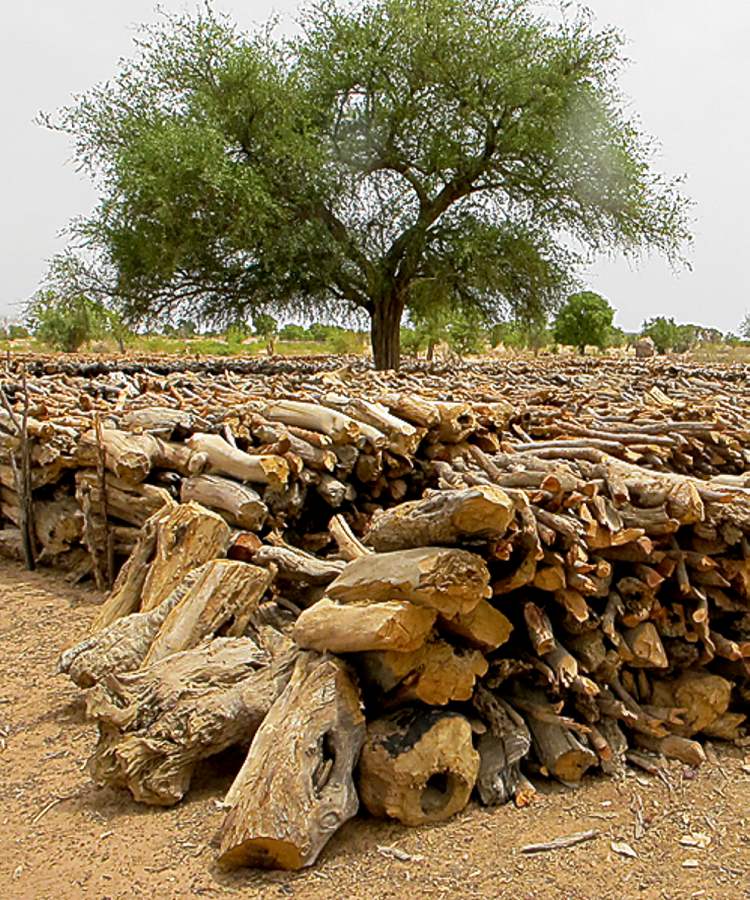
TORODI COMMUNE, Niger — On the side of a dirt track in southwestern Niger, long rows of neatly stacked wood tell the tale of the nation’s deforestation.
When farmers in the Sahel region find themselves short on food, one of the common coping strategies involves cutting down trees, selling the wood and using the cash to buy millet and other staples.
This in itself would be disastrous in one of the most environmentally degraded places on the planet. But wood sales are only one reason Niger’s trees are disappearing.
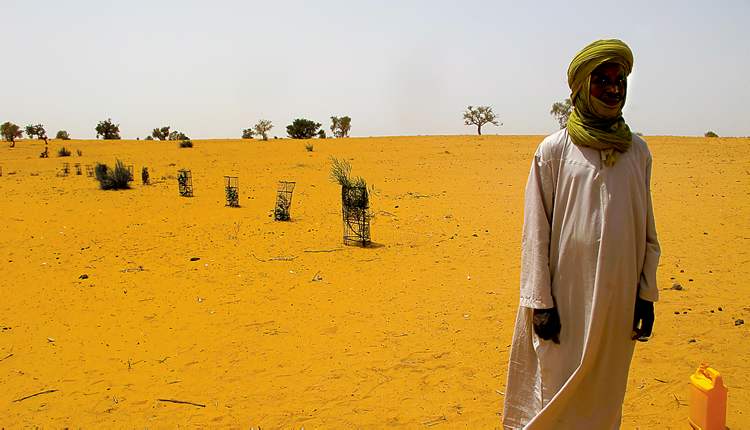
Decades of declining agricultural productivity have led millet and sorghum farmers to plant crops on every available patch of land, which often means removing the trees and shrubs that hold the soil in place.
Decreasing forage for goats and sheep, which have replaced gazelles and addax as the dominant ungulates in the Sahel, have led nomadic herders to allow their animals to mow down young trees before they have a chance to mature.
And if that isn’t enough, entire species of trees are disappearing from the Sahel as a result of rising temperatures.
According to research published late in 2011, one in six trees across the entire Sahel region died during a 50-year period, based on aerial photographs dating from 1954 to 1989, field surveys of the same areas from 2000 to 2002 and high-definition satellite images taken in 2002.
The same study also found one in five of the Sahel’s tree species was extirpated from the region during the same time frame and that vegetation has been moving to the south, toward tropical West Africa.
The primary factors behind these changes were the warming trend in the region and decreasing rainfall, more than declining soil fertility and the increasing human population, said Patrick Gonzalez, who led the research while at the University of California, Berkeley and is now climate change scientist for the U.S. National Park Service.
Unlike abstract discussions of climate change in the Canadian Arctic, where research focuses on the likes of increased mercury runoff from melting permafrost or declining summer ice cover, ordinary people can comprehend the disappearance of trees.
“One of the big advantages of this specific research is we have multiple lines of information, with multiple sets of data, involving trees on the ground,” Gonzalez said.
Some academics in the satellite-imagery field maintain the Sahel is getting greener. Gonzalez said this is not the case because satellite imaging of African vegetation only began in the 1980s, at the height of a drought cycle.
Slight increases in precipitation during the 1990s have not led to complete recovery of vegetation, as increased temperatures in the Sahel — which has warmed one degree in 50 years, according to separate U.S. Geological Survey research — have led to more evaporation from the ground and transpiration from plants.
As a response to deforestation, development groups in Niger and other Sahelian nations try to persuade herders and farmers to reverse the deforestation trends.
Tree-planting is a common feature of work-for-food programs, with decidedly mixed results. In many areas, sheep and goats have gobbled up young plantings before they have time to mature.
Herders are encouraged to leave a few branches of trees intact if they must cut wood for fuel or construction materials.
And farmers are being convinced of the benefits of the acacia albida tree, which has the unusual ability to shed its leaves during the brief rainy season, thus allowing millet crops to have full access to what little precipitation falls, as well as shade from the sun during the dry season.
Another drought-resistant species of acacia yields edible seeds that may be added to millet to make food supplies go further, said Aaron Thacher, a biologist working for development organization Samaritan’s Purse.
Reforestation involving several trees has been relatively successful in the slightly more fertile region around Maradi, near Niger’s southern border with Nigeria, where increasing vegetation has attracted insects that allow birds and rabbits to return to the area, Thacher added.
Most populated regions of Niger, however, appear to be indistinguishable from desert during the dry season. Only the presence of dry stalks from last year’s disastrous millet crop betrays that what appears to be sand is actually soil, albeit of poor quality.

In the village of Kolmane at the edge of the Sahel, where the Sahara Desert pushes southward, partly submerged trees illustrate the recent advance of sand dunes.
Increased tree cover elsewhere in Niger is of little consolation to Hussein Youhou, who can see the edge of a dune — stabilized by planted trees — from the front of his family compound.
“When I was a child, the sand was from the village,” he said through a translator, noting the village has been around for a long time.
“Even the parents of the parents of our parents lived here.”
bartley.kives@freepress.mb.ca
History
Updated on Thursday, May 10, 2012 11:10 AM CDT: amends that decreasing rainfall a factor as well as warming trend
Updated on Thursday, May 10, 2012 11:13 AM CDT: amends Gonzolez's quote to say "trees on the ground" not "real organisms on the ground"
Updated on Thursday, May 10, 2012 11:15 AM CDT: Amends "have not led to moister soil" to "have not led to complete recovery of vegetation"