

Assisted suicide back in public spotlight
Winnipegger returns attention to controversial issue

Advertisement
Read this article for free:
or
Already have an account? Log in here »
To continue reading, please subscribe:
Digital Subscription
One year of digital access for only $1.44 a week*
- Enjoy unlimited reading on winnipegfreepress.com
- Read the E-Edition, our digital replica newspaper
- Access News Break, our award-winning app
- Play interactive puzzles
*Billed as $5.77 plus GST every four weeks. After 52 weeks, price increases to the regular rate of $19.95 plus GST every four weeks. Offer available to new and qualified returning subscribers only. Cancel any time.
To continue reading, please subscribe:
Add Free Press access to your Brandon Sun subscription for only an additional
$1 for the first 4 weeks*
- Enjoy unlimited reading on winnipegfreepress.com
- Read the E-Edition, our digital replica newspaper
- Access News Break, our award-winning app
- Play interactive puzzles
*Your next Brandon Sun subscription payment will increase by $1.00 and you will be charged $17.95 plus GST for four weeks. After four weeks, your payment will increase to $24.95 plus GST every four weeks.
Read unlimited articles for free today:
or
Already have an account? Log in here »
Hey there, time traveller!
This article was published 11/04/2013 (4947 days ago), so information in it may no longer be current.
Politicians might not like it, but the issue of assisted suicide is back on the public agenda thanks to Winnipegger Susan Griffiths.
As many as four out of five Canadians agree it should be legal, but assisted suicide remains an issue in which the relatively few opponents would vehemently fight any move to make it legal.
The issue, which has been explored extensively in previous cases involving Sue Rodriguez and Gloria Taylor, has risen again like a political Lazarus because of Griffiths, 72. She made local and then national headlines earlier this week when she said her terminal diagnosis forced her to go to Switzerland, where she can die legally.
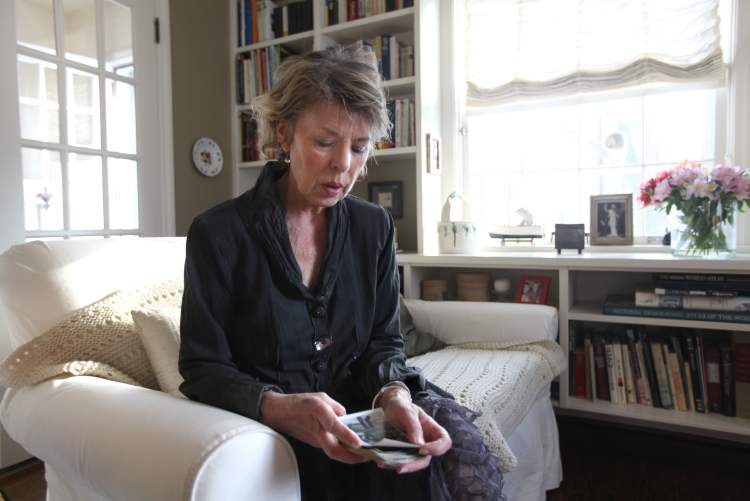
Griffiths, who was diagnosed last year with a rare brain disorder, multiple system atrophy, has said she wants to die now when she can have, in her words, “a peaceful and painless end,” instead of from her illness, which is incurable and terminal.
Mario Canseco, vice-president of Angus Reid Public Opinion, said Wednesday he doesn’t think anything has changed since his company’s poll last year that showed 80 per cent of Canadians support having a doctor, when asked by a “competent, fully-informed, terminally ill patient,” assist the person in ending their life.
And Canseco said it doesn’t surprise him the Harper government has announced it is not reopening a debate on the issue.
“The Conservatives don’t want to touch this,” Canseco said.
“It’s a tough one. Even in Britain when there was a Labour government, there was no movement.
“It would be a humungous surprise if the Conservatives did.”
Canseco said even for an issue with so much support, politicians still think there could be unexpected pitfalls.
“This government looks at everything from an electoral way so it just wants to focus on economic management.”
But John Wright, a pollster with Ipsos Public Affairs, said it isn’t an issue government can avoid forever.
“We have more people over 50 now and there will continue to be growing pressure for things to change so human beings don’t have to live through a torturous period,” Wright said.
“We’re going to be forced into a debate because of the growing wave of the population. I can see it coming and we all can.”
People representing organizations that work with people living with disabilities have already said they disagree with reopening debate on assisted suicide.
As well, Mary Ellen Douglas, national organizer of the Campaign Life Coalition, said both now and in future her organization will fight any change to federal laws to allow assisted suicide.
“Hopefully our government will not open this again,” Douglas said.

“People who feel this way need compassionate care and help. With many people, it is the pain people are worried about and pain can be controlled.”
Scott MacKay, president of Probe Research, said while he has never done a poll on the issue, he knows Griffiths has been successful in one area: “This has forced the issue back onto the public agenda.”
Columnist Lindor Reynolds and photojournalist Ruth Bonneville were with Susan Griffiths and her family during her last week in Winnipeg. Read Saturday’s FYI for the full story of Griffiths’ decision to die and the anguish that led her there.
kevin.rollason@freepress.mb.ca
Kevin Rollason
Reporter
Kevin Rollason was a general assignment reporter at the Free Press.
Our newsroom depends on a growing audience of readers to power our journalism. If you are not a paid reader, please consider becoming a subscriber.
Our newsroom depends on its audience of readers to power our journalism. Thank you for your support.
Kevin Rollason
Reporter
Kevin Rollason was a general assignment reporter at the Free Press.
Our newsroom depends on a growing audience of readers to power our journalism. If you are not a paid reader, please consider becoming a subscriber.
Our newsroom depends on its audience of readers to power our journalism. Thank you for your support.


Advertisement Advertise With Us
Advertisement Advertise With Us
History
Updated on Thursday, April 11, 2013 6:43 AM CDT: replaces photo