

Sinclair roamed streets in winter, doctor testifies
Inquest hears of hardscrabble life

Advertisement
Read this article for free:
or
Already have an account? Log in here »
To continue reading, please subscribe:
Monthly Digital Subscription
$1 per week for 24 weeks*
- Enjoy unlimited reading on winnipegfreepress.com
- Read the E-Edition, our digital replica newspaper
- Access News Break, our award-winning app
- Play interactive puzzles
*Billed as $4.00 plus GST every four weeks. After 24 weeks, price increases to the regular rate of $19.95 plus GST every four weeks. Offer available to new and qualified returning subscribers only. Cancel any time.
Monthly Digital Subscription
$4.99/week*
- Enjoy unlimited reading on winnipegfreepress.com
- Read the E-Edition, our digital replica newspaper
- Access News Break, our award-winning app
- Play interactive puzzles
*Billed as $19.95 plus GST every four weeks. Cancel any time.
To continue reading, please subscribe:
Add Free Press access to your Brandon Sun subscription for only an additional
$1 for the first 4 weeks*
*Your next subscription payment will increase by $1.00 and you will be charged $16.99 plus GST for four weeks. After four weeks, your payment will increase to $23.99 plus GST every four weeks.
Read unlimited articles for free today:
or
Already have an account? Log in here »
Hey there, time traveller!
This article was published 13/08/2013 (4605 days ago), so information in it may no longer be current.
For three days Brian Sinclair, locked out of his rooming house by his landlord and without his seizure medication, wandered the wintry streets of Winnipeg looking for shelter.
Sinclair never found a safe haven before he passed out in a fetal position in the cold outside a church he was hoping to get inside on Feb. 1, 2007.
By the time Sinclair was found, he was frozen to a wall, had severe frostbite to his legs, and his internal core body temperature was 28 C instead of the average normal of 37 C.
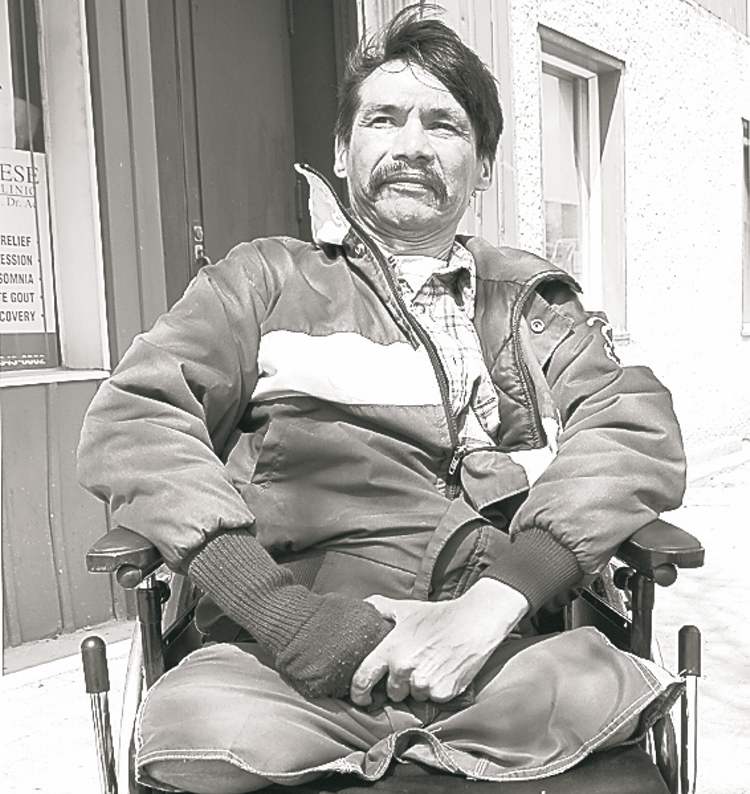
His legs were amputated above the knee three days later.
Dr. Maria Araneda, who testified at an inquest Monday looking into the circumstances of the 45-year-old Sinclair’s 2008 death in Health Sciences Centre’s emergency department waiting room, cared for Sinclair after the amputations.
Araneda told provincial court Judge Tim Preston that during months of care both she and a psychiatrist diagnosed Sinclair as not being competent to look after his own affairs, and she got the public trustee’s office involved with his care before he was discharged in early May.
“I wanted more robust support than just home care,” she said, recalling Sinclair’s care while looking at his medical chart.
“He’s not competent to make medical decisions, manage finances… he would lack capacity in arranging and organizing his care needs.
“He wouldn’t look at a medication bottle to find out how to take it. His short-term memory was OK, but his long-term memory wasn’t.”
Sinclair was sent to HSC’s emergency department in September 2008, after a doctor at a clinic diagnosed his urine catheter as being blocked and wrote a note for the man to give to staff at the emergency room.
The inquest has been told Sinclair briefly spoke to a medical person in the department before going to the waiting room in his wheelchair.
Thirty-four hours later, Sinclair was found dead there. An autopsy and review of hospital security videos found Sinclair had died from an infected bladder anywhere from two to seven hours before being found.
The note from the doctor was in his pocket.
Araneda said while she may have thought Sinclair was not competent enough to live without help on his own, she respected his wishes that he not be placed into a nursing home.
‘He’s not competent to make medical decisions, manage finances… he would lack capacity in arranging and organizing his care needs’ — Dr. Maria Araneda
She said a nursing home “takes away a significant amount of his independence.”
“That’s what he wanted and that’s what I wanted to support.”

Araneda said during the three months Sinclair was in hospital being treated, he failed two tests to void urine on his own when a catheter was pulled out. She said she recommended home-care nurses change the catheter every month or more frequently if necessary.
She said Sinclair’s release from hospital was delayed because it took a while to find a residence for him, to set up the seven-days-a-week outside nursing care he needed, to move a hospital bed into his place, and — after exhibiting “aggressive behaviour” — to do a behaviour assessment to gauge the risk to people going into his place to care for him.
When asked if it would have been “common sense” to check on a patient’s well-being if you noticed they were sitting in an emergency room waiting room when you finished a working shift and were still there when you returned, Araneda said “I would approach the patient if it happened to me.
“Common sense isn’t as common as you’d like it to be.”
kevin.rollason@freepress.mb.ca
Kevin Rollason is a general assignment reporter at the Free Press. He graduated from Western University with a Masters of Journalism in 1985 and worked at the Winnipeg Sun until 1988, when he joined the Free Press. He has served as the Free Press’s city hall and law courts reporter and has won several awards, including a National Newspaper Award. Read more about Kevin.
Every piece of reporting Kevin produces is reviewed by an editing team before it is posted online or published in print — part of the Free Press‘s tradition, since 1872, of producing reliable independent journalism. Read more about Free Press’s history and mandate, and learn how our newsroom operates.
Our newsroom depends on a growing audience of readers to power our journalism. If you are not a paid reader, please consider becoming a subscriber.
Our newsroom depends on its audience of readers to power our journalism. Thank you for your support.
Kevin Rollason is a general assignment reporter at the Free Press. He graduated from Western University with a Masters of Journalism in 1985 and worked at the Winnipeg Sun until 1988, when he joined the Free Press. He has served as the Free Press’s city hall and law courts reporter and has won several awards, including a National Newspaper Award. Read more about Kevin.
Every piece of reporting Kevin produces is reviewed by an editing team before it is posted online or published in print — part of the Free Press‘s tradition, since 1872, of producing reliable independent journalism. Read more about Free Press’s history and mandate, and learn how our newsroom operates.
Our newsroom depends on a growing audience of readers to power our journalism. If you are not a paid reader, please consider becoming a subscriber.
Our newsroom depends on its audience of readers to power our journalism. Thank you for your support.
Advertisement Advertise With Us
Advertisement Advertise With Us