

Humantree links art to charitable hearts
Funds help change lives of kids in Africa

Advertisement
Read this article for free:
or
Already have an account? Log in here »
To continue reading, please subscribe:
Monthly Digital Subscription
$1 per week for 24 weeks*
- Enjoy unlimited reading on winnipegfreepress.com
- Read the E-Edition, our digital replica newspaper
- Access News Break, our award-winning app
- Play interactive puzzles
*Billed as $4.00 plus GST every four weeks. After 24 weeks, price increases to the regular rate of $19.95 plus GST every four weeks. Offer available to new and qualified returning subscribers only. Cancel any time.
Monthly Digital Subscription
$4.99/week*
- Enjoy unlimited reading on winnipegfreepress.com
- Read the E-Edition, our digital replica newspaper
- Access News Break, our award-winning app
- Play interactive puzzles
*Billed as $19.95 plus GST every four weeks. Cancel any time.
To continue reading, please subscribe:
Add Free Press access to your Brandon Sun subscription for only an additional
$1 for the first 4 weeks*
*Your next subscription payment will increase by $1.00 and you will be charged $16.99 plus GST for four weeks. After four weeks, your payment will increase to $23.99 plus GST every four weeks.
Read unlimited articles for free today:
or
Already have an account? Log in here »
Hey there, time traveller!
This article was published 28/12/2013 (4479 days ago), so information in it may no longer be current.
When you buy a framed photograph or some other artwork you pay for it and put it on your wall to admire.
But there are some photographs and pieces of art that do even more — they help change the life of a child in Africa.
That’s what happens when you buy a piece of art through Humantree, a non-profit organization based here in Winnipeg.
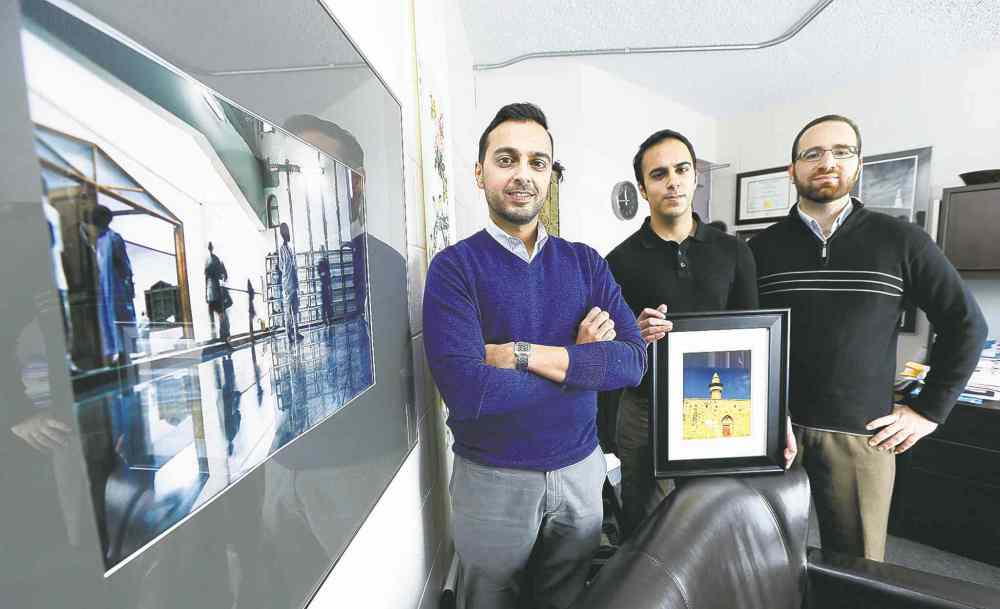
Humantree was founded in 2005 by two brothers. They have since been joined by another brother and a friend.
With the motto “Local artists, Global charity,” the organization may be small, but it punches above its weight by selling donated art and putting 100 per cent of the profits to help many children and psychology students in Africa.
“I had requests from people to buy my photos, but I never felt comfortable selling my work,” Rehman Abdulrehman said recently.
“I’m originally from Zanzibar, and I take photos in really exotic places. We thought selling my work would be a good way to raise money for the kind of places I go to that need help.”
At first, those profits went exclusively to Small Kindness, a charity affiliated with the United Nations and founded by Yusuf Islam, the musical artist formerly known as Cat Stevens. The charity works with impoverished people in Albania, Bosnia and Herzegovina, Iraq, Indonesia, Kosovo, Serbia, and Montenegro.
Yusuf funds the charity’s administrative costs, so 100 per cent of donations to Small Kindness go to help people.
But now Humantree also helps children with mental health issues in Africa.
Humantree allows the purchasers of the art to decide which direction the profits should go.
“Before I became a psychologist, I was always interested in art. Artists are very giving, but they are also starving artists,” Abdulrehman said.
“We do a lot of work now in Africa. We work with orphanages, one in Tanzania. Most children over there are not accepted into an orphanage when they reach a certain age, so they end up on the street. We work with one that takes in older children.”
Abdulrehman said Humantree now has a partnership with the University of Manitoba and the Muhimbili University of Health and Allied Sciences in Tanzania to help train students as clinical psychologists.
“I provide supervision of the students to provide psychological services for the kids in the orphanage,” he said, adding the Department of Clinical Health Psychology, at the University of Manitoba funds his flight costs to Tanzania as a part of his teaching duties at Muhimbili University. The Muhimbili University is responsible for his room and board.
“Some of the children have run away from home because they were sexually or physically abused. We help them. As well, Humantree has also built a mental health library for the school there. We collected all new textbooks and had them shipped over.”
Margaret Hogan, co-ordinator of the masters degree in clinical psychology program at Muhimbili University, said they are grateful to have received the books for the library.
“The students, while they had some reading materials like test books, these were inadequate,” Hogan said in an email from Tanzania.
“What a surprise to all of us when a large consignment of books and journals arrived. The great thing is that they were recent and no textbook was earlier than 2006 and many of them were actually new books. These books continue to be the main books we use for the program.”
Benjamin Myovela, a past student in the program, described getting the books as “like rain in the desert.”
Tasiana Njau, who graduated this year, said the books “made my studying easy as I could access books anytime I wanted.
“It did save me and my colleagues so much trouble and cost of searching and buying books. Since the books are very current and expensive ones, I must confess that it would have been impossible for me to get access or buy them online.”
Mokhtar Joundi, who also contributes photographs to Humantree and developed its website, said he joined the organization because he believes what it does is unique.
“It is humbling to think that we can have even a small impact on people — especially children — who do not have sufficient resources in the critical area of education, nor the proper tools to confront challenges in the area of mental health,” Joundi said.

“I think that living in Canada, we need to appreciate the resources and amenities we have and every person should assess what unique skills or abilities they possess that can be used to contribute positively in some way to those less privileged.”
“The book will help parents and children develop skills to prevent and treat anxiety,” he said.
“Five per cent of all profits will go to Humantree. Our ultimate goal is to develop products to disseminate in African countries.
“We’re thinking big, but we’re being practical.”
kevin.rollason@freepress.mb.ca
Kevin Rollason is a general assignment reporter at the Free Press. He graduated from Western University with a Masters of Journalism in 1985 and worked at the Winnipeg Sun until 1988, when he joined the Free Press. He has served as the Free Press’s city hall and law courts reporter and has won several awards, including a National Newspaper Award. Read more about Kevin.
Every piece of reporting Kevin produces is reviewed by an editing team before it is posted online or published in print — part of the Free Press‘s tradition, since 1872, of producing reliable independent journalism. Read more about Free Press’s history and mandate, and learn how our newsroom operates.
Our newsroom depends on a growing audience of readers to power our journalism. If you are not a paid reader, please consider becoming a subscriber.
Our newsroom depends on its audience of readers to power our journalism. Thank you for your support.
How to help
Want to donate to Humantree, buy a piece of art or ask a question? Go to www.humantree.ca or email Nadiah Sidik, director of operations, at nadiah@humantree.ca.
Kevin Rollason is a general assignment reporter at the Free Press. He graduated from Western University with a Masters of Journalism in 1985 and worked at the Winnipeg Sun until 1988, when he joined the Free Press. He has served as the Free Press’s city hall and law courts reporter and has won several awards, including a National Newspaper Award. Read more about Kevin.
Every piece of reporting Kevin produces is reviewed by an editing team before it is posted online or published in print — part of the Free Press‘s tradition, since 1872, of producing reliable independent journalism. Read more about Free Press’s history and mandate, and learn how our newsroom operates.
Our newsroom depends on a growing audience of readers to power our journalism. If you are not a paid reader, please consider becoming a subscriber.
Our newsroom depends on its audience of readers to power our journalism. Thank you for your support.
Advertisement Advertise With Us
Advertisement Advertise With Us
History
Updated on Saturday, December 28, 2013 11:28 AM CST: Corrects funding info