Olympic committee’s support of dictatorships must end
Advertisement
Read this article for free:
or
Already have an account? Log in here »
To continue reading, please subscribe:

Digital Subscription
One year of digital access for only $205*
- Enjoy unlimited reading on winnipegfreepress.com
- Read the E-Edition, our digital replica newspaper
- Access News Break, our award-winning app
- Play interactive puzzles
*First annual payment billed as $205.00 + GST for one year. This annual subscription will automatically renew at $233.00 + GST every 52 weeks (10% off the regular annual price of $259.35). Offer available to new and qualified returning subscribers only. Cancel any time.
To continue reading, please subscribe:
Add Free Press access to your Brandon Sun subscription for only an additional
$1 for the first 4 weeks*
- Enjoy unlimited reading on winnipegfreepress.com
- Read the E-Edition, our digital replica newspaper
- Access News Break, our award-winning app
- Play interactive puzzles
*Your next Brandon Sun subscription payment will increase by $1.00 and you will be charged $17.95 plus GST for four weeks. After four weeks, your payment will increase to $24.95 plus GST every four weeks.
Read unlimited articles for free today:
or
Already have an account? Log in here »
Hey there, time traveller!
This article was published 22/02/2014 (4605 days ago), so information in it may no longer be current.
EDMONTON — Along with the entertainment, the Sochi Olympics has provided Russia the opportunity to portray its “softer” side — and that is precisely the problem.
Back in 2008 the world watched in awe as another dictatorship, China, put on a show for the ages. The opening ceremonies were heralded as an incredible demonstration of national pride and showmanship. According to Richard Williams at the Guardian at the time: “The ceremony that opened the 29th Olympic games last night outdid all of its predecessors in numbers, colour, noise and expense, demonstrating to the world that the new China intends to make its presence felt.” China was seen as a great host, incredibly proud of its history, and looking to the future as it announced its arrival to modernity.
Of course, immediately afterwards, China went back to being an oppressive, authoritarian regime with little interest in western norms and that is still known to participate in human trafficking, organ harvesting, state-sponsored kidnapping, torture and murder.
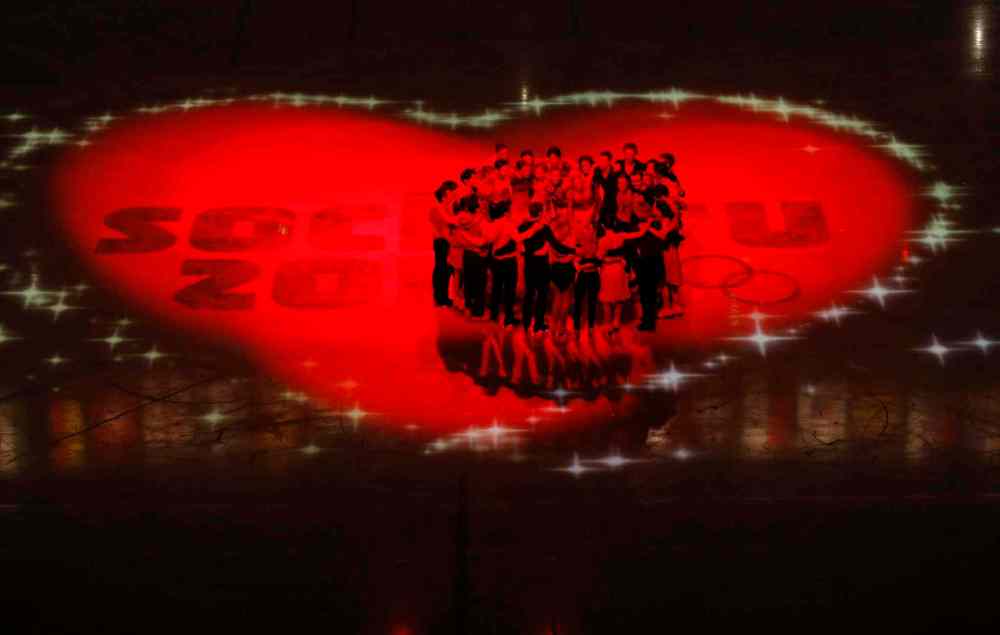
Now, it would seem the world is letting the same mythology surround Russia. Vladimir Putin has been humanized, even dropping by Canada House to wish the athletes luck in “everything but hockey.” As the world has kept its eye on the Games, Russia has been taking full advantage of the Olympics as a smoke screen for its behaviour on the international political stage.
Since the Sochi Games began, Russia has continued to prevent any progress on peace talks for the Syrian Civil War. In fact, Russia has done more to harm opportunities for a solution in Syria throughout the Olympics than in the months prior to the Games starting. It would seem Russia is more interested in the talks breaking down and taking jabs at the utterly clueless Obama administration than most anything else at the peace talks, and is now working diligently to ensure Syrian President Bashir Assad is not ousted from power. While Russia has effectively stalled the talks, Assad has unleashed his latest round of violence on the Syrian people.
It would also appear that any agreement over Iran’s nuclear program is again unlikely. Iran is now publicly stating that it will not halt its nuclear program nor will it shut down any of its nuclear facilities. Russia has been Iran’s key ally and seller of nuclear technology so it is not surprising the Russians have been excusing Iran from the start. Admittedly, it was naive of the Americans to believe that Iran would curtail its nuclear ambitions, but tensions have steadily increased throughout the last week as six world powers (including Russia) and Iran met in Vienna in an effort to broker a deal. It was difficult to believe actual progress would be made.

Then there is the escalating crisis in Ukraine, Russia’s own backyard, where, for nearly three months, Ukrainian protestors have been calling for the resignation of President Viktor Yanukovych. A key issue in the Ukraine crisis has been the role of Russia and its constant meddling in Ukrainian affairs. The bulk of Yanukovych’s support in Ukraine is derived from the country’s eastern and southern regions that have strong Russian ties. Negotiations and prospects for progress were seriously damaged this week as another round of violence erupted with the government now referring to protestors as “terrorists”.
The Olympic Games are supposed to be about the world’s top athletes coming together in the spirit of peace to compete on an equal playing field. Like China, Russia is effectively using these Games as a means to distract observers from its true nature. It is time the International Olympic Committee reconsidered just who it is legitimizing when it awards the Olympic Games.
Robert Murray is an adjunct professor of political science in the department of political science at the University of Alberta and a senior fellow of security and defence at AIMS.