Opinion

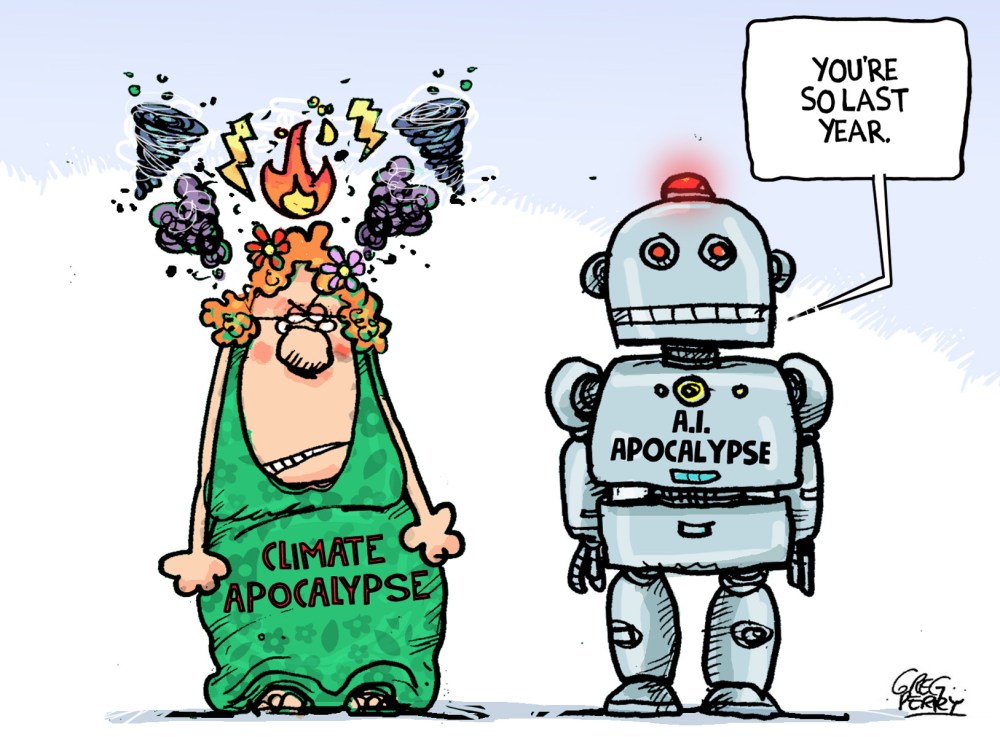
Editorial cartoon for Dec. 1, 2025

Doctor’s notes: a practice overdue for cancellation

Editorial 3 minute read Preview

Doctor’s notes: a practice overdue for cancellation

Editorial 3 minute read 2:00 AM CST

It is becoming increasingly clear that the battle to recruit physicians within Canada — and across North America — may come down to the quality of life a jurisdiction can offer, and not the size of the paycheque.

Case in point: in the recent throne speech delivered by Manitoba’s NDP government, there was a pledge to pass legislation banning employers from seeking sick notes for employee absences of one week or less. Although this may seem like a small, bordering on insignificant, gesture, it is directly connected to a major campaign to streamline the practice of medicine by reducing the administrative burden faced by physicians.

Doctors Manitoba, the organization that represents physicians in contract talks with the province, has long argued that indiscriminate demands for sick notes was adding an unnecessary burden on physicians. Physicians claim that sick notes for employees who miss a week or less of work are a waste of time; one in three people seeking notes for short-term absences are actually symptom free by the time they get in to see a doctor. Requiring the notes seems more like a litmus test for trust in employees than it does an actual barometer of employee health.

Earlier this year, Doctors Manitoba estimated more than 36,000 hours of primary care time was consumed writing 600,000 sick notes at a cost of $8 million annually to the health-care system. The organization said putting limits on sick notes would free up doctors to offer up to 300,000 additional patient visits. That, Doctors Manitoba argued, would be equivalent to adding 50 new physicians to the province’s total roster.

Read
2:00 AM CST

Tim Smith / Brandon Sun FILES

Nichelle Desilets, president of Doctors Manitoba

Tim Smith / Brandon Sun FILES
                                Nichelle Desilets, president of Doctors Manitoba

Carney tries to be slick but pipeline games won’t end well

Niigaan Sinclair 4 minute read Preview

Carney tries to be slick but pipeline games won’t end well

Niigaan Sinclair 4 minute read Saturday, Nov. 29, 2025

Prime Minister Mark Carney and Alberta Premier Danielle Smith recently agreed to a deal committing their governments to work towards building an oil pipeline to the northwest coast of British Columbia “in the national interest.”

Read
Saturday, Nov. 29, 2025

Prime Minister Mark Carney, right, signs an MOU with Alberta Premier Danielle Smith in Calgary, on Nov. 27. (Jeff McIntosh / The Canadian Press)

Prime Minister Mark Carney, right, signs an MOU with Alberta Premier Danielle Smith in Calgary, on Nov. 27. (Jeff McIntosh / The Canadian Press)

Protecting nature, culture and Churchill’s tourism economy

Ron Thiessen 4 minute read Preview

Protecting nature, culture and Churchill’s tourism economy

Ron Thiessen 4 minute read 2:00 AM CST

Churchill’s marine environment stands on the edge of profound change. Government investment is accelerating to transform the Port of Churchill into a year-round shipping hub. Without careful planning, the very wildlife that makes this region globally renowned could be irreparably harmed.

Read
2:00 AM CST

Clive Jackson/File

A polar bear near Churchill. Polar bears can’t speak for themselves, but Canadians can advocate for a conservation area on their behalf.

Clive Jackson/File
                                A polar bear near Churchill. Polar bears can’t speak for themselves, but Canadians can advocate for a conservation area on their behalf.

You don’t really need to get matching sweaters

Jen Zoratti 5 minute read Preview

You don’t really need to get matching sweaters

Jen Zoratti 5 minute read Updated: Yesterday at 3:32 PM CST

There’s a scene in the holiday classic A Charlie Brown Christmas in which Snoopy is frantically decorating his doghouse so he can enter the “spectacular super-colossal neighbourhood Christmas lights and display contest.”

Read
Updated: Yesterday at 3:32 PM CST

The hunt to find outliers of store-bought sameness

Deborah Schnitzer 4 minute read 2:00 AM CST

I rarely enter a shopping mall; even more rarely do I set foot in women’s clothing stores because, at 75, I am hard pressed to identify anything else I would ever need to purchase.

Letters, Dec. 1

7 minute read Preview

Letters, Dec. 1

7 minute read Updated: 7:56 AM CST

After Trump’s notorious 51st state insults and thinly veiled threats toward our national sovereignty, I made the immediate decision to no longer shop American. With firm resolve, I spent a good part of the following Saturday deactivating every online shopping account with an American company.

Read
Updated: 7:56 AM CST

JOHN WOODS / FREE PRESS
The Canada - USA border port south of Emerson, Manitoba Tuesday, April 15, 2025.

Reporter: tyler

JOHN WOODS / FREE PRESS
The Canada - USA border port south of Emerson, Manitoba Tuesday, April 15, 2025. 

Reporter: tyler

More Opinion

Destroying the rule of law

Gwynne Dyer 4 minute read 2:00 AM CST

Russia’s “big concession is they stop fighting, and they don’t take any more land,” U.S. President Donald Trump said last Tuesday, when asked what Russia was conceding in the thinly disguised surrender document he was trying to shove down Ukrainian throats. He truly is a 19th-century man at heart.

Those were the good old days, when anything you could conquer, you could keep. France took North Africa and Indo-China, Britain took South Africa and India, the United States took the Philippines and half of Mexico and Russia took a big chunk of China (but then lost it to Japan).

Actually, it was always like that. Every little human hunter-gatherer band fought to defend or expand its territories — and nobody changed the rules when they developed civilizations a few thousand years ago. War still delivered satisfactory results for the winners, so why would they change anything?

When the social and technological environment changes, human beings adapt — but they change as little as they have to. At least six different human mass civilizations emerged between 3,000 BC and 1,000 BC, and all of them retained the ancient institution of warfare. Indeed, we arrived in the 20th century with all that cultural baggage still intact.

Ukraine, explained by someone who knows

Judy Waytiuk 5 minute read 2:00 AM CST

Is it any wonder that Volodymyr Zelenskyy cannot trust a peace process engineered by Vladimir Putin, or any Russian, for that matter? For most of its history, Ukraine has been ruled by others — largely, the Russians — but somehow, has repeatedly thrown off the oppressive yoke.

The end of the First World War sparked a vicious Russian civil war overturning czarist rule, and Ukraine took a shot at freedom with its own War of Independence. The bloodshed lasted from March 1917 to November 1921. Ukraine got a brief, blood-tinged taste of that freedom for a year or two. But the Russians came back.

Somewhere during those few years, all four of my grandparents, still in their teens, were smuggled out by desperate peasant families, who sent them to Canada. They, and thousands of similar Ukrainian children (one child per family because even that was more than families could scrape up enough kopeks to fund) were chosen because they were the strongest and most likely to survive. Most worked their way across Europe, toiling on farms for pittances, arriving in Canada to rock-filled, thin-soiled land, gifted by Canada’s then-immigration minister, Clifford Sifton. He chose Ukrainians because the Prairies needed brute labour.

My baba on my father’s side had stitched vegetable seeds into the seams of her clothing and carried them to Canada, where she planted them and began selling vegetables in the old North End farmers market in Winnipeg. My mother was born in the family chicken coop — where they lived until there was enough money for gido to build a house.

Protective care centres for meth intoxication

Jitender Sareen, Ogo Chukwujama and Rob Grierson 4 minute read Saturday, Nov. 29, 2025

Bill 48 was passed on Nov. 5, extending the ability to hold individuals for 72 hours when their level of intoxication prevents them from safely caring for themselves. This change responds to the reality that methamphetamine intoxication, and the resulting psychosis or agitation, can last far longer than the 24-hour limit used for alcohol.

As leaders in the health system, we want to describe the clinical rationale behind this approach and emphasize the importance of evaluating its outcomes. Manitoba is facing a methamphetamine crisis that has changed how hospitals and emergency workers care for people in crisis. Unlike alcohol, meth intoxication lasts longer, is less predictable, and often leaves people unable to keep themselves safe. The new provincial sobering centre will include dedicated spaces for meth intoxication, as well as alcohol-related care, with additional capacity now being built to expand services.

When people are acutely intoxicated, at risk, and unable to make safe decisions, involuntary care is already part of standard medical practice. We do this every day for people experiencing delirium, brain injuries, acute psychosis, or overdose because our duty is to prevent harm. Whether that intervention occurs in hospital or in a sobering centre is based on the needs of the individual at the time.

Recognizing the meth crisis does not mean reducing people’s rights. It means admitting that our current system has gaps in caring for those who are temporarily incapacitated by severe stimulant intoxication.

LOAD MORE