

Light-rail option a silly fiction for Winnipeg
Advertisement
Read this article for free:
or
Already have an account? Log in here »
To continue reading, please subscribe:
Monthly Digital Subscription
$1 per week for 24 weeks*
- Enjoy unlimited reading on winnipegfreepress.com
- Read the E-Edition, our digital replica newspaper
- Access News Break, our award-winning app
- Play interactive puzzles
*Billed as $4.00 plus GST every four weeks. After 24 weeks, price increases to the regular rate of $19.95 plus GST every four weeks. Offer available to new and qualified returning subscribers only. Cancel any time.
Monthly Digital Subscription
$4.99/week*
- Enjoy unlimited reading on winnipegfreepress.com
- Read the E-Edition, our digital replica newspaper
- Access News Break, our award-winning app
- Play interactive puzzles
*Billed as $19.95 plus GST every four weeks. Cancel any time.
To continue reading, please subscribe:
Add Free Press access to your Brandon Sun subscription for only an additional
$1 for the first 4 weeks*
*Your next subscription payment will increase by $1.00 and you will be charged $16.99 plus GST for four weeks. After four weeks, your payment will increase to $23.99 plus GST every four weeks.
Read unlimited articles for free today:
or
Already have an account? Log in here »
Hey there, time traveller!
This article was published 06/05/2014 (4341 days ago), so information in it may no longer be current.
The light-rail transit versus bus rapid transit debate has resurfaced in Winnipeg.
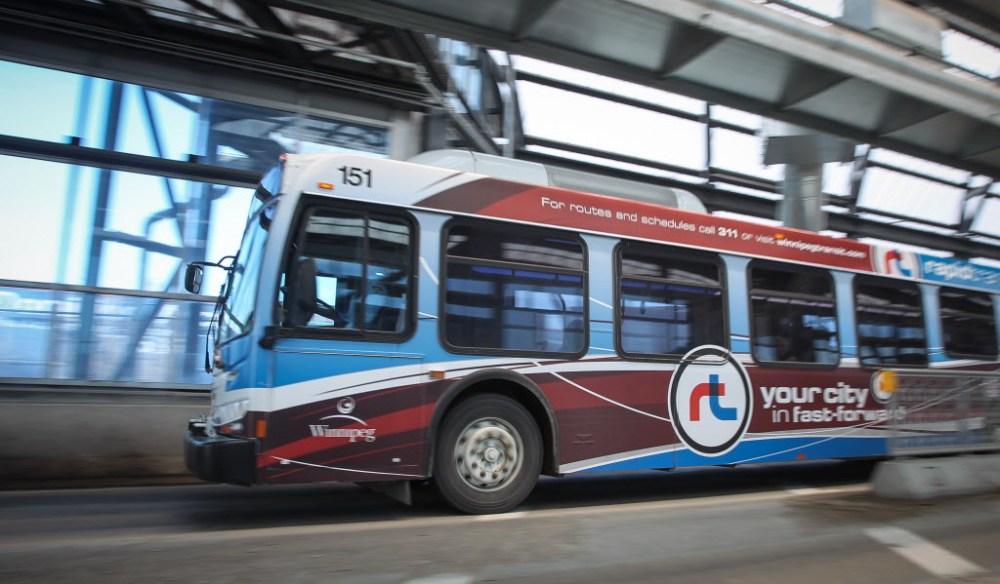
Despite the fact that the city has already built the first phase of its planned BRT system and funding for the second phase seemed to be a done deal, some city councillors want to go back to the drawing board. To understand why BRT is the right decision we should look to comparable cities with rapid-transit systems.
Portland, Ore., is considered a public transit mecca. Local officials have become accustomed to showing around starry-eyed politicians from across the country to show off their transit infrastructure. However, despite four rail expansions costing $2 billion between 1997 and 2009, transit ridership in Portland was stagnant and declined in 2014.
Portland transit accounts for roughly 10 per cent of daily trips. Winnipeg sits at 14 per cent. A study by Walkscore.com found Winnipeg has the fourth best access to public transit in Canada, and 12th best in North America. Winnipeg beat out not only Portland, but Los Angeles, Ottawa, Edmonton, and Calgary — all cities that have LRT.
(The ranking is determined by a variety of factors.)
The fact Winnipeg beat out Calgary and its vaunted C-Train system may seem surprising. Indeed, the system carries a lot of people. However, it is extremely pricey. The most recent expansion was projected to cost $700 million, but the final tab was $1.5 billion or $195 million per kilometre (a 2007 study found average North American rail projects come in 35.8 per cent over budget and see 60 per cent less ridership than projected).
Calgary has made a concerted effort to build ridership, including constraining parking downtown. That has driven Calgary’s downtown parking rates up to the second-highest in North America, right behind New York. Winnipeg has more downtown surface parking than most cities, so to push people onto LRT the city would require an aggressive campaign to develop on surface parking lots. That would be a tough sell.
Calgary’s obsession with ridership has led to an aggressive park-and-ride program, which is basically a glorified valet system that still requires many riders to have a car to get to work. Despite the effort, public transit accounts for less than nine per cent of trips.
Part of the difficulty with the debate is that many who have lived their whole lives in mid-sized cities view buses as déclassé. Since trains seem novel and are associated with bigger cities, they see them as modern and appealing. They can envision themselves potentially using them. That doesn’t mean they will. Few who live in suburban houses are going to give up their cars to ride the train.
For rapid transit to succeed, people have to be sold on the idea of locating near transit. Most of the people who will make that decision are students, or people from bigger cities who are used not only to rail but also buses. The target market for transit expansions is the type of people who care the least about the distinction between buses and rail.

Calgary shows us major related problems with LRT. The city boasts rail increases proximate real estate prices. Given that people typically are only willing to walk 200 metres to take transit and that low-income people are most likely to use transit, this is a problem. By concentrating all of the city’s transit capital investment into one corridor, it would increase the value of land precisely where low-income people need to live. Building a city-wide BRT system for a much lower cost will spread out the real estate impact, revitalizing neighbourhoods throughout the city. Moreover, BRT can be built quickly and modularly, whereas a city-wide LRT system would take decades at a staggering cost, despite there being nowhere near enough population or density to justify it.
Cleveland’s state-of-the-art BRT system provides a positive example for Winnipeg. A recent study found it attracted more investment to the corridor per dollar spent than any other project evaluated in North America. Each dollar spent attracted $114.54 in economic development. Only Kansas City’s MAX bus came close. The system is functionally similar to LRT, but on wheels — and much cheaper. A strong marketing campaign overcame the “suits don’t ride buses” mentality.
The obvious answer for Winnipeg is BRT to each corner of the city, rather than one LRT line. The city needs to be realistic about the needs of residents. The idea the city will grow ridership to the extent where it needs to replace BRT with LRT runs contrary to the evidence.
Steve Lafleur is a public policy analyst with the Frontier Centre for Public Policy (www.fcpp.org). He has lived in and studied the transit systems in Toronto, Calgary, and Portland, and is the author of The 25th Anniversary of the C-Train: A Critical Evaluation. He lives in Osborne Village and is primarily a pedestrian, and secondarily a transit user.
History
Updated on Tuesday, May 6, 2014 8:27 AM CDT: adds link
Updated on Tuesday, May 6, 2014 8:43 AM CDT: Corrects typo