

The malling of America is over
Advertisement
Read this article for free:
or
Already have an account? Log in here »
To continue reading, please subscribe:

Digital Subscription
One year of digital access for only $205*
- Enjoy unlimited reading on winnipegfreepress.com
- Read the E-Edition, our digital replica newspaper
- Access News Break, our award-winning app
- Play interactive puzzles
*First annual payment billed as $205.00 + GST for one year. This annual subscription will automatically renew at $233.00 + GST every 52 weeks (10% off the regular annual price of $259.35). Offer available to new and qualified returning subscribers only. Cancel any time.
To continue reading, please subscribe:
Add Free Press access to your Brandon Sun subscription for only an additional
$1 for the first 4 weeks*
- Enjoy unlimited reading on winnipegfreepress.com
- Read the E-Edition, our digital replica newspaper
- Access News Break, our award-winning app
- Play interactive puzzles
*Your next Brandon Sun subscription payment will increase by $1.00 and you will be charged $17.95 plus GST for four weeks. After four weeks, your payment will increase to $24.95 plus GST every four weeks.
Read unlimited articles for free today:
or
Already have an account? Log in here »
Hey there, time traveller!
This article was published 02/07/2014 (4401 days ago), so information in it may no longer be current.
Last week, Slate published photos of empty, decaying shopping malls from a new book, Autopsy of America. The images are arresting, and the timing couldn’t be better. Abandoned malls are hot: The Dead Malls Enthusiasts Facebook group boasts almost 14,000 members; a Google search of “dead malls” produces 5.7 million results; and the desolate interiors of these unused retailing meccas keep making cameos in thrillers and horror films.
The images point to some fundamental changes in suburban America and the retailing experience, though urbanists who hope that failing malls will aid downtown revitalization may be disappointed. The reality, as one might expect, is more complex.
Here are a few things to consider:
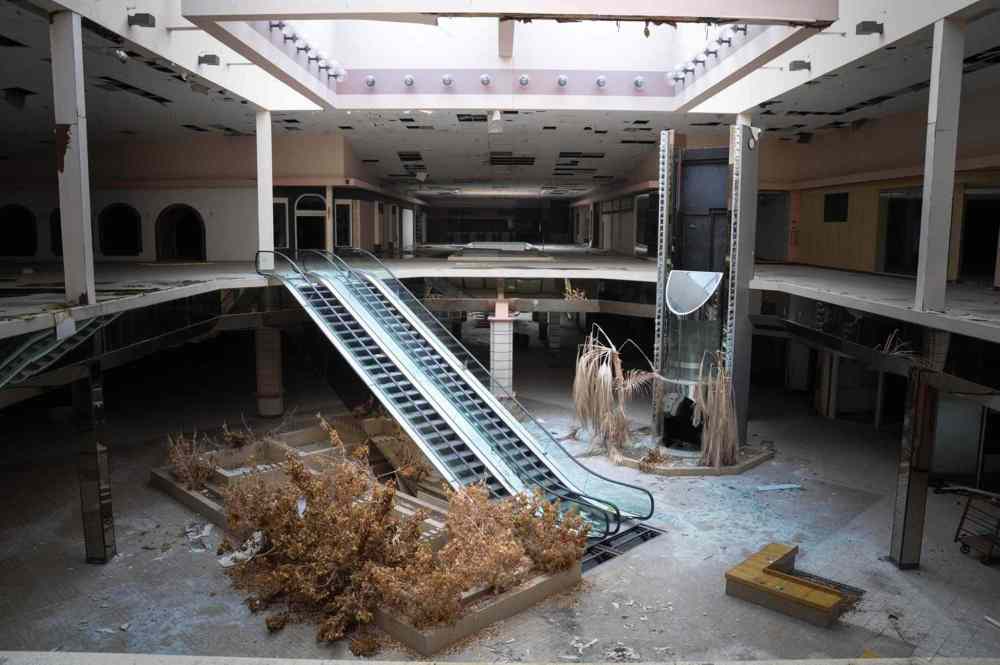
A Dying Breed: What some writers used to call the malling of America is done. Try to find anyone breaking ground for a new regional shopping mall, those hulking structures with 100-plus stores surrounded by vast asphalt parking lots. Since 1990, when 16 million-square-feet of mall space opened, building has tailed off, and 2007 was the first year in more than four decades when no large malls opened in the U.S. Only one has opened since then, in 2012.
Yesterday’s less sustainable suburban development types — the malls, office parks, and commercial strips — are increasingly being retrofitted into more sustainable, more urban places with buildings and spaces that foster communal support, diversity, and reduced vehicle miles traveled.
There’s just one catch: Malls that are failing tend to be in areas where the entire local economy is in the dumps, making it hard to see how urban retailing would benefit. In fact, some of the defunct malls are in the centre of cities that adopted the suburban shopping-mall model in a futile effort to bring people downtown.
This becomes clear just by eyeballing the list of dying and abandoned mall by state, listed appropriately enough, on the website deadmalls.com. New York leads the pack at 42, almost all of them upstate. It’s no coincidence that five of the 10 slowest growing metropolitan areas cited in a recent study commissioned by the U.S. Conference of Mayors were in upstate New York. Pennsylvania is next on the dead-malls list, with 28; Illinois and Ohio are tied at 27.

Buying Online: This one is pretty obvious. The Web is doing to malls what malls did to downtowns. Anything J.C. Penney — a classic anchor store for many big malls — can sell, Amazon.com seems to be able to offer for less. Amazon also has the luxury of very patient shareholders who don’t demand immediate profits.
Online shopping is a force few standard retailers have managed to overcome. Since 1999, when Web sales were insignificant, e-commerce has soared. Sales in 2014’s first quarter topped $71 billion, an annual rate of almost $300 billion a year, equal to more than six per cent of total U.S. retail spending.
The sense of community that teens and young adults once found by socializing at malls has also been displaced, in part, by social media. This, along with online shopping and carlessness, helps explain why foot traffic in all stores has declined so much.
Malls are still getting breaks. Last year, Minnesota’s legislature approved $250 million in tax benefits to help pay for a doubling in size of the country’s second-biggest mall, Mall of America. The money came from a fund set up to reduce economic disparities between rich and poor areas. New Jersey, meanwhile, has funneled $390 million to an struggling mall project in the Meadowlands known as Xanadu that was supposed to open in 2006. The developers now expect the mall to open in 2016 with a new name — American Dream.
James Greiff is a Bloomberg View editor.