

Onerous bail practices rapped
Suspects with addictions regularly set up to fail, rights groups allege
Advertisement
Read this article for free:
or
Already have an account? Log in here »
To continue reading, please subscribe:

Digital Subscription
One year of digital access for only $205*
- Enjoy unlimited reading on winnipegfreepress.com
- Read the E-Edition, our digital replica newspaper
- Access News Break, our award-winning app
- Play interactive puzzles
*First annual payment billed as $205.00 + GST for one year. This annual subscription will automatically renew at $233.00 + GST every 52 weeks (10% off the regular annual price of $259.35). Offer available to new and qualified returning subscribers only. Cancel any time.
To continue reading, please subscribe:
Add Free Press access to your Brandon Sun subscription for only an additional
$1 for the first 4 weeks*
- Enjoy unlimited reading on winnipegfreepress.com
- Read the E-Edition, our digital replica newspaper
- Access News Break, our award-winning app
- Play interactive puzzles
*Your next Brandon Sun subscription payment will increase by $1.00 and you will be charged $17.95 plus GST for four weeks. After four weeks, your payment will increase to $24.95 plus GST every four weeks.
Read unlimited articles for free today:
or
Already have an account? Log in here »
Hey there, time traveller!
This article was published 24/07/2014 (4382 days ago), so information in it may no longer be current.
The principle of being innocent until proven guilty is arguably the most sacred in the criminal justice system.
But this fundamental legal shield is being seriously undermined by the current bail system in Canada, and people who haven’t been convicted of any crime are being unnecessarily detained in droves, civil rights and inmate advocates charged on Wednesday.
The problem is profound in Manitoba, where 66 per cent of accused persons being housed in provincial jails sit waiting for their day in court, says Corey Shefman, a Winnipeg lawyer and president of the Manitoba Association for Rights and Liberties (MARL).
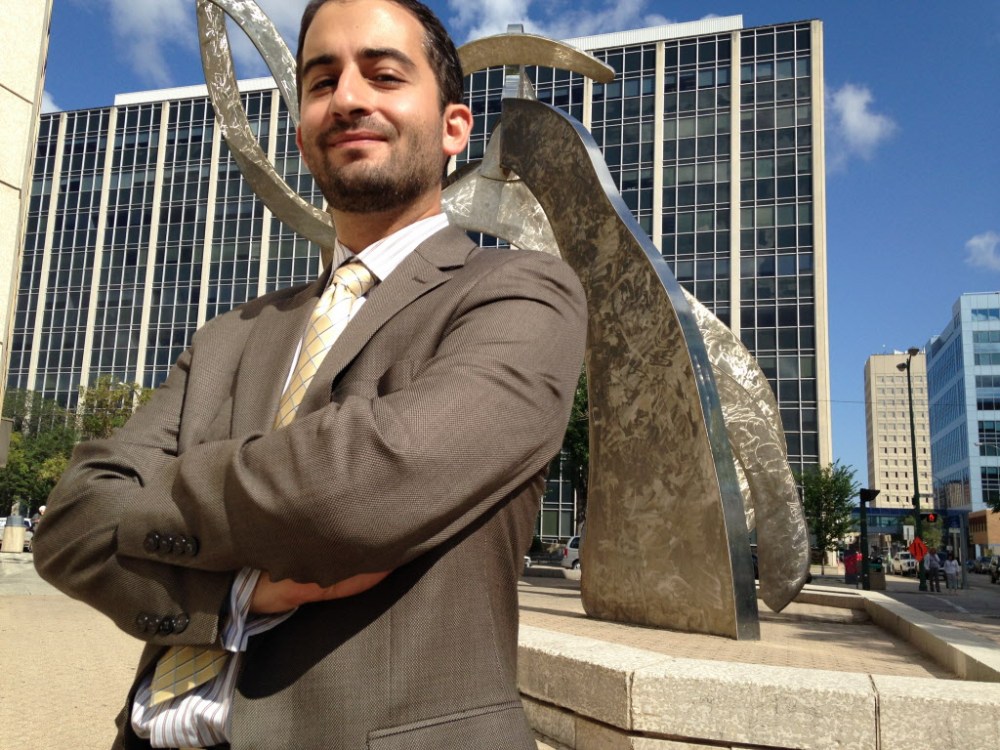
The key local issue, Shefman said, is a “zero-tolerance” Manitoba Justice policy when it comes to bail breaches.
Suspects, especially those with addictions, are essentially being set up to fail on release due to the restrictive and onerous bail conditions they’re placed on, he said.
Minor slip-ups — a missed meeting, being late for curfew — lead to them being rearrested and returned to remand, Shefman added.
“We need to make it stop,” said Shefman.
So-called “tough-on-crime” posturing many politicians favour is directly linked to the systemic problem with bail hearings, said Shefman.
“The tough-on-crime agenda is certainly a factor here,” Shefman said.
His organization is calling on Premier Greg Selinger and Justice Minister Andrew Swan to take decisive and swift action.
“It is no longer sufficient for the government to simply throw money at the problem,” said Shefman.
It costs $196 a day to house an inmate in a provincial jail in Manitoba, and soars even higher for youth suspects being held in custody.
MARL and the Canadian Civil Liberties Association released a massive report Wednesday examining bail practices in five Canadian provinces and territories for one year.
‘The tough-on-crime agenda is certainly a factor here’
— Corey Shefman, president of the Manitoba Association for Rights and Liberties
The study, entitled Set up to fail: Bail and the revolving door of pretrial detention, found the use of pretrial custody has risen nearly 300 per cent over the last three decades.
During the same time, crime rates have declined, with 2012 recorded as the safest year since 1972.
On an average day in 2012-13, more than 25,000 people were incarcerated in Canada’s provincial and territorial jails.
Of those, about 55 per cent were awaiting trial or a bail hearing — a higher number than convicted and sentenced offenders.
“The cycle of detention, restrictive release and rearrest could theoretically be justified if it were necessary for public safety or to ensure an accused person will return to court to face pending charges,” the study states. “Most of the people admitted to pretrial detention, however, are there for non-violent offences, and one in five people are there simply because they failed to comply with a bail or probation condition.”
Bail-related breach charges are on the increase and are clogging the courts, the study notes. Between 2006 and 2012, there was a 27 per cent increase in these charges to more than 167,000.
The study and its recommendations for change were being met with approval from inmate-advocacy agency the John Howard Society.
Manitoba’s chapter of the JHS has a specialized supervision and treatment program for male inmates, but it can only take so many clients, executive director John Hutton said.
It’s a “drop in the bucket compared to what’s actually needed,” said Hutton. People who enter and complete the JHS bail program have a very low reoffending rate, he added.
Keeping people in custody doesn’t enhance public safety, said Hutton. Forty per cent of people held without bail go on to commit another crime after they are released, he said.
Swan was unavailable Wednesday for comment.

A provincial spokeswoman said bail programs such as the one run by the JHS are specifically meant to help people who have difficulty meeting bail requirements.
“Adult bail practises zero tolerance on all orders,” said the spokeswoman. “The only discretion is in how quickly the charge is laid — they may not do it the day of a missed appointment but rather give the client a short time to contact them,” she said. The province also noted its range of programs available for people being held in custody.
— with files from The Canadian Press
james.turner@freepress.mb.ca
Breach charges big on court docket: survey
A Free Press survey of the adult criminal in-custody (non-domestic violence) court docket from Wednesday at Winnipeg’s Law Courts complex showed the following for newly arrested people being held on remand:
Of 46 men on the list, 19 of them faced bail-related breach charges.
Each of the five women on the docket faced bail breaches of some kind.
The most frequently laid breach involving the men was for failing to keep the peace and be of good behaviour (13 charges in total), followed by failing to abstain from alcohol and/or drugs (9) and breaching curfew (9).
One man in particular — an alcoholic previously granted a curative discharge for impaired driving — was charged with four separate breaches of an abstain condition.
Among women, failing to abstain and failing to attend court were the breaches most frequently seen.
What is the Canadian Civil Liberties Association recommending be done?
Call a temporary halt on the imposition of abstain conditions for people on bail.
End Manitoba’s “zero-tolerance” policy for bail breaches.
Revise policy directives used by prosecution services.
Reduce the reliance on sureties to secure a person’s release.
Pay immediate attention to systemic delays in bail courts.
Related Articles
Onerous bail practices rapped


Advertisement Advertise With Us
Advertisement Advertise With Us