

Control freaks and dictators
Successful prime ministers tend to have autocratic personalities
Advertisement
Read this article for free:
or
Already have an account? Log in here »
To continue reading, please subscribe:
Monthly Digital Subscription
$1 per week for 24 weeks*
- Enjoy unlimited reading on winnipegfreepress.com
- Read the E-Edition, our digital replica newspaper
- Access News Break, our award-winning app
- Play interactive puzzles
*Billed as $4.00 plus GST every four weeks. After 24 weeks, price increases to the regular rate of $19.95 plus GST every four weeks. Offer available to new and qualified returning subscribers only. Cancel any time.
Monthly Digital Subscription
$4.99/week*
- Enjoy unlimited reading on winnipegfreepress.com
- Read the E-Edition, our digital replica newspaper
- Access News Break, our award-winning app
- Play interactive puzzles
*Billed as $19.95 plus GST every four weeks. Cancel any time.
To continue reading, please subscribe:
Add Free Press access to your Brandon Sun subscription for only an additional
$1 for the first 4 weeks*
- Enjoy unlimited reading on winnipegfreepress.com
- Read the E-Edition, our digital replica newspaper
- Access News Break, our award-winning app
- Play interactive puzzles
*Your next Brandon Sun subscription payment will increase by $1.00 and you will be charged $17.95 plus GST for four weeks. After four weeks, your payment will increase to $24.95 plus GST every four weeks.
Read unlimited articles for free today:
or
Already have an account? Log in here »
Hey there, time traveller!
This article was published 03/11/2014 (4208 days ago), so information in it may no longer be current.
As the story goes, soon after the federal election of July 28, 1930, the newly elected prime minister, R.B. Bennett, who had a reputation for being a bit of a bully and a control freak, was seen walking down the street talking to himself by a visitor to the city who did not recognize him.
“Who is that man and why is he talking to himself?” the visitor asked an Ottawa friend who was with him.
“That’s Mr. R.B. Bennett, the new prime minister,” the friend said, “and he’s holding a cabinet meeting.”
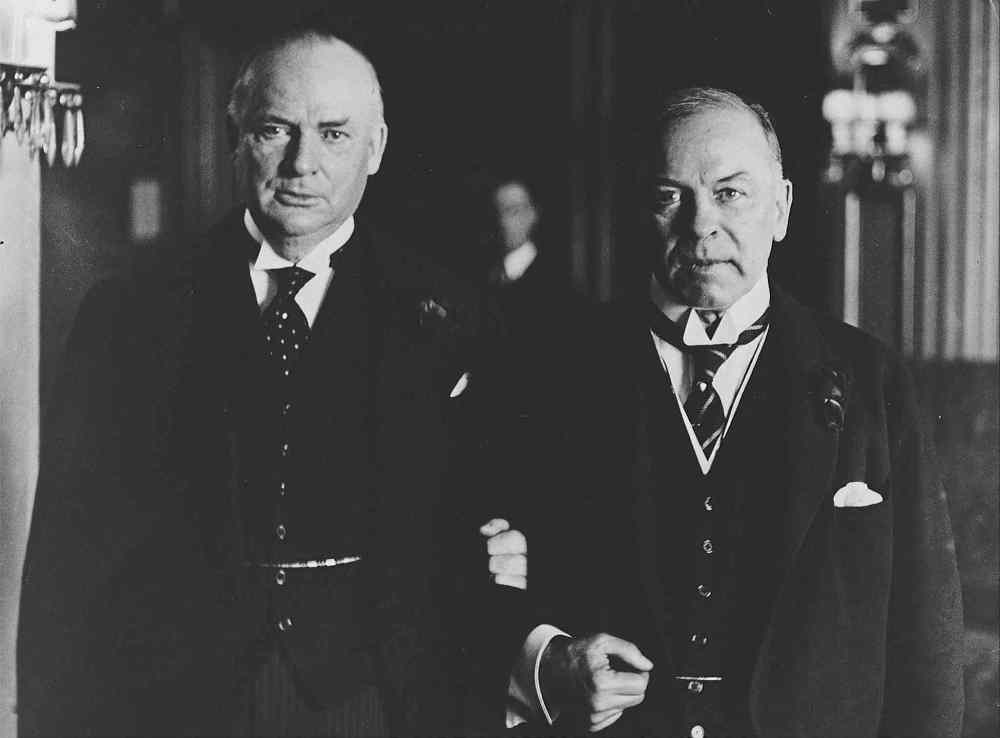
A few months after that, Arch Dale, the Free Press’s witty and acerbic political cartoonist, drew a cutting caricature of Bennett at a cabinet meeting — except all the other people at the table (as well as a waiter and messenger) were him, too.
In other words, Bennett was a dictatorial leader who took charge of every aspect of his government and was condemned for it.
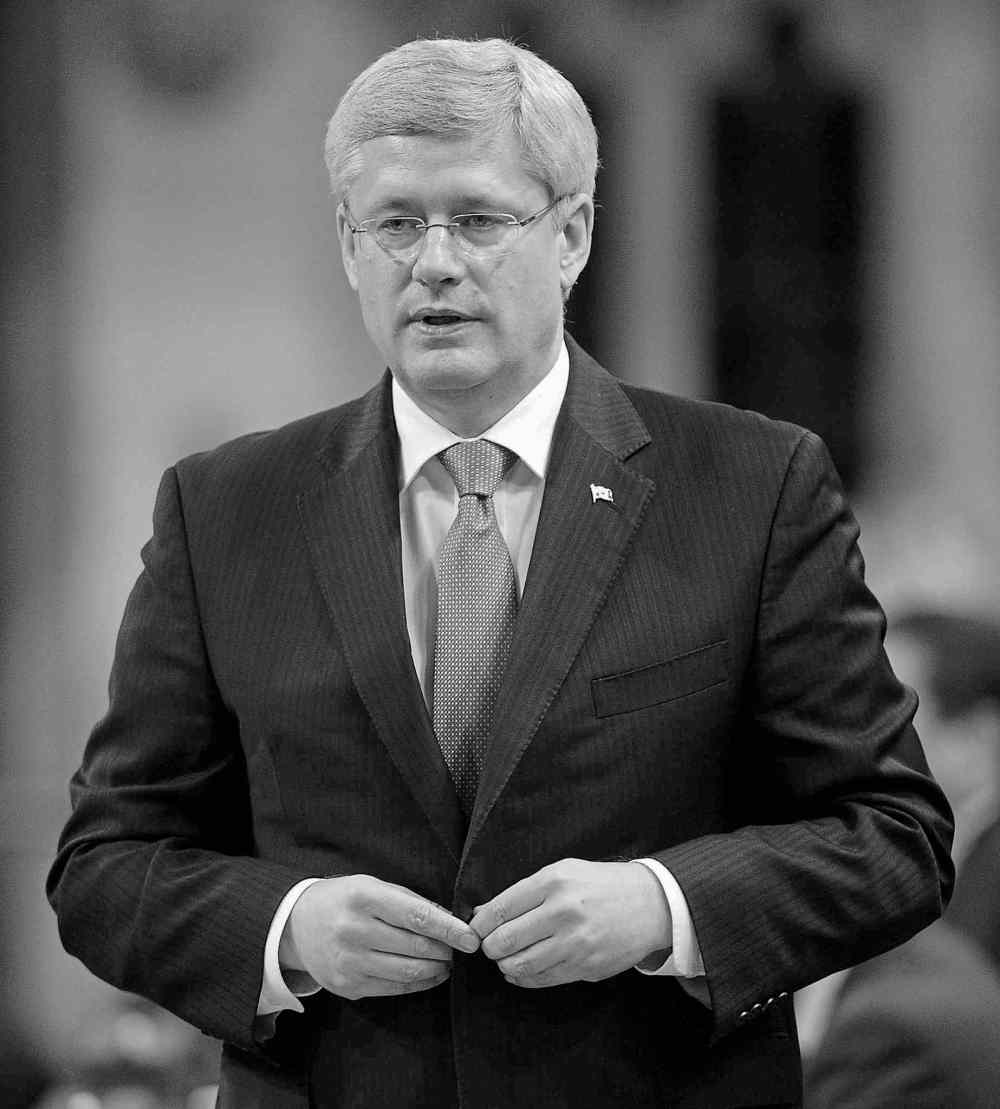
Bennett’s despotic manner comes to mind when reading Party of One, a new book by Ottawa-based journalist Michael Harris. It is a highly critical account of Prime Minister Stephen Harper’s “anti-democratic” style and alleged ruination of everything good and decent in Canada (though even Harper’s worst critics have expressed begrudging admiration for how he has handled himself during the shooting attack in Ottawa.)
In the book, Harris cites numerous examples of Harper’s R.B. Bennett-like one-man show, from his alleged abuse of Parliament to his public attack on Beverley McLachlin, chief justice of the Supreme Court over a dispute about an appointment of a Quebec judge to the high court, and to his dismissal of Winnipeg student Brigette DePape, as a “professional protester” in 2011. As a Senate page, DePape, then 22, held up a sign during the reading of the throne speech that said, “Stop Harper!”
There is, too, Harper’s dictum that Canadian diplomats reportedly were not allowed to provide informed briefings to the news media. He has prevented, or “muzzled,” depending on your point view, members of his caucus from speaking in the House of Commons about such controversial issues as abortion. His PMO has kept a tight leash on almost every issue. And from the perspective of journalists who cover Ottawa, he often won’t answer their questions when they ask them, and in the way they want them answered.
Consider, however, that Harper follows in a long line of, if not control freaks, then certainly dictatorial prime ministers. It has always been the nature of the job — particularly if you want to succeed at it.
Since 1867, nearly all of the prime ministers who have remained in power for more than one term have had to behave in an autocratic fashion at some point. Some like John A. Macdonald were more charismatic and thus able to keep party discipline (such as it was in the 19th century) through favouritism and skilful manipulation. But Macdonald, as well as Wilfrid Laurier, possibly the saintliest of the country’s prime ministers, spent a great deal of their time enforcing caucus solidarity and ensuring their governments’ message was being reported in the press the way they wanted. John W. Dafoe, the Free Press’s longtime editor who knew Laurier well, aptly wrote, for instance, that the Liberal party leader “had affinities with Machiavelli as well as Sir Galahad.”
Similarly, Canada’s longest-serving prime minister, William Lyon Mackenzie King, who had a reputation as a cautious plodder, permitted the talented members of his cabinet to have their say in private. Then, he usually decided an issue the way he believed was the most politically advantageous to him and the Liberals. The Liberal caucus rarely challenged him in public. Nor did King have patience for journalists who asked too many probing questions.
After King retired in 1948, Canadian politics began to change. Within a decade, television arrived and newspapers shed their partisan affiliations. Political coverage became more adversarial and confrontational. Since the 1980s, freedom-of-information legislation that permitted journalists to tally up prime ministerial hotel bills and travel costs, followed by the 24-hour news cycle, and then the Internet all have dramatically changed the political-media playing field.
Prime ministers soon learned controlling one’s agenda and message were paramount to continued electoral success, while mistakes and perceived weaknesses could be humiliating and politically damaging.
Lester Pearson, for example, prime minister from 1963 to 1968, was a kind and intelligent man. Yet as prime minister, he was beset by scandals and received a lot of bad press. He couldn’t even keep cabinet meeting discussions a secret while they were being convened in a locked room. He was left scrambling to hold onto power in back-to-back minority governments (despite passing some important legislation like the Medical Care Act in 1966). The same can be said about John Turner, Joe Clark, Kim Campbell and Paul Martin — all remembered, rightly or wrongly, for brief, bumbling PM performances.
On the other hand, Pierre Trudeau and Jean Chrétien were frequently castigated for being as dictatorial and irreverent of the media as Harper, yet they both served long terms (Trudeau lost in the 1979 election to Joe Clark and the Conservatives before he was back in office in 1980 and Chrétien was done in by a caucus revolt). It is telling that in 2001, before the Harper era began, journalist Jeffrey Simpson wrote a book entitled The Friendly Dictatorship. It detailed how Canada supposedly had become a one-party state controlled by the Liberals. And on its cover was a smiling photo of Chrétien dressed like a Third World military despot.
Now it is Harper’s turn to be the target of this criticism. According to several of the politicians, bureaucrats and commentators Harris interviewed and quotes in his book, Harper is a meaner and more deceitful version of Trudeau and Chrétien. As the late author Farley Mowat told Harris, “Harper is probably the most dangerous human being ever elevated to power in Canada.”

That’s an exaggeration to be sure, yet Harper may well be as “pathological” a control freak as columnist Lawrence Martin of the Globe and Mail recently labelled him. At the same time, this micromanagement does have its positive side, because without Harper firmly quelling the naysayers in Ottawa and supporting the construction of the Canadian Museum for Human Rights in Winnipeg, the odds are there would be no museum.
Like him or not (and many Canadians still do) Harper is as skilled a politician who has ever been prime minister. He understands completely the way in which power has to be exercised in the age of social media and how errors of judgment and personal foibles can be costly. In short, he knows control-freakish behaviour can be rewarded a year from now in the next federal election.
And opponents who deride Harper’s dictatorial rule should not kid themselves: Justin Trudeau — he who has blocked a candidate from running in a riding, when he said he would never do so, and decreed that all Liberal party candidates must be pro-choice — also has control-freak tendencies and no doubt would as prime minister, too. It’s in his genes.
Now & Then is a column in which historian Allan Levine puts the events of today in a historical context.