

Violent porn rewiring kids’ brains
Unlimited access to hard-core videos causing intimacy issues, city symposium told

Advertisement
Read this article for free:
or
Already have an account? Log in here »
To continue reading, please subscribe:
Digital Subscription
One year of digital access for only $1.44 a week*
- Enjoy unlimited reading on winnipegfreepress.com
- Read the E-Edition, our digital replica newspaper
- Access News Break, our award-winning app
- Play interactive puzzles
*Billed as $5.77 plus GST every four weeks. After 52 weeks, price increases to the regular rate of $19.95 plus GST every four weeks. Offer available to new and qualified returning subscribers only. Cancel any time.
To continue reading, please subscribe:
Add Free Press access to your Brandon Sun subscription for only an additional
$1 for the first 4 weeks*
- Enjoy unlimited reading on winnipegfreepress.com
- Read the E-Edition, our digital replica newspaper
- Access News Break, our award-winning app
- Play interactive puzzles
*Your next Brandon Sun subscription payment will increase by $1.00 and you will be charged $17.95 plus GST for four weeks. After four weeks, your payment will increase to $24.95 plus GST every four weeks.
Read unlimited articles for free today:
or
Already have an account? Log in here »
Hey there, time traveller!
This article was published 18/11/2014 (4215 days ago), so information in it may no longer be current.
Gabe Deem talks about his “porn history” with the matter-of-factness of discussing the weather.
“I was exposed to magazines at eight (years) old,” the 27-year-old begins. “I found a Playboy magazine outside my house. Then I had cable porn at 10. I had unlimited access to porn at the age of 12 when my parents got high-speed Internet. That was at the turn of the century, back in 1999.”
Back at the turn of the century, indeed. That’s largely before the explosion of Wi-Fi and the development of iPhones and tablets. Porn went mobile and Deem went along for the ride.
Deem, from Irving, Texas, became a self-confessed porn addict. “My porn use escalated and escalated and what I watched became more misogynistic, more shocking,” he said. “Because as I became numb I needed a bigger hit. I was searching for that more hard-core material.”
Deem’s website, RebootNation.org, was designed to connect a community of addicts so they could “overcome problems related to porn use.”
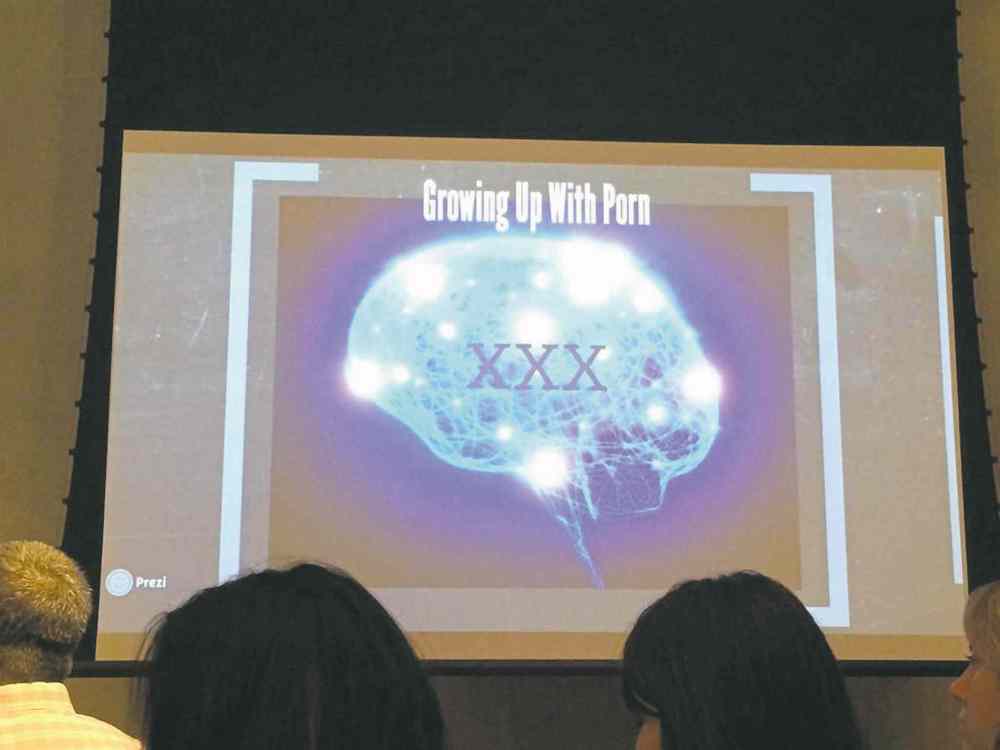
Deem is not alone. Canadian children are accessing pornography in greater numbers at a younger age — and it’s literally rewiring their brains to be stimulated by unrealistic, violent sex, according to experts attending a symposium held at the Canadian Museum for Human Rights on Monday.
The symposium is called Generation XXX: the Pornification of Our Children.
The forum, sponsored by Beyond Borders, cited how exposure to hard-core pornography over time — especially for children — can lead to sexual dysfunction and intimacy issues.
“The concern is not that they’re getting access to sexual content, but they’re getting access to exploitive and violent content that’s masquerading as sex,” said Cordelia Anderson, founder of the Minneapolis-based Sensibilities Prevention Services, which specializes in sexual violence and child sexual abuse. “It’s completely different now. You’re getting multiple stimulation now. The content of those (older Playboy magazines) you’ll see on music videos and games now. It’s more and more violent and degrading. And it’s really encouraging stimulating pain and degradation. There’s nothing about mutual pleasure. It’s not even realistic depictions at all of what could or does happen.”
‘My porn use escalated and escalated and what I watched became more misogynistic, more shocking. Because as I became numb I needed a bigger hit. I was searching for that more hard-core material’
— self-professed porn addict Gabe Deem
Other speakers included John Carr, executive board member of the U.K. Council of Child Internet Safety and Cathy Wing, co-executive director of MediaSmarts, which for over a decade has monitored children’s use of the Internet, along with Deem.
Wing said a 2013 study of Ontario teens from grades 7 to 11 revealed 40 per cent of the male students looked for porn online, as opposed to seven per cent of females. The study also cited that parental control over access is falling, from 70 per cent in 2005 to 43 per cent in 2013 — which coincides with the increased mobility of the Internet in general.
The answer, according to Wing, is to start introducing sex education to students as soon as Grade 4.
“Sex ed has always been taught in school,” Wing noted. “But the problem is kids are being exposed to much more explicit stuff much younger. And we have to recognize that as adults. It (education) has to happen in the home as well.”
However, Wing said a recent attempt by the Ontario provincial government to introduce sex education beginning in Grade 4 was abandoned because of protests from some parents that the program was too explicit.

However, Anderson said students can already find all the explicit material they want. But if they’re first introduction to sexual activity is pornographic videos, their expectations and attitudes will be warped.
“I think it’s a lie to men, that no men are interested in a relationship or love or intimacy,” Anderson said. “We’re hard-wired to crave that. Also it’s a lie to say women aren’t interested in sex or looking and reading, too.
“But what the porn industry has done is taken all the degradation and sexual violence and called it sex. And it’s been difficult to speak out against it because we didn’t want to sound prudish or hung up, which we are often accused of, or being the sex police.

“No, this is hijacking us of our sexuality. It’s robbing us of our sexuality.”
“It’s manifesting itself in sexual dysfunctions,” Deem added. “Because you people have access to something no human has had access to; an unlimited amount of porn that constantly shocks them.”
Deem cited studies that concluded adolescents are “vulnerable” to excessive pornography, to the point where it “rewires” their brain with unrealistic and/or unattainable expectations of sex.

“You have to educate young people on how their brain works and how what they do matters,” Deem said. “Teach them how to avoid overstimulation. They can avoid escalating into that porn they shouldn’t be watching because that’s wiring their arousal to a screen, not a real person. Teach them that they long for intimacy and connection and the more they get connected online, the more disconnected they are in the real world.”
randy.turner@freepress.mb.ca
Randy Turner
Reporter
Randy Turner spent much of his journalistic career on the road. A lot of roads. Dirt roads, snow-packed roads, U.S. interstates and foreign highways. In other words, he got a lot of kilometres on the odometer, if you know what we mean.
Our newsroom depends on a growing audience of readers to power our journalism. If you are not a paid reader, please consider becoming a subscriber.
Our newsroom depends on its audience of readers to power our journalism. Thank you for your support.
Randy Turner
Reporter
Randy Turner spent much of his journalistic career on the road. A lot of roads. Dirt roads, snow-packed roads, U.S. interstates and foreign highways. In other words, he got a lot of kilometres on the odometer, if you know what we mean.
Our newsroom depends on a growing audience of readers to power our journalism. If you are not a paid reader, please consider becoming a subscriber.
Our newsroom depends on its audience of readers to power our journalism. Thank you for your support.
Advertisement Advertise With Us
Advertisement Advertise With Us