

Manitoban was Canada’s first black Olympian
Advertisement
Read this article for free:
or
Already have an account? Log in here »
To continue reading, please subscribe:

Digital Subscription
One year of digital access for only $205*
- Enjoy unlimited reading on winnipegfreepress.com
- Read the E-Edition, our digital replica newspaper
- Access News Break, our award-winning app
- Play interactive puzzles
*First annual payment billed as $205.00 + GST for one year. This annual subscription will automatically renew at $233.00 + GST every 52 weeks (10% off the regular annual price of $259.35). Offer available to new and qualified returning subscribers only. Cancel any time.
To continue reading, please subscribe:
Add Free Press access to your Brandon Sun subscription for only an additional
$1 for the first 4 weeks*
- Enjoy unlimited reading on winnipegfreepress.com
- Read the E-Edition, our digital replica newspaper
- Access News Break, our award-winning app
- Play interactive puzzles
*Your next Brandon Sun subscription payment will increase by $1.00 and you will be charged $17.95 plus GST for four weeks. After four weeks, your payment will increase to $24.95 plus GST every four weeks.
Read unlimited articles for free today:
or
Already have an account? Log in here »
Hey there, time traveller!
This article was published 24/02/2015 (4231 days ago), so information in it may no longer be current.
Vancouver — The name John Armstrong “Army” Howard may not be familiar to most Canadians, but it should be. The Winnipeg-raised First World War veteran dominated Canadian sprinting from 1912 to 1915.
Howard appears to be Canada’s first black Olympian — something to note, given February is Black History Month — and he passed on his passion for running to his grandchildren, Olympians Harry and Valerie Jerome.
Howard, born on Oct. 6, 1888, trained as a mechanic. The tall handsome athlete eventually made his mark on the Canadian scene as a sprinter and easily qualified for the 1912 Olympics held in Sweden.
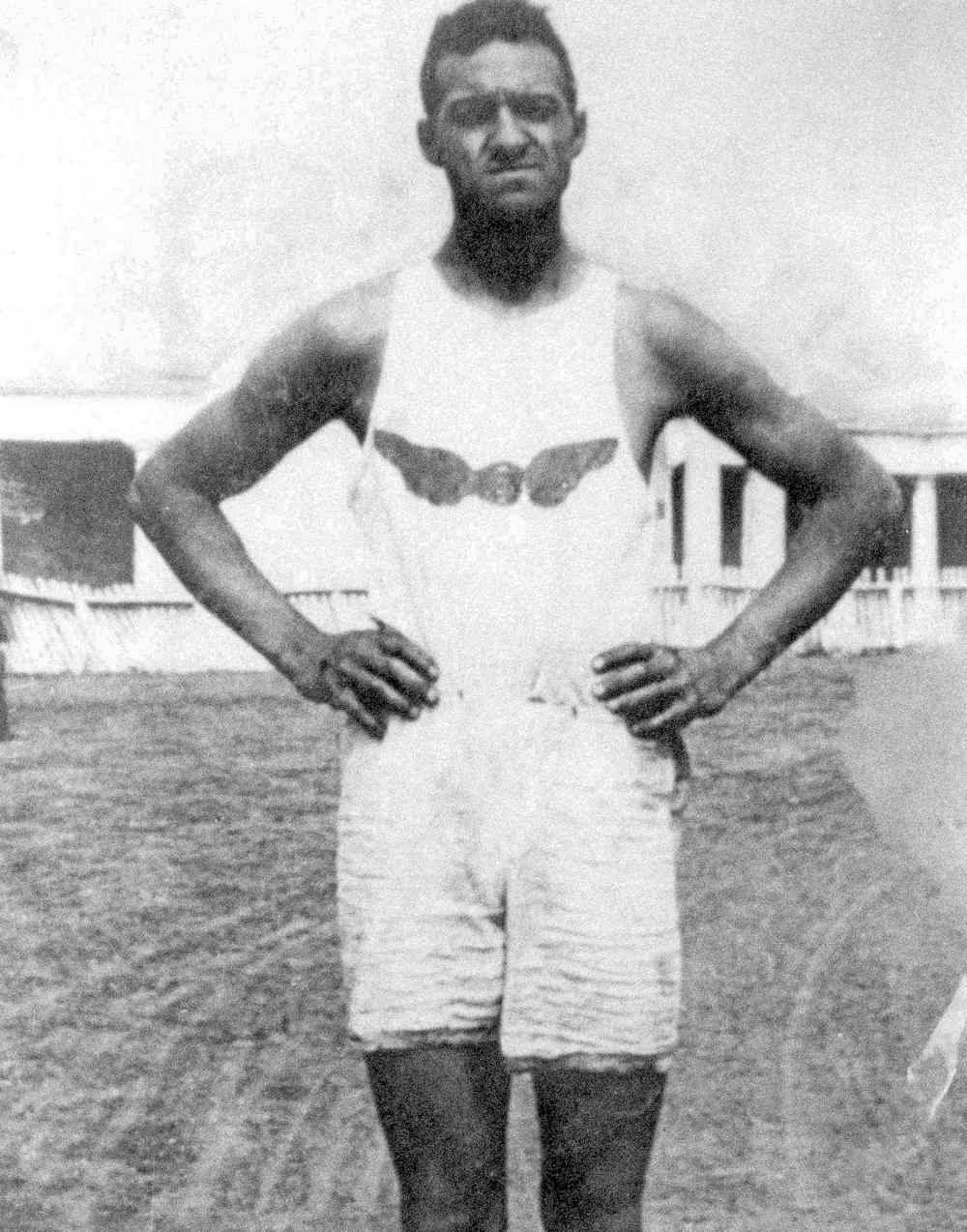
The path to Stockholm was not smooth. The playing field that was Canadian society in the 1910s was far from level for black Canadians.
“My grandfather headed off to Stockholm enveloped in controversy,” said Valerie Jerome, noting the Olympic sprinting team’s coach, Walter Knox, described Howard to the press as outspoken and disobedient. When the Canadian Olympic team mustered in Montreal before setting sail for Stockholm, Howard was barred from staying at the same hotel as the white athletes, she noted. In addition, when travelling by boat to Sweden, he was not allowed to eat in the dining room with his white teammates.
In Stockholm, a stomach ailment ultimately derailed Howard’s medal hopes. All three medal winners of his events had been beaten by Howard at track meets just prior to the 1912 Olympics, Valerie Jerome said. He came back in full force at the Canadian Outdoor Championships in 1913, winning all his races. Howard also showed his athletic abilities as a catcher for the Crescent Creamery Baseball Club in Winnipeg.
Howard’s athletic career was cut short by the outbreak of the First World War in 1914. He was conscripted into the Canadian Expeditionary Force and began his military service on April 12, 1918 as a private with 1st Depot Battalion, Manitoba Regiment. He served in England, first as a sapper (the Canadian military engineers term for those of private rank) with the Canadian Railway Troops, a railway construction unit.
He later transferred to the 11th and 18th Canadian Reserve Battalions, which provided reinforcements for infantry battalions on the continent. Howard ended his deployment with the Canadian Army Medical Corps, most likely serving as a stretcher bearer moving convalescent patients.
In 1920, Howard returned to Canada with his English fiancée Edith Lipscomb and a baby girl who was the first of their three daughters. Married in Winnipeg, the inter-racial couple soon encountered severe prejudice. Valerie Jerome says her grandparents were stoned to drive them out of town when they tried to homestead at Ste. Rose du Lac. “They didn’t even get their buckboard unloaded and they had this infant daughter with them.”
The Howards finally settled near the Crane River reserve, though the marriage eventually broke up. The First World War veteran worked as a railway porter and taught boxing until he died of pneumonia in 1937 at the young age of 48.
Howard never got the public acclaim in his lifetime his accomplishments deserved, but was inducted into the Manitoba Sports Hall of Fame in 2004. Valerie Jerome and her brother Harry were also Olympic competitors.
Howard came back in full force at the Canadian Outdoor Championships in 1913, winning all of his races

Harry Jerome’s story bears some striking similarities to his grandfather’s, both in his athletic success and the racist attitudes he encountered. As multi-talented as Howard, he turned down an offer to play with the Montreal Alouettes football club. He set seven world sprinting records and competed in all three Olympic Games in the 1960s, earning a bronze medal in the 100 metres at the 1964 games.
Despite this success, Valerie Jerome said her brother often faced heavy criticism in the press. Sadly, Harry Jerome also died young, succumbing in 1982 to a brain aneurism at 42. Jerome was awarded the Officer of the Order of Canada in 1971 and a star on Canada’s Walk of Fame in 2001.
“I think they both had a lot of self-confidence,” Valerie Jerome said. “They had a lot of courage. They went beyond the limits of what they were expected to do.”
Gerry Weaver is a communications officer for Directorate Army Public Affairs.