

Headdresses need to be treated with reverence

Advertisement
Read this article for free:
or
Already have an account? Log in here »
To continue reading, please subscribe:
Monthly Digital Subscription
$1 per week for 24 weeks*
- Enjoy unlimited reading on winnipegfreepress.com
- Read the E-Edition, our digital replica newspaper
- Access News Break, our award-winning app
- Play interactive puzzles
*Billed as $4.00 plus GST every four weeks. After 24 weeks, price increases to the regular rate of $19.95 plus GST every four weeks. Offer available to new and qualified returning subscribers only. Cancel any time.
Monthly Digital Subscription
$4.99/week*
- Enjoy unlimited reading on winnipegfreepress.com
- Read the E-Edition, our digital replica newspaper
- Access News Break, our award-winning app
- Play interactive puzzles
*Billed as $19.95 plus GST every four weeks. Cancel any time.
To continue reading, please subscribe:
Add Free Press access to your Brandon Sun subscription for only an additional
$1 for the first 4 weeks*
*Your next subscription payment will increase by $1.00 and you will be charged $16.99 plus GST for four weeks. After four weeks, your payment will increase to $23.99 plus GST every four weeks.
Read unlimited articles for free today:
or
Already have an account? Log in here »
Hey there, time traveller!
This article was published 21/07/2015 (3934 days ago), so information in it may no longer be current.
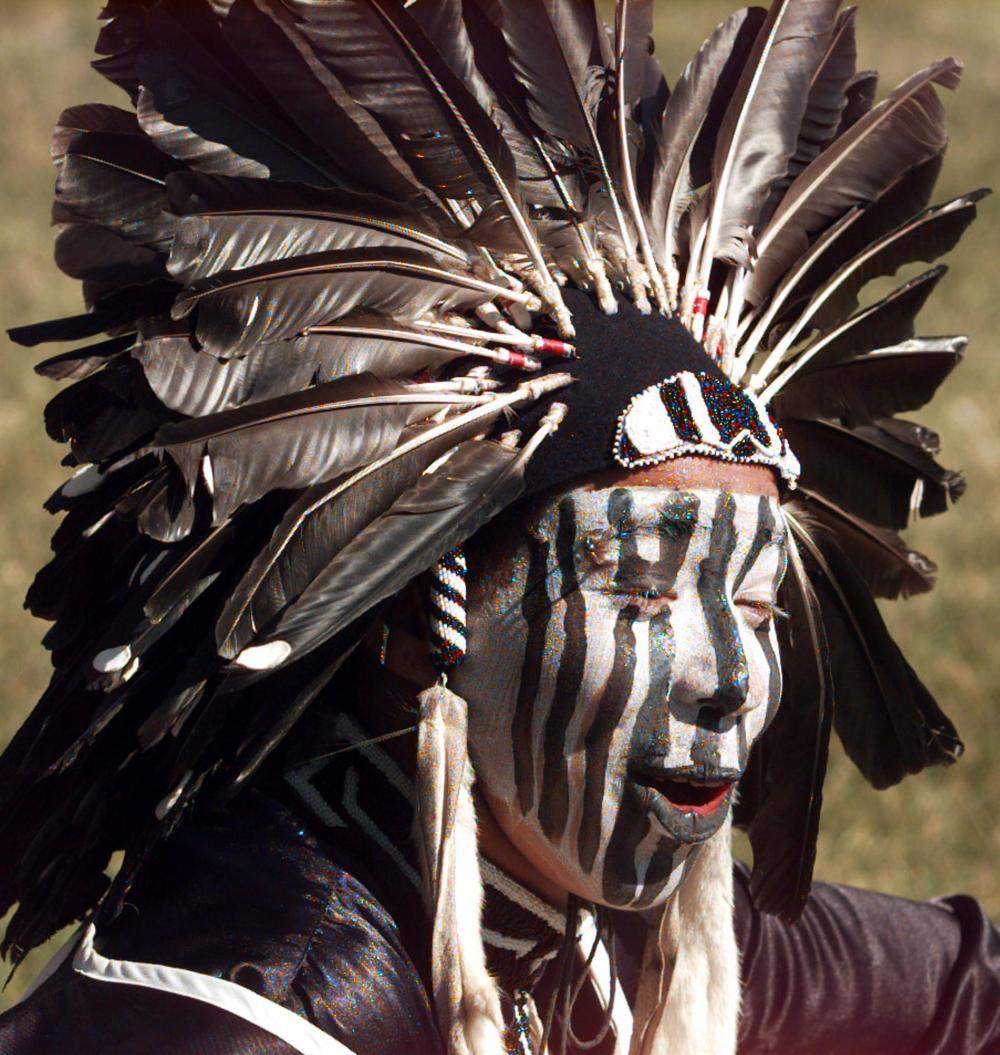
It is not OK to wear a faux-indigenous headdress at music festivals. It has never been OK to wear a faux-indigenous headdress at music festivals. And yet, people keep wearing faux-indigenous headdresses at music festivals.
But now — finally — some Canadian music festivals are officially cracking down on cultural appropriation, banning the so-called Hipster Headdress. Osheaga Music and Arts Festival, which runs July 31 to Aug. 3, has included First Nations headdresses and other feather headdresses on its list of items not allowed on the festival site, right there alongside fireworks, drones and weapons.
The Edmonton Folk Music Festival, which runs Aug. 6 to 9, is also banning headdresses. The Calgary Folk Music Festival, which kicks off Thursday, isn’t banning them per se, but executive director Debbi Salmonsen wrote a Facebook post saying the festival will “trust our inclusive, diverse and intelligent audience to be respectful and we trust them to make appropriate choices.”
The Winnipeg Folk Festival will also be asking patrons not to wear headdresses to future festivals after Dené Sinclair took to Twitter to encourage the WFF to adopt a no-headdresses policy after she spotted a white woman wearing a headdress at this year’s event. Sinclair tweeted that she was “shocked and upset that the @Winnipegfolk festival would allow someone in wearing a full headdress and face paint.”
It is shocking and upsetting, and it’s important we understand why. Headdresses are sacred, spiritual, ceremonial items to be treated with reverence, not to be mass-produced by fast-fashion retailers such as H&M — as in 2013 — as part of their festival fashion collections.
As Chelsea Vowel, a Montreal-based Métis educator who blogs as âpihtawikosisân points out, headdresses are restricted items — not unlike military medals or bachelor degrees. She notes that faux-indigenous headdresses often imitate those worn by various Plains nations — so, in other words, they are a hodge-podge stereotype. And it’s usually men within those nations who have earned them. “So unless you are a native male from a Plains nation who has earned a headdress, or you have been given permission to wear one (sort of like being presented with an honorary degree),” she writes, “then you will have a very difficult time making a case for how wearing one is anything other than disrespectful, now that you know these things.”
Listening to someone’s concerns — and then respecting them — isn’t that big of an ask. But people tend to get defensive when it comes to matters of cultural appropriation. It’s not a particularly comfortable thing, to be called out on behaviour that might be hurting someone else — especially if you “didn’t mean” to hurt someone else. Or if you “don’t find it offensive.” Or if you’re “showing appreciation for someone’s culture.” It requires looking past yourself, and that takes some effort.
It requires considering the fact that aboriginal women’s bodies have long been fetishized, sexualized and objectified, and realizing that seeing a headdress on, say, a Victoria Secret model — as in 2012 — or on a bikini-clad woman at Coachella perpetuates dangerous, damaging ideas. It requires considering the fact that indigenous people in this country have experienced a long, painful erosion of their culture, and realizing that it’s literally the least we can do to not turn a sacred item of dress into a cheap Halloween costume.

There’s been an awful lot of panic as of late about “PC culture” and how people who say/do terrible things are currently having a more difficult time saying/doing terrible things because of those over-sensitive social justice warriors on the Internet. Some will undoubtedly argue that music festivals adopting headdress bans is “political correctness run amok.”
But this isn’t about being politically correct. It’s about being respectful. It’s about thinking a little harder before you open your mouth or, in this specific case, donning a cheap imitation of a headdress.
And hey, if you really do want to show your appreciation for Indigenous culture, there are better ways to do it. You can buy First Nations-made moccasins, mukluks and jewelry. You can hang the work of First Nations artists on your walls. And, perhaps most importantly, you can take the time to learn more about the cultures from which those beautiful items come.
jen.zoratti@freepress.mb.ca
Jen Zoratti is a columnist and feature writer working in the Arts & Life department, as well as the author of the weekly newsletter NEXT. A National Newspaper Award finalist for arts and entertainment writing, Jen is a graduate of the Creative Communications program at RRC Polytech and was a music writer before joining the Free Press in 2013. Read more about Jen.
Every piece of reporting Jen produces is reviewed by an editing team before it is posted online or published in print – part of the Free Press‘s tradition, since 1872, of producing reliable independent journalism. Read more about Free Press’s history and mandate, and learn how our newsroom operates.
Our newsroom depends on a growing audience of readers to power our journalism. If you are not a paid reader, please consider becoming a subscriber.
Our newsroom depends on its audience of readers to power our journalism. Thank you for your support.
Jen Zoratti is a columnist and feature writer working in the Arts & Life department, as well as the author of the weekly newsletter NEXT. A National Newspaper Award finalist for arts and entertainment writing, Jen is a graduate of the Creative Communications program at RRC Polytech and was a music writer before joining the Free Press in 2013. Read more about Jen.
Every piece of reporting Jen produces is reviewed by an editing team before it is posted online or published in print – part of the Free Press‘s tradition, since 1872, of producing reliable independent journalism. Read more about Free Press’s history and mandate, and learn how our newsroom operates.
Our newsroom depends on a growing audience of readers to power our journalism. If you are not a paid reader, please consider becoming a subscriber.
Our newsroom depends on its audience of readers to power our journalism. Thank you for your support.
Advertisement Advertise With Us
Advertisement Advertise With Us