

Flora MacDonald’s pioneering legacy
Advertisement
Read this article for free:
or
Already have an account? Log in here »
To continue reading, please subscribe:
Digital Subscription
One year of digital access for only $75*
- Enjoy unlimited reading on winnipegfreepress.com
- Read the E-Edition, our digital replica newspaper
- Access News Break, our award-winning app
- Play interactive puzzles
*Billed as $5.77 plus GST every four weeks. After 52 weeks, price increases to the regular rate of $19.95 plus GST every four weeks. Offer available to new and qualified returning subscribers only. Cancel any time.
Monthly Digital Subscription
$4.99/week*
- Enjoy unlimited reading on winnipegfreepress.com
- Read the E-Edition, our digital replica newspaper
- Access News Break, our award-winning app
- Play interactive puzzles
*Billed as $19.95 plus GST every four weeks. Cancel any time.
To continue reading, please subscribe:
Add Free Press access to your Brandon Sun subscription for only an additional
$1 for the first 4 weeks*
- Enjoy unlimited reading on winnipegfreepress.com
- Read the E-Edition, our digital replica newspaper
- Access News Break, our award-winning app
- Play interactive puzzles
*Your next Brandon Sun subscription payment will increase by $1.00 and you will be charged $17.95 plus GST for four weeks. After four weeks, your payment will increase to $24.95 plus GST every four weeks.
Read unlimited articles for free today:
or
Already have an account? Log in here »
Hey there, time traveller!
This article was published 30/07/2015 (3948 days ago), so information in it may no longer be current.
She once wore a red negligee to get her male colleagues to pay attention to what she was saying.
She was the first female external affairs minister.
And she’s the name behind a metaphor used to describe the situation at leadership campaigns in which people say they’ll support a candidate and then turn around and vote for someone else.
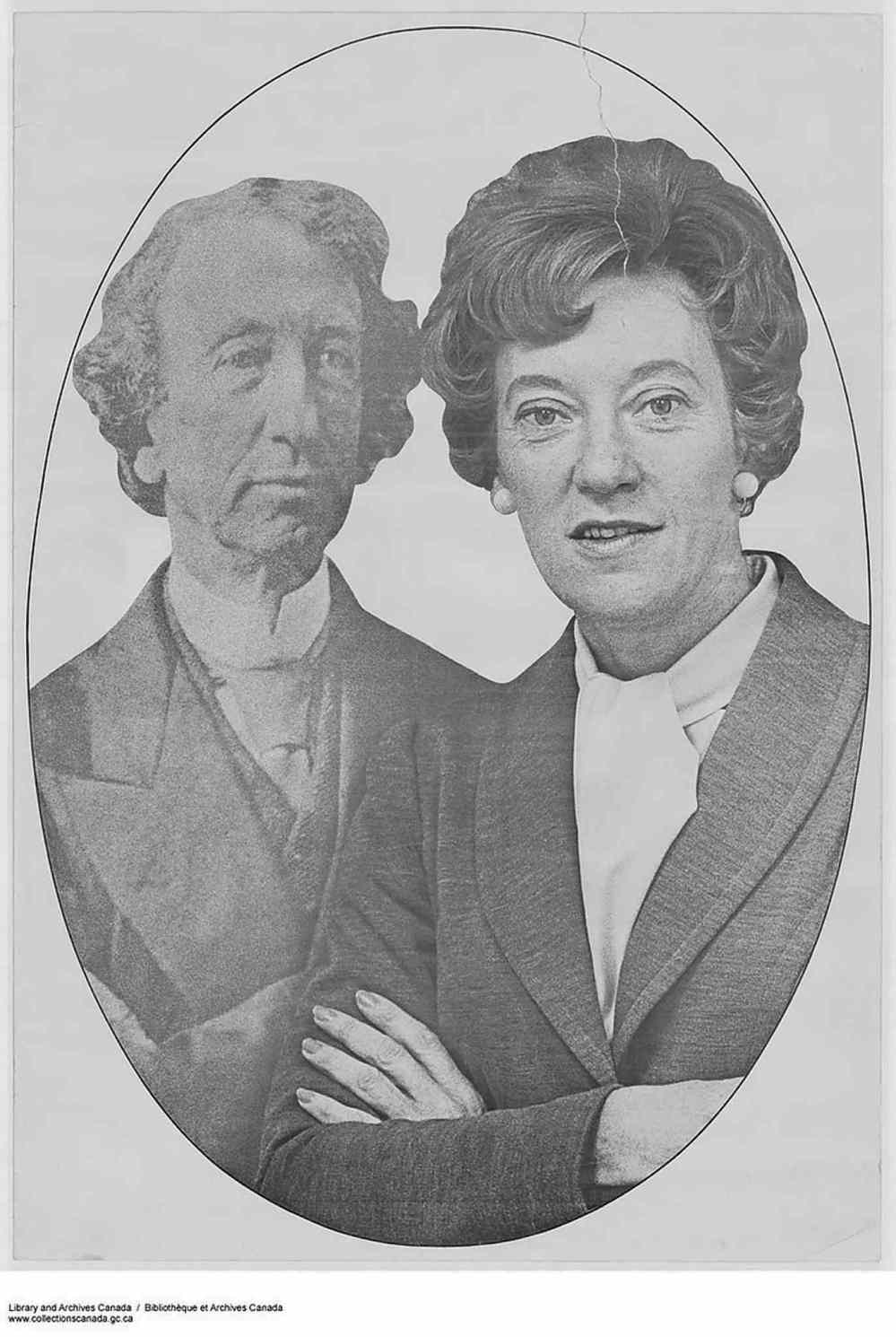
Flora MacDonald died earlier this week at the age of 89. She represented the riding of Kingston and the Islands from 1972 until 1988, when she lost as a result of the backlash against the free-trade movement. As a Conservative, MacDonald worked behind the scenes for leaders John Diefenbaker and Robert Stanfield, working on 38 election campaigns in total. Then she stepped into the limelight herself to run for office, running in Sir John A. Macdonald’s riding, using the clever campaign slogan “From Macdonald to MacDonald.”
In 1976, she was the first credible female candidate to make the bid for leadership of the Progressive Conservative party. In 1967, Mary Walker-Sawka was a last-minute addition to the PC party nomination list, in which Robert Stanfield took over as head of the party. In 1975, Rosemary Brown had made a similar bid for the NDP and almost won. Born in Jamaica, Brown was the first minority woman to seek leadership of a national party.
For MacDonald, her loss in 1976 was a bitter pill to swallow. Despite the fact she went into the convention floor with some 300 pledged votes, they never materialized on the ballot, giving rise to the metaphor, the Flora Syndrome. Many commentators suggested the lack of support was the result of sexism. One of her supporters, Hugh Hanson said about her loss: “The Progressive Conservative party proved that day it hadn’t the balls to elect a woman leader.” She withdrew after the second ballot. Joe Clark would go on to win in the fourth ballot. Her defeat left her angry for a long time, she said in an interview.
At the time of MacDonald’s leadership bid, women made up only 3.4 per cent of the seats in the House of Commons. Today, there are about 25 per cent. Things have improved, albeit at a slower pace than hoped.
Her campaign workers asked campaign delegates: “Are you going to do your wife a favour and vote for MacDonald?” Surrounded by male policy advisers, speech writers, campaign organizers and a spattering of women who were relegated to greeting roles, MacDonald had to deal with questions from the campaign floor about women in politics. In a speech at the convention, she told the audience: “I am not a candidate because I am a woman. But I say to you quite frankly that because I am a woman, my candidacy helps our party. It shows that in the Conservative party there are no barriers to anyone who has demonstrated serious intentions and earned the right to be heard.”
MacDonald is quoted in a National Film Board documentary on her leadership race about making the decision to run for leader: “Because women do not perceive of themselves in the role of the leader, therefore they find it difficult to perceive of another woman in the role of a leader. The more that that position is tried for by women, the more it explodes that myth.”
In the years following MacDonald’s bid, five women have successfully won the job of party leader at the federal level: Audrey McLaughlin and Alexa McDonough for the NDP, Conservative Kim Campbell, Canada’s first and only female prime minister and Kathryn Cholette and Elizabeth May for the Green party. In total, there have been 12 leadership contests following MacDonald’s bid that had at least one female leadership candidate. One hopes MacDonald’s view that the more women try, the more the myth is exploded holds true.
MacDonald went on to become Canada’s first female external affairs minister at a time when that role was dominated by men. Then-prime minister Joe Clark gave her that cabinet post in his short run with a minority government. Brian Mulroney, another leadership-candidate hopeful in 1976, made her immigration minister in 1984.
When she lost her seat in 1988 in a wave of anti-free-trade sentiment, she was interviewed about her political career. At that time, MacDonald said she didn’t think it was necessary to create the dichotomy of male versus female. She just wanted to do her job as a politician, representing her constituents and her party. And in that interview, she revealed her rebellious streak, telling the story of how she once donned a red negligee while partaking as the only woman in a year-long course at Kingston’s national defence college in a bid to get her male colleagues to pay attention to what she was saying. After that, she said, they saw her as one of them, and the barriers were down.
When we lose women like MacDonald, part of me is saddened that yet another important piece of our history is lost. The other part celebrates her amazing spirit, skill and class and hopes more women like her will step forward and do what few women have done.

She was one of the good ones.
Shannon Sampert is the Free Press perspectives and politics editor.
shannon.sampert@freepress.mb.ca
Twitter: @paulysigh