

Japan marks 70th anniversary of bombing of Hiroshima with renewed call for nuclear arms ban
Advertisement
Read this article for free:
or
Already have an account? Log in here »
To continue reading, please subscribe:

Digital Subscription
One year of digital access for only $205*
- Enjoy unlimited reading on winnipegfreepress.com
- Read the E-Edition, our digital replica newspaper
- Access News Break, our award-winning app
- Play interactive puzzles
*First annual payment billed as $205.00 + GST for one year. This annual subscription will automatically renew at $233.00 + GST every 52 weeks (10% off the regular annual price of $259.35). Offer available to new and qualified returning subscribers only. Cancel any time.
To continue reading, please subscribe:
Add Free Press access to your Brandon Sun subscription for only an additional
$1 for the first 4 weeks*
- Enjoy unlimited reading on winnipegfreepress.com
- Read the E-Edition, our digital replica newspaper
- Access News Break, our award-winning app
- Play interactive puzzles
*Your next Brandon Sun subscription payment will increase by $1.00 and you will be charged $17.95 plus GST for four weeks. After four weeks, your payment will increase to $24.95 plus GST every four weeks.
Read unlimited articles for free today:
or
Already have an account? Log in here »
Hey there, time traveller!
This article was published 06/08/2015 (4078 days ago), so information in it may no longer be current.
HIROSHIMA, Japan – Japan marked the 70th anniversary of the atomic bombing of Hiroshima on Thursday, with Mayor Kazumi Matsui renewing calls for U.S. President Barack Obama and other world leaders to step up efforts toward making a nuclear-weapons-free world.
Tens of thousands of people stood for a minute of silence at 8:15 a.m. at a ceremony in Hiroshima’s peace park near the epicenter of the 1945 attack, marking the moment of the blast. Then dozens of doves were released as a symbol of peace.
The U.S. bomb, “Little Boy,” the first nuclear weapon used in war, killed 140,000 people. A second bomb, “Fat Man,” dropped over Nagasaki three days later, killed another 70,000, prompting Japan’s surrender in World War II.
The U.S. dropped the bombs to avoid what would have been a bloody ground assault on the Japanese mainland, following the fierce battle for Japan’s southernmost Okinawan islands, which took 12,520 American lives and an estimated 200,000 Japanese, about half civilians.
Matsui called nuclear weapons “the absolute evil and ultimate inhumanity” that must be abolished, and criticized nuclear powers for keeping them as threats to achieve their national interests. He said the world till bristles with more than 15,000 nuclear weapons.
He renewed an invitation to world leaders to visit Hiroshima and Nagasaki to see the scars themselves, during the G-7 summit in Japan next year.
“President Obama and other policymakers, please come to the A-bombed cities, hear the hibakusha (surviving victims) with your own ears, and encounter the reality of the atomic bombings,” he said. “Surely, you will be impelled to start discussing a legal framework, including a nuclear weapons convention.”
The anniversary comes as Japan is divided over Prime Minister Shinzo Abe’s push to pass unpopular legislation to expand the country’s military role internationally, a year after his Cabinet’s decision to loosen Japan’s war-renouncing constitution by adopting a new interpretation of it.
“We must establish a broad national security framework that does not rely on use of force but is based on trust,” Matsui said. He urged the Japanese government to stick with “the pacifism of the Japanese Constitution” to lead the global effort of no proliferation.
Abe, also addressing the ceremony, said that as the sole country to face a nuclear attack, Japan had a duty to push for the elimination of nuclear weapons. He pledged to promote the cause through international conferences to be held in Hiroshima later this month.
With the average age of survivors now exceeding 80 for the first time this year, passing on their stories is considered an urgent task. There were 5,359 hibakusha who died over the past year, bringing the total death toll from the Hiroshima bombing to 297,684.
U.S. Ambassador Caroline Kennedy and representatives from more than 100 countries, including Britain, France and Russia, attended the ceremony.
“Little Boy,” dropped from the Enola Gay B-29 bomber, destroyed 90 per cent of the city. A “black rain” of radioactive particles followed the blinding blast and fireball, and has been linked to higher rates of cancer and other radiation-related diseases among the survivors.
___
Yamaguchi reported from Tokyo.
___
This story has been corrected to show the minute of silence was at 8:15 a.m., not 8:30 a.m.
Related Articles
Myths persist about nuclear attack on Japan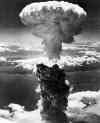
Advertisement Advertise With Us