

Harper plays vague, futile terrorism card
Advertisement
Read this article for free:
or
Already have an account? Log in here »
To continue reading, please subscribe:

Digital Subscription
One year of digital access for only $205*
- Enjoy unlimited reading on winnipegfreepress.com
- Read the E-Edition, our digital replica newspaper
- Access News Break, our award-winning app
- Play interactive puzzles
*First annual payment billed as $205.00 + GST for one year. This annual subscription will automatically renew at $233.00 + GST every 52 weeks (10% off the regular annual price of $259.35). Offer available to new and qualified returning subscribers only. Cancel any time.
To continue reading, please subscribe:
Add Free Press access to your Brandon Sun subscription for only an additional
$1 for the first 4 weeks*
- Enjoy unlimited reading on winnipegfreepress.com
- Read the E-Edition, our digital replica newspaper
- Access News Break, our award-winning app
- Play interactive puzzles
*Your next Brandon Sun subscription payment will increase by $1.00 and you will be charged $17.95 plus GST for four weeks. After four weeks, your payment will increase to $24.95 plus GST every four weeks.
Read unlimited articles for free today:
or
Already have an account? Log in here »
Hey there, time traveller!
This article was published 10/08/2015 (4038 days ago), so information in it may no longer be current.
It is already a criminal act for Canadians to aid or engage in terrorist activity, at home or abroad. That should cover terrorist wannabes who head overseas to join the Islamic State or any other organization Canada may one day oppose in international conflict. That’s hardly news on a campaign trail.
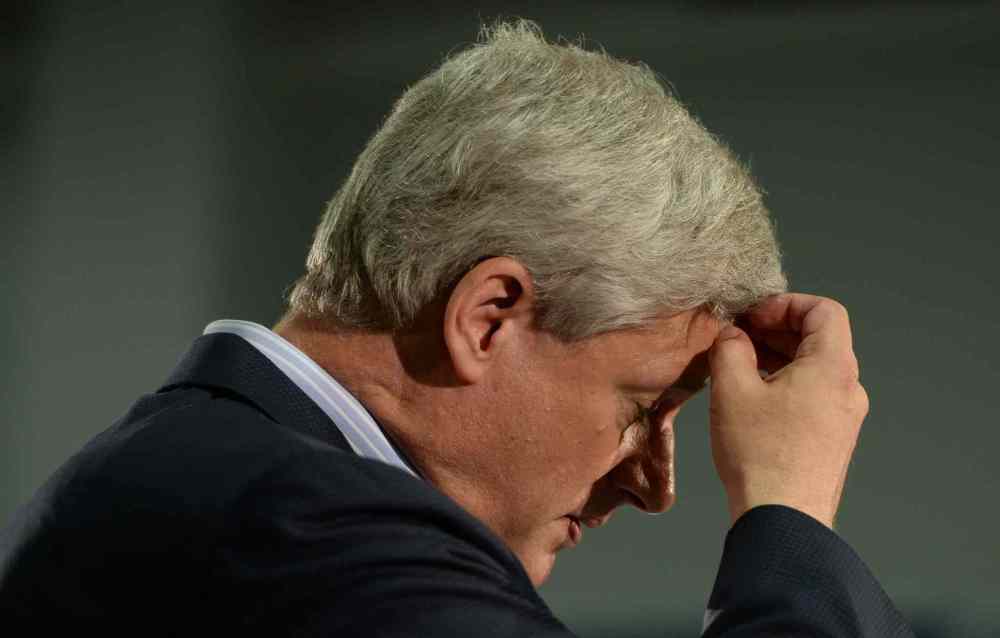
But on Sunday, Conservative Leader Stephen Harper found a way to ratchet up the anti-terrorism rhetoric, announcing if re-elected, his party would pass a law banning travel overseas to regions under the control of terrorist organizations. No need to prove intent for terrorism. Just being in the area presumes guilt.
Mr. Harper’s promise to ban travel to yet-to-be-named foreign hot spots will have limited, if any, effect on homegrown wannabe terrorists — although now they’ll have to resist the temptation to take selfies in no-go zones.
It will, however, make it unnecessarily difficult for the relatively few Canadians with legitimate reason to fly to countries in conflict. The most obvious of those would be Iraq and Syria, where IS is waging its war against governments Canada and its international allies are supporting in limited fashion, primarily with airstrikes and ground support.
In classic campaign style, the Conservatives revealed few details about how the proposed law would work. Australia, they pointed out, passed such a law in September and listed the regions of al-Raqqa, in Syria, and Mosul, in Iraq, as no-go zones for its citizens. Those caught having travelled to the areas can be jailed for up to 10 years.
It is a sweeping ban that, as local human rights lawyer David Matas noted, is over-broad. In other words, it impinges upon the mobility rights of, and potentially incriminates, travellers who have perfectly good reasons to travel to listed areas. Mr. Harper and his team said journalists, humanitarian workers, diplomats and ordinary individuals who may need to travel to attend a funeral could be exempted from the ban.
Tying up the visa application process in a new bureaucratic knot of approvals will undoubtedly unravel some of those plans — funerals, or any other sort of extended family emergency, tend to have their own timelines.

The real knock against this sort of legislation, however, is its futility. Those who leave the country to join organizations such as IS, al-Shabab or al-Qaida typically do so secretly, make their way to foreign training bases in various countries and hop borders when ready to fight.
It is possible today, for example, to fly to Baghdad and land within kilometres of IS-controlled territory, a mere car ride away.
Canada, as with other western states, has seen hundreds of citizens join or abet terrorist organizations such as IS, al-Qaida and al-Shabab. In 2014, the Tories noted, 80 Canadians returned home after engaging in terrorist activities and 130 were overseas for terrorism purposes. This is why the UN security council, last September, demanded member states make travelling abroad for terrorism purposes illegal, something Canada had already addressed within law in 2013.
Mr. Harper’s declaration travelling “to an area under the governance of terrorists” is not a human right plays well on the campaign trail, where “ordinary” hand-picked Canadians are assembled to applaud as politicians jump on and off the bus in carefully managed, high-octane events. But it is short on details, making it hollow rhetoric bent on playing to the Conservative base.
Less than a month ago, this proposed law could have been introduced and debated in Parliament. Now, it feels like a cynical attempt by the Tories to keep the isolated attacks against Canadian Forces personnel last fall fresh in the public mind. Conservatives did not invent political opportunism, but they may be testing its limits.
Related Articles
Liberals win 4th mandate as NDP vote collapses and Singh announces he will resign





Advertisement Advertise With Us
Advertisement Advertise With Us