

Feds OK Freedom Road… in principle
Shoal Lake 40 residents not celebrating, yet
Advertisement
Read this article for free:
or
Already have an account? Log in here »
To continue reading, please subscribe:

Digital Subscription
One year of digital access for only $205*
- Enjoy unlimited reading on winnipegfreepress.com
- Read the E-Edition, our digital replica newspaper
- Access News Break, our award-winning app
- Play interactive puzzles
*First annual payment billed as $205.00 + GST for one year. This annual subscription will automatically renew at $233.00 + GST every 52 weeks (10% off the regular annual price of $259.35). Offer available to new and qualified returning subscribers only. Cancel any time.
To continue reading, please subscribe:
Add Free Press access to your Brandon Sun subscription for only an additional
$1 for the first 4 weeks*
- Enjoy unlimited reading on winnipegfreepress.com
- Read the E-Edition, our digital replica newspaper
- Access News Break, our award-winning app
- Play interactive puzzles
*Your next Brandon Sun subscription payment will increase by $1.00 and you will be charged $17.95 plus GST for four weeks. After four weeks, your payment will increase to $24.95 plus GST every four weeks.
Read unlimited articles for free today:
or
Already have an account? Log in here »
Hey there, time traveller!
This article was published 11/08/2015 (4037 days ago), so information in it may no longer be current.
It took a push from a rogue Tory MP, but the federal Conservatives have — sort of — agreed a highway to Shoal Lake 40 First Nation ought to be built, ending the band’s century of isolation.
Calling it “the right thing to do,” outgoing Conservative MP Joy Smith called on the Harper government Monday to build the highway, dubbed Freedom Road, and fund one-third of its cost. Moments after her news conference ended, Natural Resources Minister Greg Rickford, also the Conservative MP for Kenora, called to tell her he’d committed in principle to build the road once the design study is done.
“We support the construction of the Freedom Road in principle,” Rickford said in a statement released by Smith. “That is why we are funding the design of the Freedom Road.”
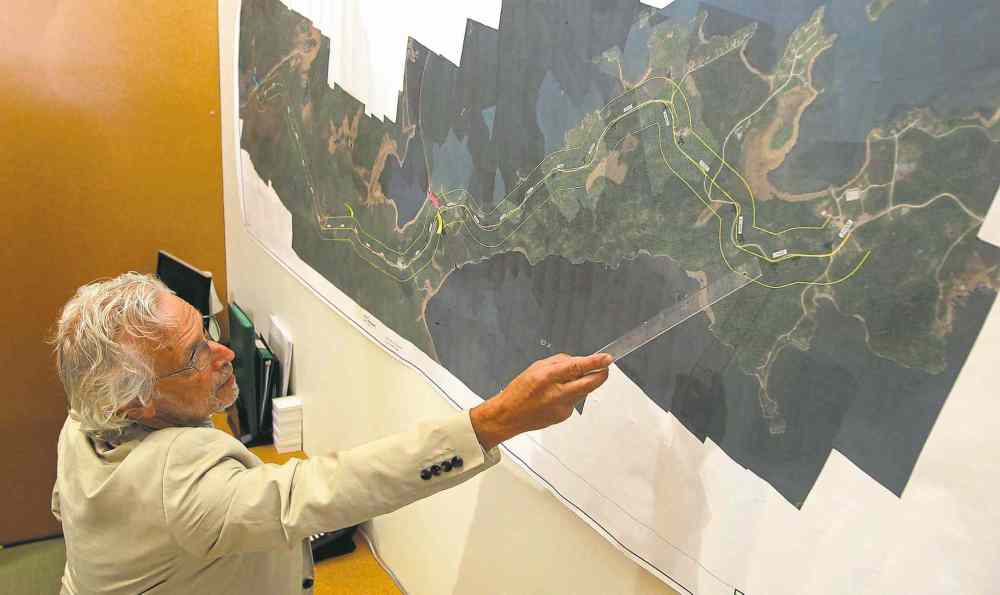
But, the commitment came without mention of federal funding. The city and province have each pledged to pay for a third of the $30-million highway. Attempts to get clarification from Rickford’s office Monday failed.
But Smith, Shoal Lake residents and supporters declared a kind of victory Monday. “It’s done,” said Smith.
Shoal Lake Chief Erwin Redsky couldn’t be reached due to a death in the family. Daryl Redsky, the band’s community consultant, said he’s hopeful but postponing any celebration until he sees something in writing.
“We’ve been waiting for a response from them for a while now. I think all the parties have been waiting. They’re the last piece of the puzzle for this situation we’re in,” he said. “We haven’t received anything in writing yet. Until we see something, as for myself personally, I’ll probably feel the effect of it.”
Rick Harp, organizer of a crowd-sourcing campaign to raise money for Freedom Road, agreed, saying “it’s better than nothing, but it isn’t something yet.”
“The challenge becomes how much weight to give to it,” said Harp. “The usual clichés apply: The devil’s in the details.”
Harp’s campaign, Shoal Lake 40: Road to Reconciliation, has so far seen roughly 800 people pledge a total of $83,000. The goal is $10 million, Ottawa’s share of the road-construction funding.
Harp said he wouldn’t stop the campaign because of Monday’s “in principle” announcement.
“I guess an agreement in principle sounds good in principle, but I’m looking forward to seeing an agreement in action and a road actually constructed,” he said.
On Monday, flanked by musician Steve Bell, one of the organizers of the Churches for Freedom Road awareness campaign, Smith described a trip she and Bell took last week to the picturesque First Nation near the Manitoba-Ontario border. She said she was moved by the plight of the First Nation and its isolation, which stymies economic development, makes it hard to cope with medical emergencies, forces children to attend school off the reserve and endangers residents who try to shortcut across the ice in winter.
Smith was the first Manitoba Conservative to publicly side with the isolated First Nation, which has been under a boil-water advisory for nearly 20 years, even though it’s the source of Winnipeg’s excellent drinking water. The 27-kilometre road, planned to connect to the Trans-Canada Highway, will help end Shoal Lake 40’s century-long status as an island. It will also allow the band to build a proper water-treatment plant.
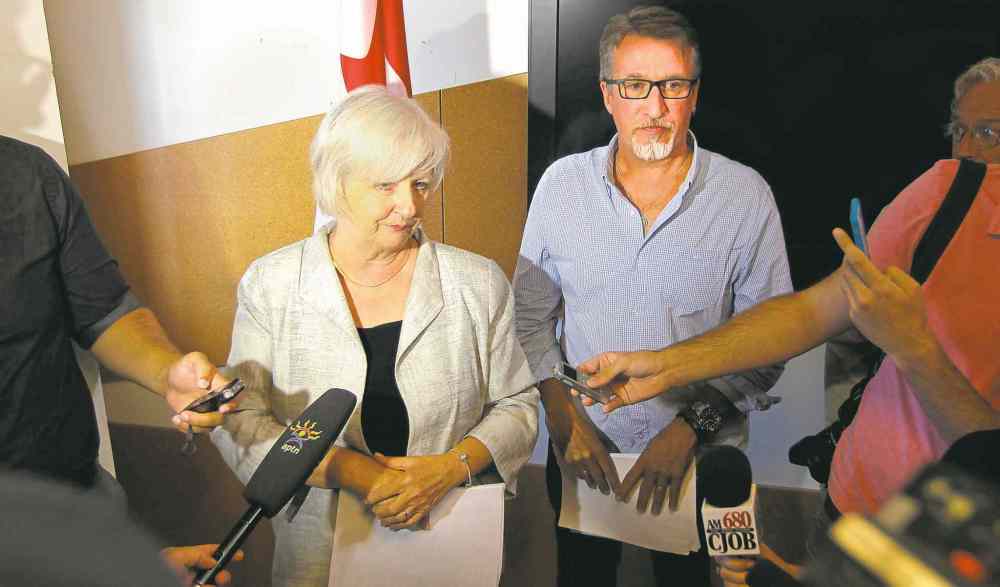
“It is definitely the right thing to do,” said Smith.
Bell, who has helped create a coalition of local churches lobbying for Shoal Lake, said Rickford offered up the words Shoal Lake’s supporters were hoping to hear.

“The fact that it took a public campaign to say what he claims to have supported all along leaves lots of room for skepticism,” said Bell. “But I’m willing to take him at his word and hold him to it.”
At an event at Shoal Lake in June, Rickford raised hackles when he would only reiterate a previously announced $1-million commitment for a design study. He refused to commit federal funds and, until now, the government would not even explicitly commit to Freedom Road “in principle.”
Smith’s move puts her at odds with the Conservative Party of Canada in the midst of a federal election and threatened to put pressure on other local Tories, including former Blue Bombers executive Jim Bell, to make their views on the issue known.
Smith announced her retirement from politics in January, leaving her Kildonan-St. Paul riding suddenly up for grabs. There, the Liberals and NDP are running strong campaigns against Bell, who is running for the Conservatives in Smith’s stead.
maryagnes.welch@freepress.mb.ca jessica.botelho-urbanski@freepress.mb.ca
A century of troubles
1912 — The original Ojibwa village, located at the mouth of the Falcon River at Shoal Lake, begins to be moved to a man-made island nearby to make way for Winnipeg’s aqueduct and water intake structure.
1919 — The city’s aqueduct opens, flowing fresh drinking water from the lake to Winnipeg. It’s an engineering marvel.
1980 — Shoal Lake 40 and nearby Iskatewizaagegan #39 Independent First Nation try to develop hundreds of cottage lots along the lake. The move is eventually stymied by the city, which fears contamination of its drinking-water supply.
1983 — Worried about over-fishing, Ontario shuts down the area’s commercial walleye fishery, which helped Shoal Lake 40 sustain itself.
1989 — The city, province and Shoal Lake reach a deal that sees the creation of a $6-million trust fund that provides annual income to the First Nation. In exchange, Shoal Lake agrees to limit economic development that would damage the lake.
1998 — Ottawa shelves plans for a water-treatment plant after the costs skyrocket.
2000 — Health Canada issues its latest boil-water advisory, one that’s still in effect.
July 2014 — As part of a focused lobbying campaign, a delegation of politicians and officials from the Canadian Museum for Human Rights visits the reserve.
June 2015 — Work begins on a permanent bridge over the canal. The bridge will provide better access to a winter road. At the celebration, area MP and Natural Resources Minister Greg Rickford refuses to commit to federal involvement in a permanent, 27-kilometre highway from the reserve to the Trans-Canada Highway. Instead, he re-announces existing money for a design study.
August 2015 — Outgoing MP Joy Smith bucks her party and demands that Ottawa commit to the road project. The federal Conservatives commit “in principle.”
Related Articles
Liberals win 4th mandate as NDP vote collapses and Singh announces he will resign



Advertisement Advertise With Us
Advertisement Advertise With Us