

NDP’s health-care transfers come with strings attached
Advertisement
Read this article for free:
or
Already have an account? Log in here »
To continue reading, please subscribe:

Digital Subscription
One year of digital access for only $205*
- Enjoy unlimited reading on winnipegfreepress.com
- Read the E-Edition, our digital replica newspaper
- Access News Break, our award-winning app
- Play interactive puzzles
*First annual payment billed as $205.00 + GST for one year. This annual subscription will automatically renew at $233.00 + GST every 52 weeks (10% off the regular annual price of $259.35). Offer available to new and qualified returning subscribers only. Cancel any time.
To continue reading, please subscribe:
Add Free Press access to your Brandon Sun subscription for only an additional
$1 for the first 4 weeks*
- Enjoy unlimited reading on winnipegfreepress.com
- Read the E-Edition, our digital replica newspaper
- Access News Break, our award-winning app
- Play interactive puzzles
*Your next Brandon Sun subscription payment will increase by $1.00 and you will be charged $17.95 plus GST for four weeks. After four weeks, your payment will increase to $24.95 plus GST every four weeks.
Read unlimited articles for free today:
or
Already have an account? Log in here »
Hey there, time traveller!
This article was published 16/09/2015 (4007 days ago), so information in it may no longer be current.
OTTAWA – If the federal NDP get elected, Manitoba could see upwards of $80 million more a year in health-care transfers but much of that money would come with some strict strings attached.
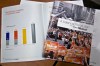
That was made clear as the NDP released a glossy five-page brochure outlining in very broad strokes how it plans to balance the budget and still meet its promises. That is a claim its opponents have openly mocked now for weeks but is a central tenet of the NDP campaign. It is direct contrast to the Liberals who plan to run deficits for the next three years to invest in the economy and stimulate growth.
The document says the NDP will run a $4-billion surplus next year, while still increasing spending by $6 billion for everything from infrastructure and health care to improved programs for seniors, veterans and universal child care. The NDP says it will have surpluses of $3.4 billion, $3 billion and $4 billion in the three years after that, Their promises would cost $11.3 billion to implement annually by 2019-20.

“These are commitments Canadians can rely on,” said Andrew Thompson, former Saskatchewan finance minister and NDP candidate in Eglinton – Lawrence in Toronto. “They are based on a long-term plan, not short-term thinking.”
With leader Tom Mulcair out of sight in Calgary preparing for tomorrow night’s debate on the economy, the party turned to what it calls its “economic team” to field questions about the costing document. That included Thompson, Toronto MP Peggy Nash and Quebec MP Guy Carron.
The plan includes finding $3.7 billion in annual savings from raising the corporate tax rate two points, $2.2 billion from cancelling family income splitting and the doubling of the tax-free savings account annual contribution limit, and $1 billion from closing tax loopholes for the wealthy.
The details of the fiscal plan were not available, as the party wants to save them for future campaign announcements.
The lack of details leave room for critics who have raised doubts about whether the NDP’s numbers add up. In one instance for example, the NDP claims it will save $240 million a year by ending fossil fuel subsidies, but it could not point to any specific subsidies that would add up to that amount.
There are also concerns about whether the NDP can implement many of its pledges without provincial buy in. It’s universal child care pledge for example, requires provinces to kick in 40 per cent of the annual cost. And it turns out the NDP promise to restore health-care transfers to an annual increase of six per cent starting in 2017-18 will come with caveats that the provinces have to spend most of that money on programs the NDP has promised.
Nash said there will be negotiations to be had with the provinces but said within the health transfer increases will have to be funding for pledges such as $1.8 billion over four years for better home care and more nursing beds, $300 million to build or expand health clinics and $200 million for recruitment grants for health-care workers.
The provinces may welcome some of those programs but many, such as Quebec, bristle at being told how to spend the health transfer.
Since the 2004 Canada Health Care Accord, provinces have received an annual increase in health-care transfers of six per cent, often referred to by politicians as an “escalator”. In 2011, the Conservatives said they would maintain that six per cent until 2016-17. After that increases will drop to be in line with annual GDP growth, with a minimum increase of three per cent.
mia.rabson@freepress.mb.ca
Related Articles
Liberals win 4th mandate as NDP vote collapses and Singh announces he will resign









Advertisement Advertise With Us
Advertisement Advertise With Us