

NDP works up steam on railways
Advertisement
Read this article for free:
or
Already have an account? Log in here »
To continue reading, please subscribe:

Digital Subscription
One year of digital access for only $205*
- Enjoy unlimited reading on winnipegfreepress.com
- Read the E-Edition, our digital replica newspaper
- Access News Break, our award-winning app
- Play interactive puzzles
*First annual payment billed as $205.00 + GST for one year. This annual subscription will automatically renew at $233.00 + GST every 52 weeks (10% off the regular annual price of $259.35). Offer available to new and qualified returning subscribers only. Cancel any time.
To continue reading, please subscribe:
Add Free Press access to your Brandon Sun subscription for only an additional
$1 for the first 4 weeks*
- Enjoy unlimited reading on winnipegfreepress.com
- Read the E-Edition, our digital replica newspaper
- Access News Break, our award-winning app
- Play interactive puzzles
*Your next Brandon Sun subscription payment will increase by $1.00 and you will be charged $17.95 plus GST for four weeks. After four weeks, your payment will increase to $24.95 plus GST every four weeks.
Read unlimited articles for free today:
or
Already have an account? Log in here »
Hey there, time traveller!
This article was published 17/11/2015 (3966 days ago), so information in it may no longer be current.
Since it came to power in 1999, the NDP has not made railway relocation in Winnipeg a priority. The party even rejected the city’s efforts in 2002 to launch a campaign that would have forced railway companies to relocate or share tracks to ease congestion and reduce the cost of building and repairing underpasses and bridges.
The NDP’s argument was the railways were major employers and the government did not want to do anything that might force them to shed jobs in Winnipeg.
But the dream of relocating some rail lines, particularly the CP marshalling yards that divide north and south Winnipeg, never went away. Indeed, it has been around for the last 40 years.
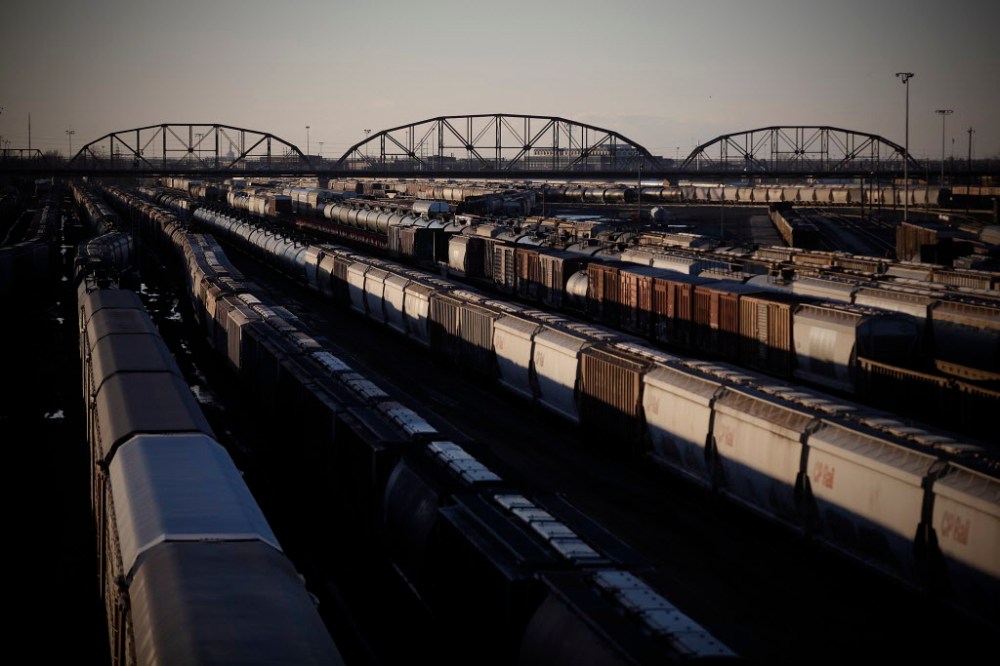
Now, suddenly, Premier Greg Selinger sees the merits of launching a campaign to dramatically remake the city by working with the rail companies to move some of their operations outside the city.
“For far too long,” Monday’s throne speech said, “rail lines have divided our capital city. It is time to move the tracks and open up opportunities for urban renewal.”
The timing is political, but at least a process will be started. At least we will get the facts, including the cost for such a massive endeavour, as well as the benefits to the community and the railways. It should provide a basis for determining realistic options.
The railways have not agreed to move a single line. “It would be very costly and complex,” a CN official said following the throne speech.
A CP spokesman said they like their current location, but they are prepared to talk and participate in a study. That’s good enough, for now.
Unfortunately, the tepid responses mean nothing is likely to happen for a very long time. The railways also have history and federal legislation on their side, meaning they won’t move or change unless doing so improves their bottom lines.
It means the city will still have to spend hundreds of millions of dollars repairing and building new bridges over rail lines, constructing new underpasses at places such as Waverley Street and other crossings where people are tired of waiting for trains.
And trains are getting longer as railways seek greater efficiencies, meaning those infuriating wait times will also rise without new underpasses.
All of this will fuel the movement to convince railways they would be better off bypassing the city.
Indeed, railways generally find navigating large urban centres difficult because they have to slow down, build and maintain level crossings, carry hefty disaster insurance and hire extra employees to manage the complex urban environment.
It remains to be seen if the NDP will be around after the April election to convince railways of the mutual benefits of relocation. There’s no reason to fear, however, that the Progressive Conservatives will kill the initiative if they are elected.

It’s hard to find anyone who doesn’t see the wisdom of rail-line rationalization in urban centres. In the end, however, it all comes down to cost, affordability and priorities.
For their part, the railways are highly competitive, and they have always resisted the idea of rationalizing their networks and sharing lines.
Relocating CP’s marshalling yards may turn out to be too complex and expensive, but some experts believe CN could move its main line around the city with minimal disruption to its operations.
Ideally, the railway issue should have been resolved decades ago.
History, however, doesn’t always unfold the way you want. But now the government has the ear of the rail magnates, there is still a chance the city could make history again.
Read More
Read more about what rail yard redevelopment would mean for Winnipeg in this Free Press series, Off the Rails.
Related Articles
NDP to ramp up infrastructure spending: throne speech
Advertisement Advertise With Us
Advertisement Advertise With Us
History
Updated on Tuesday, November 17, 2015 5:18 PM CST: Added write-through of story.