

NDP to ramp up infrastructure spending: throne speech

Advertisement
Read this article for free:
or
Already have an account? Log in here »
To continue reading, please subscribe:

Digital Subscription
One year of digital access for only $205*
- Enjoy unlimited reading on winnipegfreepress.com
- Read the E-Edition, our digital replica newspaper
- Access News Break, our award-winning app
- Play interactive puzzles
*First annual payment billed as $205.00 + GST for one year. This annual subscription will automatically renew at $233.00 + GST every 52 weeks (10% off the regular annual price of $259.35). Offer available to new and qualified returning subscribers only. Cancel any time.
To continue reading, please subscribe:
Add Free Press access to your Brandon Sun subscription for only an additional
$1 for the first 4 weeks*
- Enjoy unlimited reading on winnipegfreepress.com
- Read the E-Edition, our digital replica newspaper
- Access News Break, our award-winning app
- Play interactive puzzles
*Your next Brandon Sun subscription payment will increase by $1.00 and you will be charged $17.95 plus GST for four weeks. After four weeks, your payment will increase to $24.95 plus GST every four weeks.
Read unlimited articles for free today:
or
Already have an account? Log in here »
Hey there, time traveller!
This article was published 16/11/2015 (3966 days ago), so information in it may no longer be current.
The Selinger government plans a pedal-to-the-metal approach to infrastructure spending in the hopes of keeping the economy humming and winning support from the electorate in next spring’s general election.
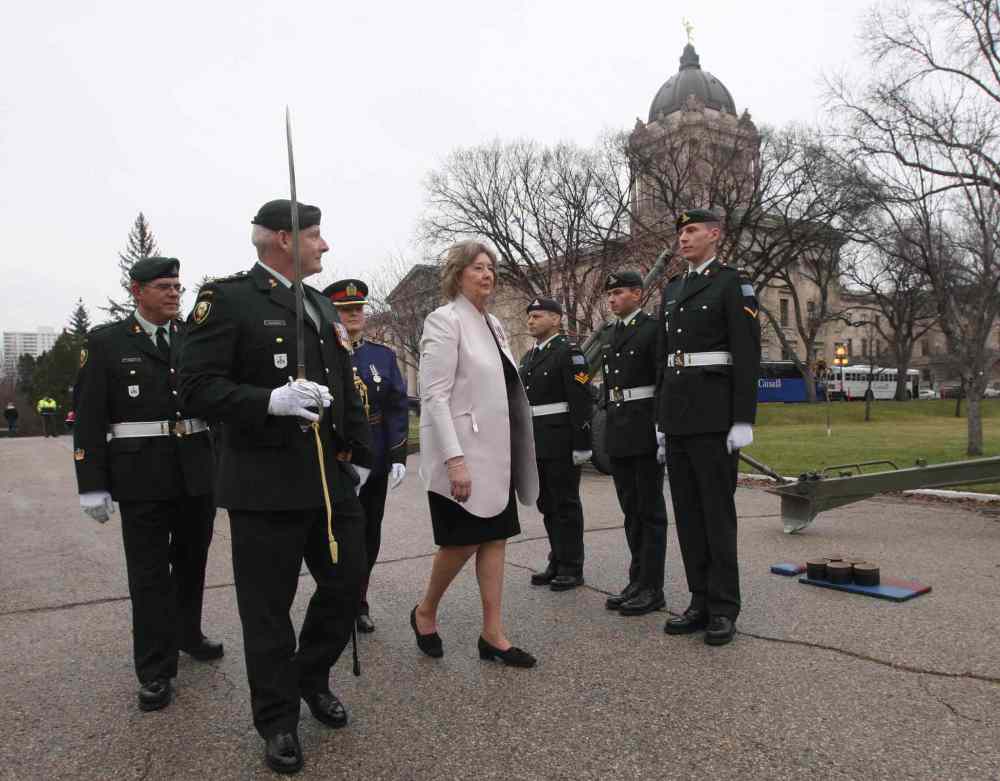
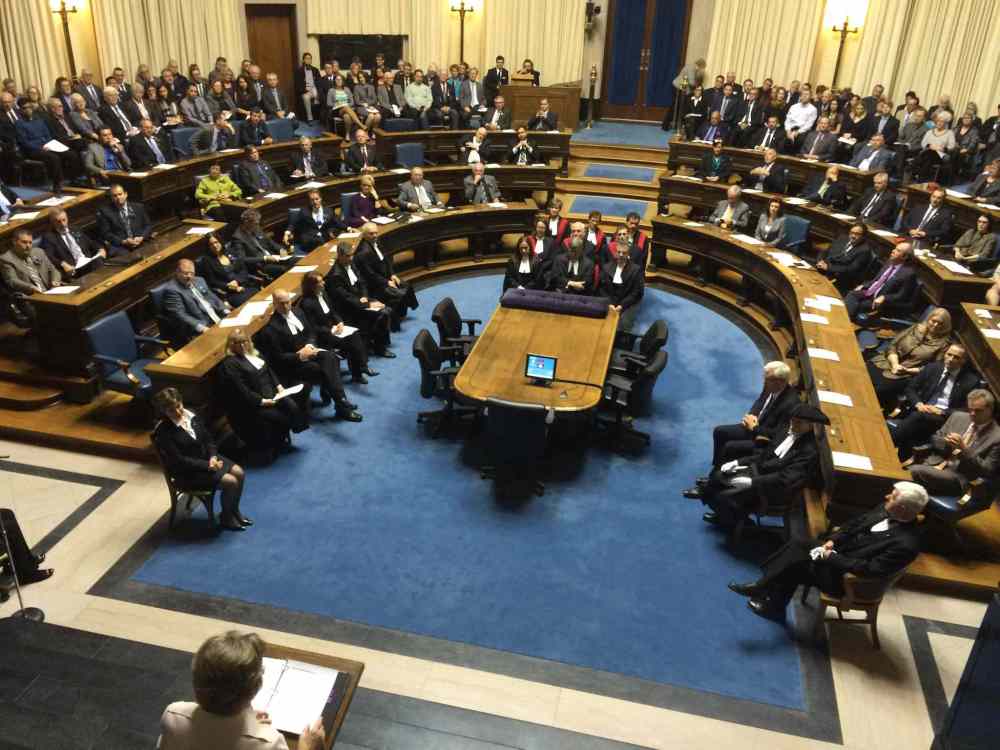
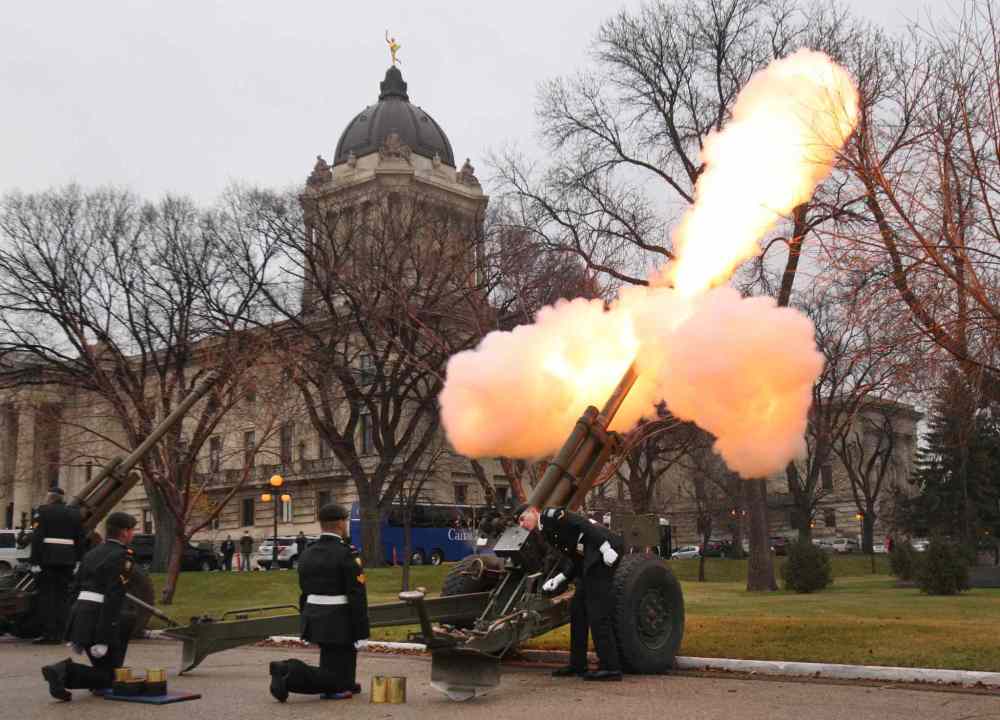
The government’s speech from the throne calls for a three-year extension of the NDP’s multi-billion dollar infrastructure program to 2020, bringing the total investment to $10 billion.
Included in the province’s spending projects is a $1 billion New Partnership with the City of Winnipeg for roads, public transit, wastewater treatment plants and recreation centres.
Premier Greg Selinger told a press wbriefing before the speech, read by Lt.-Gov. Janice Filmon, that about 25 per cent of the Winnipeg spending will be over above what the province contributes right now. It includes upping the province’s share of wastewater treatment upgrades to one-third at a cost of $100 million and paving and upgrading roads throughout the city, he said.
As first reported by the Free Press, the premier also signalled his government’s intention to work towards the removal of rail lines and rail yards inside Winnipeg. That effort will begin next year when CentrePort Canada breaks ground on a new rail park, he said.
The removal of the rail lines, a long-term project that would require co-operation from the railways and other levels of government, would save families time on their daily commute “and reimagine urban renewal” in Manitoba’s capital city,” the premier said. He didn’t provide a cost estimate for the massive undertaking.
Now is the time to make big investments: Selinger
The NDP is planning large new spending initiatives at a time when the government has been unable to balance the books in six years.
But Selinger argued this is the time to make big investments while interest rates are low and the global and Canadian economies are threatening to slow down.
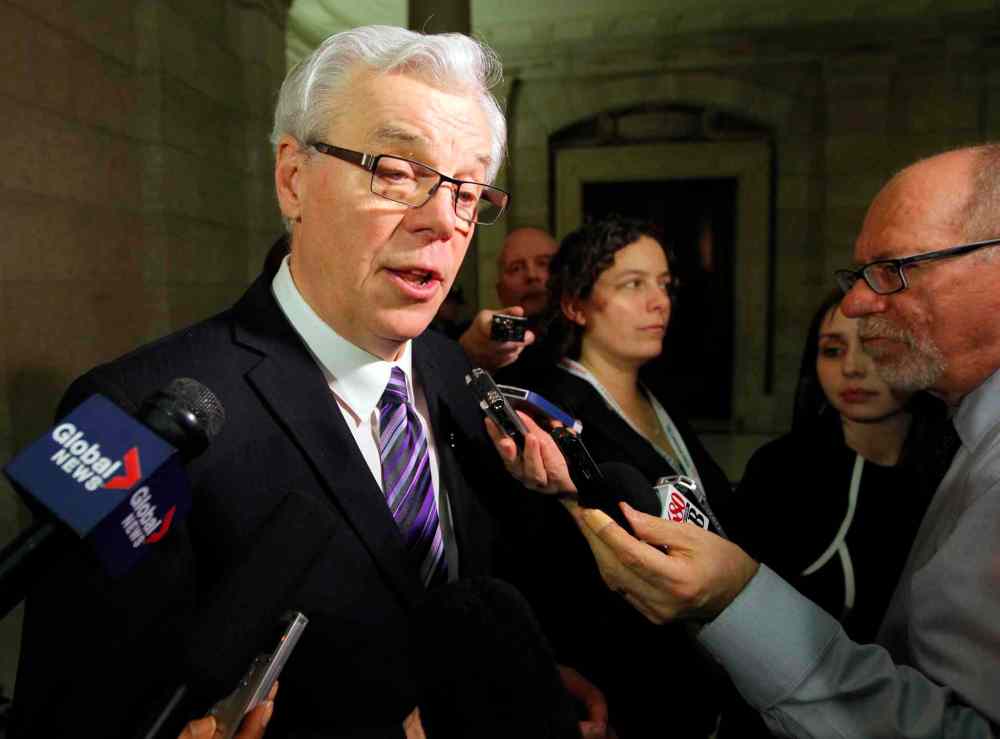
“This is the right time to invest. Borrowing costs are at a historic low. We can lock in those investments for 30, sometimes 40 years… That allows for those assets to be built now when the global economy is fragile,” he said.
Asked whether his government’s commitment last spring to balance its operating budget by 2019 may now be in doubt, Selinger replied that it still remains the target.
“The one thing that we know around the world is if your economy is not growing, your deficits are actually larger, your ability to look after people is reduced and weakened,” he said.
“You’ve got to have a growth strategy twinned with a fiscal prudence strategy based around investing in people and communities.”
He said the government’s strategies are working.
“If you have a province with the lowest unemployment rate in Canada and the best job creation rate why would you want to mess with that?” the premier said.
Today’s throne speech, which kicks off the final legislative session until the April 19, also promises the creation of 12,000 new child care spaces within five to seven years, depending on how quickly child-care workers can be trained.
The province also intends to turn Nov. 11 into a full statutory day of remembrance.
The government also plans to build a new Pan-Am Clinic and it plans continued increases to the minimum wage.
Promises not sustainable: Pallister
Opposition Leader Brian Pallister said the throne speech promises are not sustainable since the government does not have a plan to restore balanced budgets.
“Fiscal mismanagement underpins the problems with keeping any of these promises,” the Progressive Conservative leader said.
“The question is why would Manitobans believe them after their record of breaking every election promise last time,” Pallister said.
He said he shares the sentiments expressed by the government about the need to improve education and health care. “But love isn’t words, love is deeds, love is results,” he said.
Liberals: What’s taking so long?
Liberal Leader Rana Bokhari said the speech from the throne felt more like one emanating from a new government than one that has been in power for a decade and a half.
“If you’ve been here for 16 years, most of the stuff should have either been implemented, in place or dealt with already,” she said.
“I think the issue is, how do you trust a government after this much time.”
Bokhari noted there was nothing in the throne speech about improving hospital wait times, an issue that continues to vex the health-care system.
She said plans to expand the number of child care spaces is a good idea, but questioned why the NDP has failed to get on top of the issue after being in power for so long.
Winnipeg needs new funding model: mayor
Mayor Brian Bowman said he was glad to see the city had a high profile in the throne speech, but he expressed disappointment about what was not said.
“We want a new funding model,” Bowman said just minutes after the speech ended.
“We need to secure a new modern funding model and we haven’t received it to date.”
Bowman said the city wants funding from the province that isn’t tied to specific projects so it can set its own priorities.
He pointed to the province’s inclusion of a replacement of the Louise Bridge as part of the problem.
“We were asked to prioritize projects,” Bowman said.
“The Louise (Bridge) was not on that… this has been done for some time.
“We want unrestricted funds.”
As for the announcement the province will give the city $1 billion during the next five years, Bowman said the city will have to see the details on whether this is more cash than the city normally gets.
As well, Bowman said an additional $100 million to help the city upgrade its waste water treatment plants is nice, but “we still have a long ways to go.”
Meanwhile, Bowman said the city will be a “constructive partner” at the table for discussions about moving rail lines out of the city.
But Bowman said he has been talking to the province about rail “rationalization” and not necessarily relocation.
“We have to proceed in a realistic manner,” he said.
“We do need to be realistic about the cost.”
Bowman did admit if the rail lines were moved it would be a “tremendous opportunity to better connect our citizens.”
Minimum-wage hike pleases labour group
Kevin Rebeck, president of the Manitoba Federation of Labour, said he’s pleased the province is committed to continuing to raise the minimum wage.
“A job should be a path out of poverty, not a poverty trap,” he said.
Currently, the minimum wage is $11 per hour, but in 2013, it was estimated the minimum wage would have to be $15.23 to get a person to the poverty line.
Rebeck said he’s also happy the province has committed to adding paid workplace-leave provisions to victims of domestic violence.
“We’re very excited about that,” he said.
“Many victims suffer in silence… When people are not safe and secure at home, they need to know that their job is.”
Rebeck said when in place, the legislation will be the first in Canada and brings to an end two years of lobbying by the Manitoba Federation of Labour and the Canadian Labour Congress.
More fiscal responsibility needed: Chamber
Loren Remillard, vice-president of the Winnipeg Chamber of Commerce, said he’s not pleased about the amount of money the province is talking about spending.
“There’s no problem they’ve identified they can’t throw enough money at,” he said.
Remillard said the government needs to take more fiscal responsibility.
As for relocating the rail yards, Remillard said he agrees it needs to be examined.
“But let’s not fall in here with the solution before we know the problem,” he said, adding rail amalgmation should be looked at first instead of relocation.
“We applaud the province for saying, ‘let’s take a look at it.’”
WAG close to budget for new building
Stephen Borys, executive director of the Winnipeg Art Gallery, said he’s pleased the province has committed cash to its proposed Inuit Art Centre. The WAG has already raised about $15 million to build a building which would house the world’s largest collection of Inuit art.
“We’re not quite there yet, but this puts us close,” Borys said, adding it hopes to have the city and federal governments come on board next.
“We anticipate groundbreaking in the fall of 2016. What was heard today could make it possible.”
larry.kusch@freepress.mb.ca
kevin.rollason@freepress.mb.ca
Kevin Rollason
Reporter
Kevin Rollason was a general assignment reporter at the Free Press.
Our newsroom depends on a growing audience of readers to power our journalism. If you are not a paid reader, please consider becoming a subscriber.
Our newsroom depends on its audience of readers to power our journalism. Thank you for your support.
What was said
Here are the highlights of the provincial government’s Throne Speech today:
- Make Remembrance Day a full statutory holiday like Christmas and Labour Day so all employees can get paid even when they have the day off. Currently the day is not a general holiday, but many industries are not allowed to operate that day under the province’s labour legislation.
- Extend the province’s core infrastructure plan by three years to investing $10 billion beyond 2020.
- CentrePort Canada will begin constructing a new Rail Park in 2016.
- Add Peace Officers and First Responders who die in the line of duty to the province’s Geographic Names Program. Currently, it honours Manitobans who die in war service with the naming of a lake, river or other feature in remote areas of the province.
- Once marijuana is legalized by the federal government, the NDP says the province’s Liquor and Gaming Authority will be “well positioned” to sell pot.
The City of Winnipeg:
- Will get $1 billion over five years from the provincial government.
- The province will work to relocate the CP Rail yards which effectively split the North End from the south end of the city.
- Increase its share of upgrading the city’s wastewater treatment plants by $100 million to take on one-third of the expense
- Renew roads in every neighbourhood in the city
- Build the Waverley Underpass along with an unspecified project to increase traffic flow on Marion Street.
- Replace the Louise Bridge, extend the Chief Peguis Trail west, and upgrade Kenaston Boulevard.
- Help implement the city’s curb-side composting program
- Help fund the completion of the southwest rapid transit corridor from Jubilee Avenue to the University of Manitoba.
- Push to convert the city’s fleet of buses to run on electricity.
Health:
- Support the building of a new CancerCare Manitoba facility.
- Invest in expansion of the Women’s Health Clinic.
- Help build a new Pan-Am Clinic in partnership with the Reh-Fit Centre.
- Build new personal care homes with emphasis on patients with Alzheimer’s and dementia.
- Introduce legislation to help families get time off when caring for family members.
- Create a breast milk bank, enhance fertility treatment support, increase mental health supports for youth, add more hospice beds with Jocelyn House, and support a new chair in palliative care at the University of Manitoba.
- Build more social and affordable housing to work at ending homelessness.
- Reduce ambulance fees.
Labour:
- Increase the minimum wage.
- Bring the incomes of Manitoba families above the poverty line.
- Modernize supports for people living with disabilities who face disadvantages in employment.
- Create training and job opportunities for people facing barriers to employment.
Justice:
- Increase support for victims of violence and give paid leave to victims of domestic violence.
- Will strengthen protection orders.
- Will create Restorative Justice Strategy to fight the root causes of crime.
- Partner with post-secondary institutions on sexual violence and harassment policies to make them a safer place for students.
Daycare and Education:
- Create 12,000 child care spaces so everyone who needs a space will get one.
- Open more child care centres in schools, colleges, universities and new housing developments.
- A $150 million funding commitment to the University of Manitoba to help it leverage $500 million for students supports for education and research opportunities.
- Double the number of women apprentices in the skilled trades.
- Build a new trades training centre with the University College of the North.
- Create more after-school programs in northern and rural Manitoba
Tourism:
- The Assiniboine Park Conservancy will get new dollars to help with its next redevelopment project, Diversity Gardens, at the park.
- Work with Nunavut’s Premier to support the building of the Winnipeg Art Gallery’s new Inuit Art Centre – which will have the world’s largest collection of Inuit art.
- Promote Churchill as a “tourism destination and a gateway to the North”. Churchill will also see investments in world class research facilities in arctic science.
- Partner with Travel Manitoba and the Manitoba Chambers of Commerce to launch a tourism investment plan.
- Help grow and develop the local craft beer industry.
Brandon:
- Funding for a new south-end school, a redevelopment of the North Hill Assiniboine Community College campus, and expansion of the Daly Overpass.
- Funding for flood protection, the renewal of community centres and curling rinks, and adding more housing for students at Brandon University.
First Nations communities:
- New roads connecting First Nations on the east side of Lake Winnipeg and the Freedom Road to Shoal Lake 40, and upgrading single access roads into communities like Nisichawayasikhk Cree Nation.
- The Freedom Road to Shoal Lake 40 would not come under the mandate of the East Side Road Authority.
- Introduce customary care legislation so children who might have been seized from parents and looked after in another community can stay in their home community.
- Set up new partnerships between Indigenous communities, business leaders and schools to create more opportunities for youth.
Environment:
- Build flood protection around the province and rebuild communities around Lake Manitoba and Lake St. Martin.
- Work to reduce nutrient loading and fight the spread of Zebra mussels.
- Help Manitobans save money on electricity bills by creating new programs with Manitoba Hydro.
- Expand protected areas and put more money into provincial parks.
- New action to protect wetlands and wildlife.
- Create new environmental bill of rights so every Manitoban is guaranteed the right to a healthy environment.
Rural communities:
- Create a new Growing Communities Infrastructure Fund to help rural and northern communities build and renew roads, sewer, water and community centres.
- Give stable and long-term funding to municipalities so they can plan better.
Kevin Rollason
Reporter
Kevin Rollason was a general assignment reporter at the Free Press.
Our newsroom depends on a growing audience of readers to power our journalism. If you are not a paid reader, please consider becoming a subscriber.
Our newsroom depends on its audience of readers to power our journalism. Thank you for your support.
Related Articles
Selinger promises new modern interchanges on Perimeter Highway



Advertisement Advertise With Us
Advertisement Advertise With Us
History
Updated on Monday, November 16, 2015 2:00 PM CST: Adds live video, fixes text formatting
Updated on Monday, November 16, 2015 2:04 PM CST: Adds point about marijuana.
Updated on Monday, November 16, 2015 3:10 PM CST: Adds Pallister comments.
Updated on Monday, November 16, 2015 3:21 PM CST: Adds Bowman reaction.
Updated on Monday, November 16, 2015 3:39 PM CST: Adds Bokhari reaction.
Updated on Monday, November 16, 2015 3:49 PM CST: Adds Rebeck reaction.
Updated on Monday, November 16, 2015 4:23 PM CST: Adds video.