

The mixed legacy of Canadian immigration
Advertisement
Read this article for free:
or
Already have an account? Log in here »
To continue reading, please subscribe:

Digital Subscription
One year of digital access for only $205*
- Enjoy unlimited reading on winnipegfreepress.com
- Read the E-Edition, our digital replica newspaper
- Access News Break, our award-winning app
- Play interactive puzzles
*First annual payment billed as $205.00 + GST for one year. This annual subscription will automatically renew at $233.00 + GST every 52 weeks (10% off the regular annual price of $259.35). Offer available to new and qualified returning subscribers only. Cancel any time.
To continue reading, please subscribe:
Add Free Press access to your Brandon Sun subscription for only an additional
$1 for the first 4 weeks*
- Enjoy unlimited reading on winnipegfreepress.com
- Read the E-Edition, our digital replica newspaper
- Access News Break, our award-winning app
- Play interactive puzzles
*Your next Brandon Sun subscription payment will increase by $1.00 and you will be charged $17.95 plus GST for four weeks. After four weeks, your payment will increase to $24.95 plus GST every four weeks.
Read unlimited articles for free today:
or
Already have an account? Log in here »
Hey there, time traveller!
This article was published 30/11/2015 (3926 days ago), so information in it may no longer be current.
THE current debate about admitting 25,000 Syrian refugees into Canada during the
next four months or so has pitted humanitarians against those who want the government to adopt a more cautious approach after initial media reports one of the terrorists involved in the Paris attacks may have entered Western Europe as a Syrian refugee. Those reports have been disproved, but the debate rages on.
Those who are in favour of forging ahead and bringing in the refugees irrespective of any potential security lapses perceive themselves as reflecting Canada’s true values, while those who worry about the country’s safety are seen as being less than generous, almost un-Canadian.
In fact, the dispute ignores the history of Canada’s immigration and refugee policies. Consider, for example, that it took until 1969 for Canada (under the government of Pierre Trudeau) to sign the United Nations Convention relating to the Status of Refugees — 18 years after it was adopted. Until then, Canada’s position on who constituted a refugee had not been formalized. The decision to accept the convention coincided with a rethinking and revamping of the country’s immigration policies, which made it more liberal and in line with our current views.
Though Canada is a country built on immigration, for much of its history immigration policy was highly selective and at times blatantly xenophobic. Newcomers, including refugees, who did not fit the white, Anglo-protestant mould — that is, desirable immigrants from Britain, Scotland and northern Europe — were feared more than welcomed, even during periods when Canada’s door was supposedly open. There was always a “humanitarian impulse” of sorts, but it was tempered for much of 19th and 20th centuries by a much stronger and narrower impulse about the definition of a desirable Canadian and concerns about the country’s future composition and social and economic development.
In the 1850s, even before Confederation, the Irish Catholic victims of the potato famine — refugees in every sense of the word — who managed to make it to Upper Canada (Ontario) were greeted with prejudice and discrimination by the Anglo majority, who did not trust Catholics and stereotyped most Irish immigrants as drunk paupers.
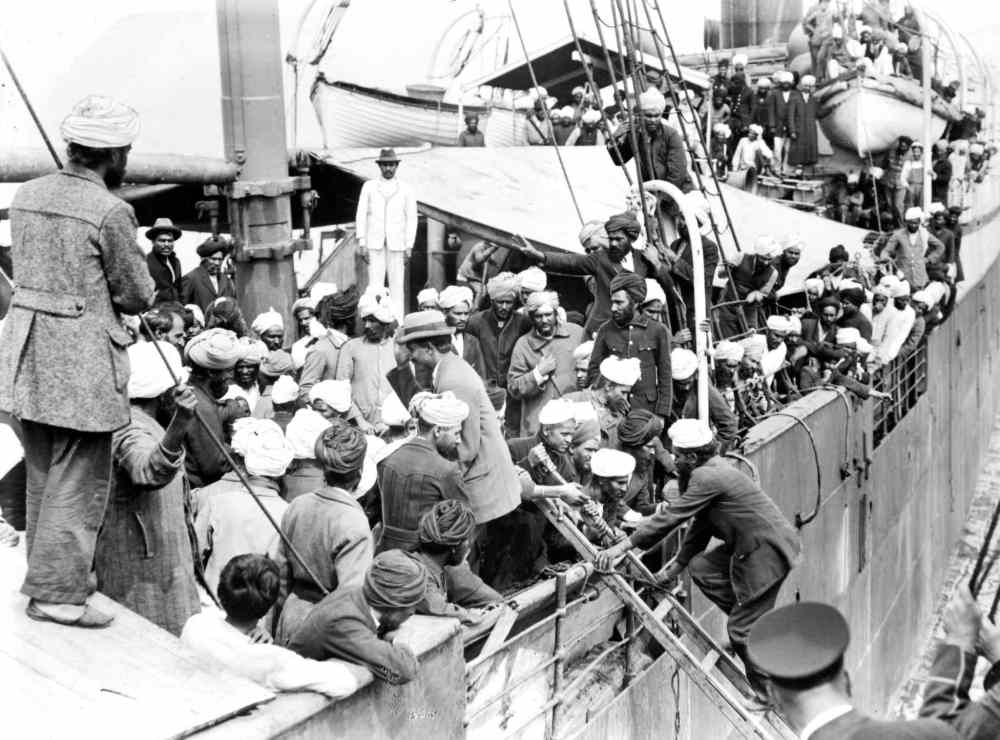
That more or less set the pattern. Chinese immigrants endured a discriminatory head tax from 1885 to 1923, until the even more discriminatory Chinese Immigration Act of 1923 banned nearly all Chinese immigration to Canada for the next two decades. Prejudice, too, prevented Sikh, Hindu and Muslim immigrants, all British subjects, from seeking a new life in British Columbia in 1914 when they arrived in Vancouver aboard the steamship, the Komagata Maru. And when Clifford Sifton, the minister of the interior in charge of immigration in Wilfrid Laurier’s government from 1897 to 1905, opened Canada up to “stalwart peasants in sheepskin coats” who were prepared to farm the Prairies, his officials ensured these did not include unwanted African-Americans.
The Laurier administration’s policy that brought hundreds of thousands of newcomers to Canada, mainly British, but also Italians, Germans and Eastern European Jews, forever altered the country’s character. Many, however, settled in the growing cities rather than rural areas, contributing, it was asserted, to the urban problems of the early 20th century. Hence, the immigrants were considered dangerous to the survival of “Canadian values” — as defined by the majority and assimilation was seen as the only solution.

In this era, the tug of war between following the precepts of Christian charity and keeping Canada white and free of undesirable immigrants, the latter usually won out. The most well-known example is the refusal of Mackenzie King’s Liberal government in the late 1930s to permit German-Jewish refugees fleeing Nazi persecution to come to Canada. Ignoring the lobbying efforts from more tolerant Canadian leaders, advice from a few of his humanitarian-minded cabinet ministers, as well as his own conscience, King instead heeded the anti-Semitic views of Frederick Blair, the deputy minister of immigration, and the members of his Quebec caucus, who wanted to keep the refugees out.
Even after the Second World War, Canada maintained strict controls on immigration, especially on allowing displaced persons into the country. A decade later, the federal government was more welcoming to Hungarian refugees affected by the Soviet invasion of 1956.
That humanitarian approach, which we today regard as quintessentially Canadian, continued in the 1960s and ‘70s, culminating in 1979-80 with assistance for nearly 60,000 Indochinese refugees, the so-called “boat people.” Both the government and private organizations stepped forward to create what was then an unprecedented refugee resettlement plan. In many ways, it was a defining moment for the country, yet one that only happened 35 years ago.
Now & Then is a column in which historian Allan Levine puts the events of today in a historical context.