

Racist attitudes behind residential schools ‘not things of the past’: report
Advertisement
Read this article for free:
or
Already have an account? Log in here »
To continue reading, please subscribe:

Digital Subscription
One year of digital access for only $205*
- Enjoy unlimited reading on winnipegfreepress.com
- Read the E-Edition, our digital replica newspaper
- Access News Break, our award-winning app
- Play interactive puzzles
*First annual payment billed as $205.00 + GST for one year. This annual subscription will automatically renew at $233.00 + GST every 52 weeks (10% off the regular annual price of $259.35). Offer available to new and qualified returning subscribers only. Cancel any time.
To continue reading, please subscribe:
Add Free Press access to your Brandon Sun subscription for only an additional
$1 for the first 4 weeks*
- Enjoy unlimited reading on winnipegfreepress.com
- Read the E-Edition, our digital replica newspaper
- Access News Break, our award-winning app
- Play interactive puzzles
*Your next Brandon Sun subscription payment will increase by $1.00 and you will be charged $17.95 plus GST for four weeks. After four weeks, your payment will increase to $24.95 plus GST every four weeks.
Read unlimited articles for free today:
or
Already have an account? Log in here »
Hey there, time traveller!
This article was published 15/12/2015 (3943 days ago), so information in it may no longer be current.
OTTAWA — Canada has yet to come to terms with the racist attitudes that led to the creation of Indian Residential Schools, the final report of the Truth and Reconciliation Commission says.
“The beliefs and attitudes that were used to justify the establishment of residential schools are not things of the past,” reads the report, which is being made public in Ottawa today. “They continue to animate much of what passes for Aboriginal policy today.”
The six-volume report is a no-holds-barred account of the history of the residential schools, the abuses aboriginal children suffered within them, and the legacy they have left behind for Canada and aboriginal peoples.
In addition to experiencing abuse and poor living conditions, more than 3,000 children died while living at residential schools.
The six-volume final report follows the release last June of the executive summary and the 94 recommendations made by the TRC.
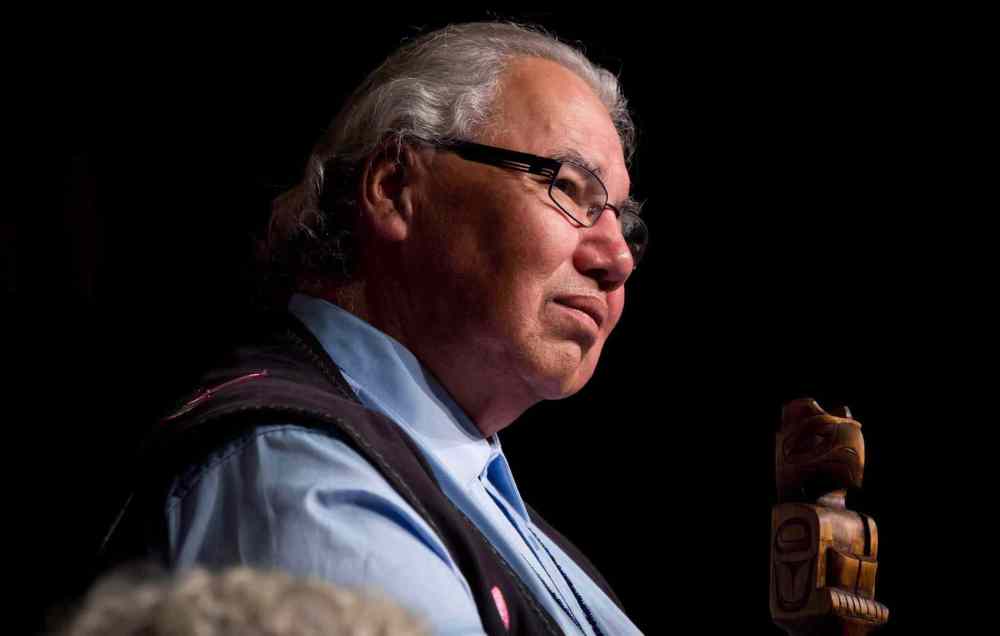
Commission Chair Murray Sinclair said in the report the children who attended the schools were robbed of their dignity and pride and have “caused individuals and communities to lose their capacity to cope with the daily tasks of living.”
For evidence one must only look at the serious social conditions aboriginal peoples cope with today.
The Commission was clear last June Canada’s goal in creating the residential school system was cultural genocide. And the attitudes that led to that goal live on, writes Sinclair.
“The legacy can be seen in the myths, misunderstandings, and lack of empathy many Canadians openly display about Indigenous people, their history, and their place in society,” he wrote. “Canadians have been educated to believe in the inferiority of Indigenous peoples and in the superiority of European nations.”
The TRC was the one of the results the Indian Residential Schools Settlement Agreement, signed in 2007 between survivors, the federal government and the churches that ran the schools for the government. In addition to payments made to survivors and victims of abuse in the schools, the agreement required a national apology and the creation of the TRC to document the history of the schools and move towards a new relationship between Canada and aboriginal peoples.
More than 6,000 survivors told their stories to the commissioners over the last six years and the report is based on those accounts as well as poring over millions of documents from the federal government and the churches.
Widespread physical, sexual and psychological abuse are documented in the report, and there is an entire chapter dedicated to the deaths of students as well as looking for those who went missing after being forced to attend.
The schools were death traps of disease, poor nutrition, and shoddy building structures that in many cases burned to the ground, killing students who were unable to escape. At one point the death rate in the schools was five times that of the regular Canadian school-aged population. But even there, record keeping is a factor since after 1966, the government did not report enrolment numbers for the schools, making a death rate impossible to determine.
Right now, the TRC has a registry of 3,201 deaths, but one-third of those have no name attached because record keeping was so shoddy, school authorities didn’t think it necessary to attach a name to the death record. One-quarter of the deaths don’t even have a gender.
Many of these children were buried in unmarked graves near the school grounds. Many of their parents were never even informed of their deaths.
The TRC aims to continue to try and fill in the gaps of the deaths and missing children. Sinclair believes the records are so poor, and many of those kept were destroyed decades ago, that the actual death toll may be five or 10 times higher than what is currently known.
An estimated 150,000 aboriginal children attended Indian Residential Schools,most of them by force, from the latter half of the 19th century and throughout most of the 20th. Most were in the west, the north, northern Ontario and northern Quebec.
The last of the schools closed in the mid-1990s, although few remained after 1980.

The schools were run by the churches on behalf of the federal government and operated out of a federal government policy to assimilate aboriginal children.
The 94 recommendations made by the commission include everything from improvements to child welfare programs and education funding and programs on reserves to helping aboriginal languages survive, to building a national monument for survivors in Ottawa.
In June, before he won the election, Prime Minister Justin Trudeau pledged to implement all 94, although several are outside his purview. He has however moved already to establish a national inquiry into the epidemic of murdered and missing indigenous women in Canada, promised to lift funding caps on aboriginal programming and improve education funding on reserve.
As well, most provinces have acted to include aboriginal history and the residential schools in public school curriculums.
mia.rabson@freepress,mb.ca
Related Articles
Post-secondary institutes will sign Indigenous Education Blueprint


Advertisement Advertise With Us
Advertisement Advertise With Us