

Differences in handling First Nations issues
Country must move beyond symbolism
Advertisement
Read this article for free:
or
Already have an account? Log in here »
To continue reading, please subscribe:

Digital Subscription
One year of digital access for only $205*
- Enjoy unlimited reading on winnipegfreepress.com
- Read the E-Edition, our digital replica newspaper
- Access News Break, our award-winning app
- Play interactive puzzles
*First annual payment billed as $205.00 + GST for one year. This annual subscription will automatically renew at $233.00 + GST every 52 weeks (10% off the regular annual price of $259.35). Offer available to new and qualified returning subscribers only. Cancel any time.
To continue reading, please subscribe:
Add Free Press access to your Brandon Sun subscription for only an additional
$1 for the first 4 weeks*
- Enjoy unlimited reading on winnipegfreepress.com
- Read the E-Edition, our digital replica newspaper
- Access News Break, our award-winning app
- Play interactive puzzles
*Your next Brandon Sun subscription payment will increase by $1.00 and you will be charged $17.95 plus GST for four weeks. After four weeks, your payment will increase to $24.95 plus GST every four weeks.
Read unlimited articles for free today:
or
Already have an account? Log in here »
Hey there, time traveller!
This article was published 16/12/2015 (3930 days ago), so information in it may no longer be current.
After six long years and a preliminary report released earlier this year, the Truth and Reconciliation Commission’s final report was released in Ottawa with Prime Minister Justin Trudeau looking on.
Tuesday’s ceremony underscores a new relationship between Ottawa and aboriginal people. The new Liberal government couldn’t be more different than the government under Stephen Harper, if only in terms of symbolism.
There’s no doubt 2016 will go down as the year in which indigenous issues were given prominence. The TRC report, coupled by a commitment by the federal government to hold an inquiry into missing and murdered aboriginal women and girls, suggests there is a interest at the federal level to improve the relationship between the state and the more than 1.3 million aboriginal people who call this country home. Trudeau is taking seriously the message he issued in mandate letters to his cabinet ministers: “No relationship is more important to me and to Canada than the one with indigenous peoples.”
The TRC report included 94 recommendations. Trudeau, in his election campaign, promised to enact those recommendations, starting with the TRC’s call that Canada implement the United Nations Declaration on the Rights of Indigenous Peoples (UNDRIP). The declaration addresses both individual and collective rights, cultural rights and identity, rights to education, health, employment, language and others for aboriginal people and sets out the minimum standards for the “survival, dignity and well-being” of indigenous peoples around the world.
Canada was not a signatory to that agreement eight years ago. It is a largely an aspirational, symbolic document, thus not legally binding, but the government took issue with the language of the declaration. The UN declaration requires government to obtain “free, prior and informed consent,” particularly on approval for natural resources development. The Harper government feared this could imply First Nations could veto development. It refused to sign the UNDRIP in 2007 and again in 2014.
In June, when the executive summary of the final TRC report was tabled, Harper suggested endorsing the declaration was unnecessary because “Canada is one of the very few countries in the world where aboriginal treaty rights are fully recognized in our Constitution.”
Five short months later, Indigenous and Northern Affairs Minister Carolyn Bennett said the new Liberal government would make good on its promise to implement the UNDRIP in a bid to rebuild the relationship between the state and aboriginal groups.
The Liberals also promised in the election campaign to “immediately launch a national public inquiry into missing and murdered Indigenous women and girls in Canada.” The government earlier this month outlined its first phase of an inquiry, which will include consultation with the families of victims first before proceeding.
This also stands in stark contrast to Harper, who refused to call an inquiry because there have already been 40 studies on the issue.
“Our government position on this has been very clear,” Harper said at a campaign stop in Ontario in October.
“We have moved forward with a whole series of criminal justice reforms to deal with the problems of violence against people generally, violence against women in particular. Most of these murders, sad as they are, are in fact solved.”
A year earlier, Harper was severely criticized for saying missing and murdered aboriginal women should not be seen as a “sociological phenomenon,” but instead seen as crimes that can be dealt with by police.
Trudeau’s decision may just be symbolic. All pomp, but little circumstance. A national inquiry into missing and murdered indigenous women may not unearth anything new and may well cover the same terrain as the previous 40 reports. The recommendations of the TRC may also be incredibly difficult to implement, particularly as they require a buy-in from the provinces at a time when their economies are struggling.
However, symbolism is important. At one point, it would seem Harper understood that. After all, the Harper government oversaw the implementation in 2007 of the Federal Court-mandated Indian Residential School Settlement Agreement. Harper must also be given credit for issuing an apology on behalf of the Canadian people to for the legacy of Indian Residential schools in 2008. This after three lacklustre apologies between 1991 and 2007, one proffered by the Chrétien government but never signed by the prime minister himself.
Harper’s apology in the House of Commons was prominent and endorsed by all three parties. And symbolic in its recognition that “the absence of an apology has been an impediment to healing and reconciliation. Therefore, on behalf of the Government of Canada and all Canadians, I stand before you, in this chamber so central to our life as a country, to apologize to aboriginal peoples for Canada’s role in the Indian Residential Schools system.”
But the Tories were prepared to go only so far in symbolic affirmations for indigenous people.

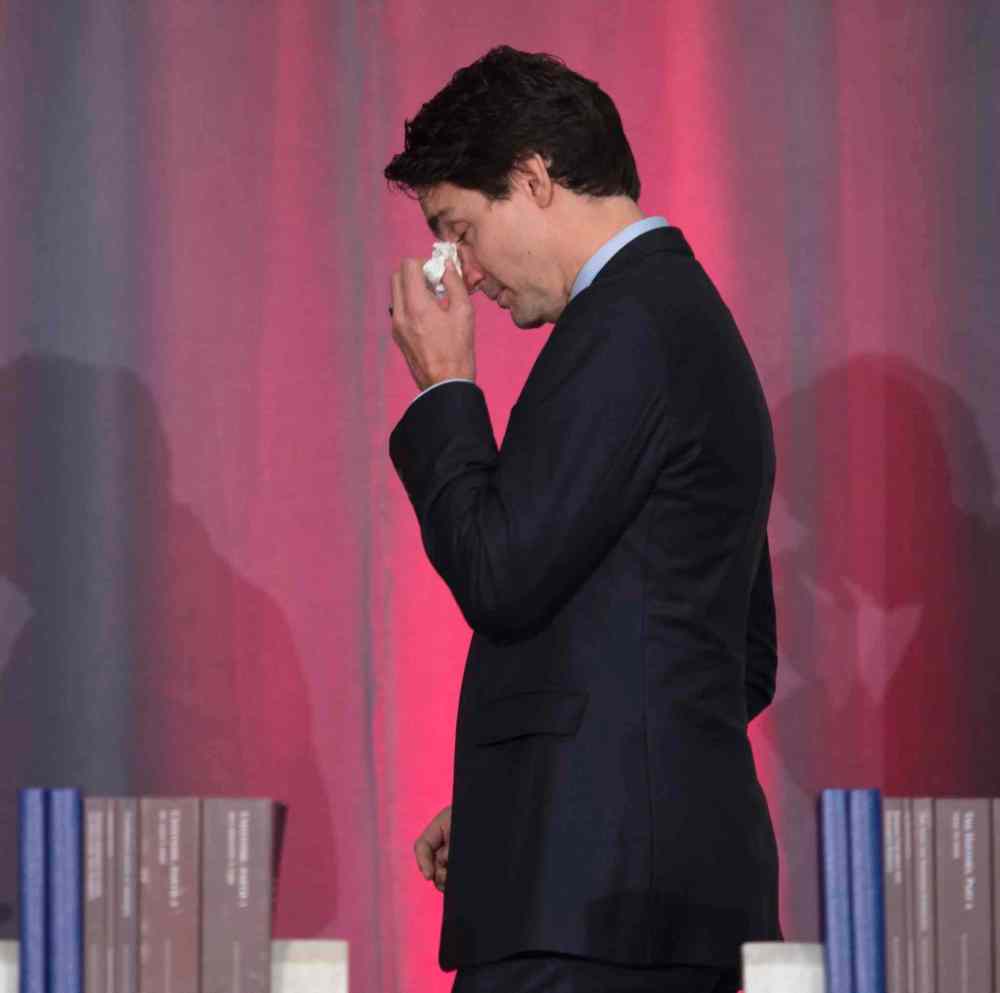
And now, with a new government, there’s more symbolism. Trudeau participated in a smudging ceremony on Tuesday and became emotional as he accepted the final report on behalf of the Canadian government.
What we need now is to turn that symbolism into action.
Shannon Sampert is the Free Press perspectives and politics editor.
shannon.sampert@freepress.mb.ca Twitter: @paulysigh
Related Articles
Post-secondary institutes will sign Indigenous Education Blueprint

Advertisement Advertise With Us
Advertisement Advertise With Us
History
Updated on Wednesday, December 16, 2015 1:16 PM CST: Corrects name of United Nations Declaration on the Rights of Indigenous Peoples.