

Good housing needs a good economy
Advertisement
Read this article for free:
or
Already have an account? Log in here »
To continue reading, please subscribe:

Digital Subscription
One year of digital access for only $205*
- Enjoy unlimited reading on winnipegfreepress.com
- Read the E-Edition, our digital replica newspaper
- Access News Break, our award-winning app
- Play interactive puzzles
*First annual payment billed as $205.00 + GST for one year. This annual subscription will automatically renew at $233.00 + GST every 52 weeks (10% off the regular annual price of $259.35). Offer available to new and qualified returning subscribers only. Cancel any time.
To continue reading, please subscribe:
Add Free Press access to your Brandon Sun subscription for only an additional
$1 for the first 4 weeks*
- Enjoy unlimited reading on winnipegfreepress.com
- Read the E-Edition, our digital replica newspaper
- Access News Break, our award-winning app
- Play interactive puzzles
*Your next Brandon Sun subscription payment will increase by $1.00 and you will be charged $17.95 plus GST for four weeks. After four weeks, your payment will increase to $24.95 plus GST every four weeks.
Read unlimited articles for free today:
or
Already have an account? Log in here »
Hey there, time traveller!
This article was published 01/02/2016 (3863 days ago), so information in it may no longer be current.
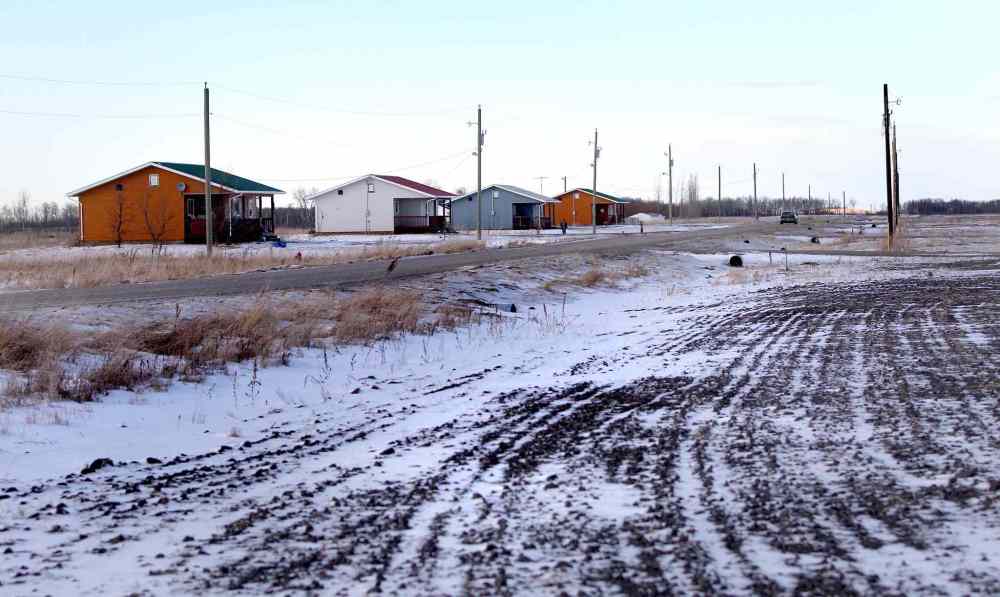
Give federal Indigenous Affairs Minister Carolyn Bennett an ‘A’ for dedication and an honest desire. She has admitted the condition of housing on Canadian reserves is a disgrace. But wearing a hair shirt in public doesn’t get the concrete poured, walls up, water running or the heat turned on.
Year-old internal documents from Ms. Bennett’s department reveal Manitoba reserves alone need $1.9 billion to repair houses and build new units to meet the need. In Canada, only Alberta is similarly impoverished, with First Nations in both provinces seeing about 29 per cent of residents living in poor housing.
It’s more than a disgrace, as the minister knows. Poor and crowded housing contributes to the high rates of chronic disease, such as tuberculosis, and the spread of infections. It’s why the H1N1 influenza spread fastest in northern Manitoba in 2009, hitting aboriginal people hardest.
Prime Minister Justin Trudeau has raised the hopes of Canada’s indigenous people, promising them a new deal, in effect, in which their standards of living rise as they become partners in economic development and resource sharing.
Mr. Trudeau has promised to immediately lift the artificial two per cent cap (imposed in 1997) on funding to First Nations bands for programs and services. Bands could not possibly keep up with the rising cost of services, such as schools, in the face of a rapidly rising population. (Between 1999 and 2006, funding to bands rose 1.9 per cent when inflation is considered, while the First Nations population rose more than 11 per cent.)
Historically, housing and infrastructure programs have had their envelopes raided as both the federal department and the bands struggled to meet competing priorities. But stealing from Peter to pay Paul, so to speak, keeps everyone impoverished. Infrastructure and housing are aging and deteriorating at a rapid rate, and with federal funding concentrated on fixing the worst, chipping away at the growing backlog is near impossible.

The national numbers tell the story: a 2015 Senate report found the infrastructure deficit on-reserve was $8.2 billion in 2013, more than $1 billion of that in water and waste alone. This year, the government allocated $1.2 billion for infrastructure on reserves, with less than $330 million for water and waste. Meanwhile, between the department and Canada Mortgage and Housing Corp., annual investment in housing is about $298 million.
Most First Nations bands cannot go to the bank to borrow because land (and often houses) are communally owned, held in trust for the members, and loans cannot be secured against them. They need loan guarantees from the minister or another source, such as CMHC. But in Manitoba, that’s impossible for most communities because they are under some form of third-party management.
Federal funding has to rise. But, there isn’t enough money around to fix the problem fast enough.
Mr. Trudeau has made First Nations education — improving high school graduation rates — a priority, which is critical. He needs to explain what he envisions for resource sharing. This is key to economic development, particularly for northern bands (high potential for resource extraction) desperate for skill development and jobs.
Good housing is pivotal to physical and mental health. Education and skills are foundational to a viable economy. Mr. Trudeau’s plan for improving the standard of living on-reserve in Canada has to be about more funding hikes. It has to be about economic development. He should start explaining his vision.
Related Articles
$2B to fix First Nations homes: report
Advertisement Advertise With Us
Advertisement Advertise With Us