$2B to fix dilapidated First Nations homes in Manitoba alone: government report
Advertisement
Read this article for free:
or
Already have an account? Log in here »
To continue reading, please subscribe:

Digital Subscription
One year of digital access for only $205*
- Enjoy unlimited reading on winnipegfreepress.com
- Read the E-Edition, our digital replica newspaper
- Access News Break, our award-winning app
- Play interactive puzzles
*First annual payment billed as $205.00 + GST for one year. This annual subscription will automatically renew at $233.00 + GST every 52 weeks (10% off the regular annual price of $259.35). Offer available to new and qualified returning subscribers only. Cancel any time.
To continue reading, please subscribe:
Add Free Press access to your Brandon Sun subscription for only an additional
$1 for the first 4 weeks*
- Enjoy unlimited reading on winnipegfreepress.com
- Read the E-Edition, our digital replica newspaper
- Access News Break, our award-winning app
- Play interactive puzzles
*Your next Brandon Sun subscription payment will increase by $1.00 and you will be charged $17.95 plus GST for four weeks. After four weeks, your payment will increase to $24.95 plus GST every four weeks.
Read unlimited articles for free today:
or
Already have an account? Log in here »
Hey there, time traveller!
This article was published 01/02/2016 (3896 days ago), so information in it may no longer be current.
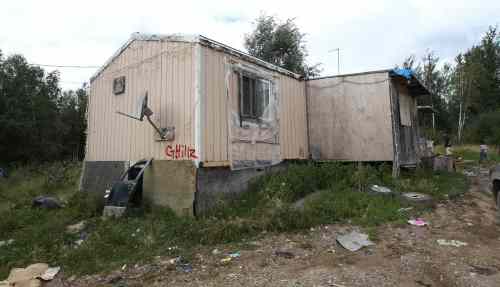
WINNIPEG – Internal government documents say Manitoba First Nations live in some of the most dilapidated homes in the country and it will cost $2 billion to eliminate mould and chronic overcrowding in that province alone.
That’s almost 13 times more than the $150 million the federal government has budgeted for housing on all reserves across Canada this year.
Reports from Indigenous and Northern Affairs Canada, obtained by The Canadian Press under access-to-information legislation, say the housing situation in Manitoba has worsened as infrastructure funding has been siphoned off to other areas.
“As a result, Manitoba First Nations continue to face further deterioration in infrastructure,” says the internal report dated January 2015.
“Current estimates indicate a $1.9B need to address existing overcrowding, replacement and major repairs related to mould and substandard conditions of housing units. Key challenges continue to include affordability, low income and high social assistance rates.”
The report notes Manitoba has among the highest percentage at 29 of indigenous people living in poor housing in Canada. Officials say Alberta is the only other province in a similar situation.
One quarter of existing homes on reserves in both provinces need to be repaired or replaced.
Chief David McDougall said the situation is a “ticking time bomb” in his remote aboriginal community of St. Theresa Point in northern Manitoba. The waiting list for housing on the cluster of four reserves in his tribal council is 1,500. Last year, his reserve got 18 units.
They were the lucky ones. Other reserves got less than that.
It’s not uncommon for 18 people to live in a small bungalow, McDougall said. Last year, there were 23 people living in a two-bedroom home.
“They had to take turns sleeping.”
While the government’s own estimates put Manitoba’s housing needs at $2 billion, the department said $50 million is budgeted for on-reserve housing in the province this year.
That is to drop to $29 million next year.
Some reserves can build additional homes with a ministerial loan guarantee, but McDougall said that isn’t available if the reserve is under third-party management. The department’s internal report said only 30 per cent of Manitoba reserves operate independently.
People on McDougall’s reserve are losing hope, he said. Suicides are on the rise while others turn to a homemade alcoholic concoction called “superjuice.”
The federal government spent the last few years hooking up the reserve’s homes to water and sewer, but McDougall compared that to putting new tires on a rusty, decrepit car.
“We need to find a proper, sustainable solution — what is realistic in terms of how we can begin to even make a dent in this huge backlog.”
Indigenous Affairs Minister Carolyn Bennett said she’s not deterred by the $2-billion price tag. She couldn’t explain exactly how the new Liberal government will tackle the backlog, but said improving First Nations housing is a priority.
“I’ve been in those homes,” Bennett said in an interview. “It is a disgrace for Canadians to watch. There is a consensus in this country that we have got to get going on this.
“The sticker shock on any of these things can’t get in the way of us beginning what has to happen.”
Leilani Farha, United Nations special rapporteur on the right to housing, said her predecessor conducted a in-depth investigation in 2007 which evaluated the adequacy of on-reserve housing. He concluded “we have a crisis on our hands,” she said.
Canada needs a national housing strategy firmly rooted in human rights, she said.
“It will cost money but there is money in one of the wealthiest countries in the world,” Farha said in Ottawa Monday. “That is the standard to which Canada needs to be held.”
Ottawa has been warned before about the housing situation on Manitoba reserves. A 2011 internal assessment of on-reserve housing said communities don’t have the means to maintain the homes they have, which often require “aggressive maintenance.”
“The consequences are manifold: maintaining housing stock is costly, poorly maintained housing is unsafe and contributes to poor health, which in itself generates additional costs,” stated the report.
An evaluation three years before found people on reserves were living in homes that were “falling apart” and rife with mould, which made them “not suitable for people with breathing problems.” It noted two people died in one community “related to wiring and lack of heat. People were using a dryer to help heat a home.”
Craig Makinaw, Alberta regional chief with the Assembly of First Nations, said the situation is dire for some First Nations. While some reserves with a source of income can afford to go above and beyond government funding, residents on other Alberta reserves wait up to 30 years for a home, he said.
“All the cuts that have happened over the years have caused this backlog,” he said. “It needs to be addressed because it’s not going to get any better.”
Related Articles
Good housing needs a good economy
Advertisement Advertise With Us
Advertisement Advertise With Us
History
Updated on Monday, February 1, 2016 4:29 PM CST: Graphic added.