

The thin veneer of reconciliation
Advertisement
Read this article for free:
or
Already have an account? Log in here »
To continue reading, please subscribe:
Monthly Digital Subscription
$1 per week for 24 weeks*
- Enjoy unlimited reading on winnipegfreepress.com
- Read the E-Edition, our digital replica newspaper
- Access News Break, our award-winning app
- Play interactive puzzles
*Billed as $4.00 plus GST every four weeks. After 24 weeks, price increases to the regular rate of $19.95 plus GST every four weeks. Offer available to new and qualified returning subscribers only. Cancel any time.
Monthly Digital Subscription
$4.99/week*
- Enjoy unlimited reading on winnipegfreepress.com
- Read the E-Edition, our digital replica newspaper
- Access News Break, our award-winning app
- Play interactive puzzles
*Billed as $19.95 plus GST every four weeks. Cancel any time.
To continue reading, please subscribe:
Add Free Press access to your Brandon Sun subscription for only an additional
$1 for the first 4 weeks*
*Your next subscription payment will increase by $1.00 and you will be charged $16.99 plus GST for four weeks. After four weeks, your payment will increase to $23.99 plus GST every four weeks.
Read unlimited articles for free today:
or
Already have an account? Log in here »
Hey there, time traveller!
This article was published 28/03/2016 (3658 days ago), so information in it may no longer be current.
I teach the history of Winnipeg at the University of Manitoba. I sometimes talk to my students about Gordon Sinclair’s award-winning book, Cowboys and Indians, which tells the story of the 1988 shooting death of John Joseph Harper, executive director of the Island Lakes Tribal Council, at the hands of police. It’s a very teachable book, unflinching in its exposure of the fallout of racism and police violence.
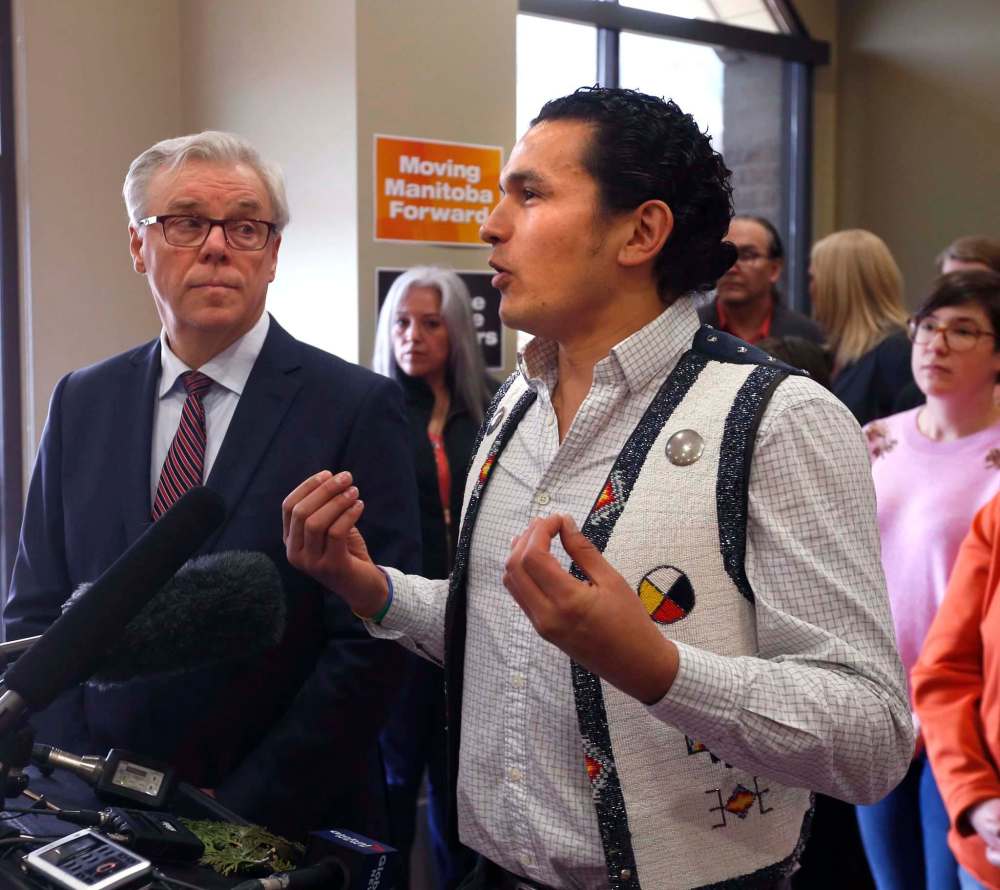
Sinclair has lived through and written about multiple news stories over the past 30 years that inform readers just how far we are from any meaningful equality for aboriginal peoples. So I was caught off-guard by the unexamined clichés in his articles about Wab Kinew. Sinclair tells the readers that Kinew is scary and violent — implying that he is just one layer of white civilization (a university degree, perhaps?) from brawling brutality. Watch out if you challenge him, he’s gonna punch you, Sinclair suggests. He’s got anger.
I am just so saddened by this. Because it reveals, doesn’t it, how thin is the veneer of “reconciliation.” The frustration felt by aboriginal people is not just about their individual circumstances, as difficult as they have often been. It is about the repression of their people and our society’s relentless double standard, without which we can’t explain why history moves on and we don’t: why the notion of inevitable progress towards a better and brighter future can feel pretty empty to an aboriginal person living in Canada today. A man like Wab Kinew, no matter the degree to which he works to prove himself as “equal,” by definition can never be perceived as anything other than an aboriginal man, barely more than a savage. Centuries of colonialism have thus defined him. So lamentably predictable is this trope. Sinclair’s column expresses views that could have been (and were) written 100 years ago. So much for 2016.
Last year, a man who spent 13 years in residential schools (several of them at Assiniboia Residential School in Winnipeg) came to speak to my students. He was invited by an elder, who happened to be taking my class. Our guest speaker, like Kinew, had spent years trying to put his childhood behind him to create a life he wanted. He had succeeded eventually, but he didn’t make himself sound like a saint. He was funny at times. It was a challenging moment. My students had to work through a problem: how does a common narrative of aboriginal victimhood that emphasizes our society’s capacity for empathy (aren’t we amazing!) square with the obvious non-victimhood of the person to whom we were listening — a man who has found his own way. Not all of them were ready for that. But it’s hard to ignore when history becomes real in front of you.
Sinclair’s characterization of Kinew reminds me of the struggle my non-aboriginal students faced in sorting through what it means to “know” aboriginal peoples and their histories, when they themselves do not live that legacy. I suspect Sinclair is discomfited by a man like Kinew, who has retained his human integrity and autonomy and claimed his own voice. Sinclair wants contrition. Anger suggests a spark of rebellion. What Sinclair appears to want is a straight-up victim, a tragic survivor. Kinew isn’t interested in ending his story there. His people have been forced to play the role of victim for hundreds of years. It doesn’t go anywhere.
Sinclair has always been interested in emotional reactions to events in our collective lives, so I can tell you the emotion that our class visit brought to me — respect for the man’s courage but also anger at the blindness of Winnipeg’s residents. As several of my students who grew up in River Heights told me, Assiniboia Residential School was somehow wiped from their family histories of the neighbourhood. Their parents and grandparents claim to not even have known it existed. These aboriginal kids were literally their neighbours, and yet were invisible or have been rendered so by history.
Listening to his story, some of my students felt a bit embarrassed. I shared that feeling, because in many ways, I wonder if we deserve to have patiently explained to us the implications of colonial oppression, live and in person. And yet, people do this, again and again. Men and women stand up, and they try to explain to us, in simple language they think we might understand, what our governments, churches, and dare I say, voters, have wrought.

Kinew has stood up. He’s patiently told us, again and again, like the babes we really are. If Kinew is angry that we have still learned so little about how the past haunts our present, then he is entitled to that bit of righteous rage. Without it, his people would have long ago disappeared from this earth, as colonial governments so openly intended.
Esyllt Jones is a history professor at St. John’s College, University of Manitoba.
Related Articles
Here's what happened after Kinew's stare-down
Advertisement Advertise With Us
Advertisement Advertise With Us