

Leaders put Pallister in their crosshairs during debate
Advertisement
Read this article for free:
or
Already have an account? Log in here »
To continue reading, please subscribe:

Digital Subscription
One year of digital access for only $205*
- Enjoy unlimited reading on winnipegfreepress.com
- Read the E-Edition, our digital replica newspaper
- Access News Break, our award-winning app
- Play interactive puzzles
*First annual payment billed as $205.00 + GST for one year. This annual subscription will automatically renew at $233.00 + GST every 52 weeks (10% off the regular annual price of $259.35). Offer available to new and qualified returning subscribers only. Cancel any time.
To continue reading, please subscribe:
Add Free Press access to your Brandon Sun subscription for only an additional
$1 for the first 4 weeks*
- Enjoy unlimited reading on winnipegfreepress.com
- Read the E-Edition, our digital replica newspaper
- Access News Break, our award-winning app
- Play interactive puzzles
*Your next Brandon Sun subscription payment will increase by $1.00 and you will be charged $17.95 plus GST for four weeks. After four weeks, your payment will increase to $24.95 plus GST every four weeks.
Read unlimited articles for free today:
or
Already have an account? Log in here »
Hey there, time traveller!
This article was published 12/04/2016 (3784 days ago), so information in it may no longer be current.
The only televised debate of the Manitoba provincial election saw a laser focus on the man leading the polls.
Progressive Conservative Leader Brian Pallister found himself in the hot seat at Tuesday’s debate as he faced a war on three fronts when his opponents questioned him on poverty, privatization and what he will do if he becomes the next premier of Manitoba.
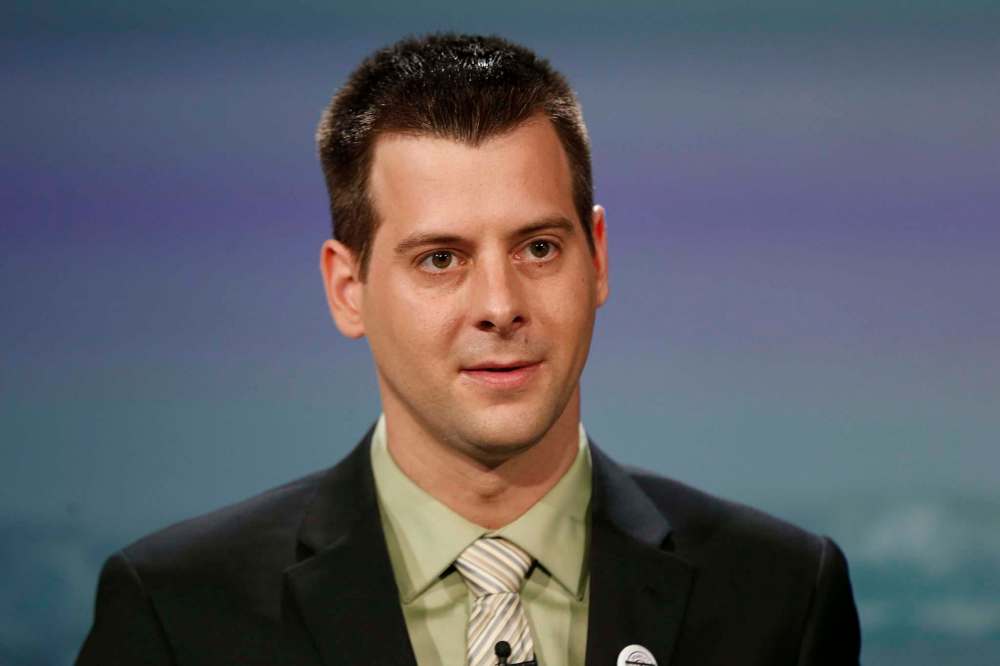
Pallister faced tough questions from NDP Leader Greg Selinger, Liberal Leader Rana Bokhari and Green Party Leader James Beddome, who virtually ignored each other in favour of ganging up on Pallister.
Here’s how the leaders fared:
Brian Pallister (Progressive Conservative)
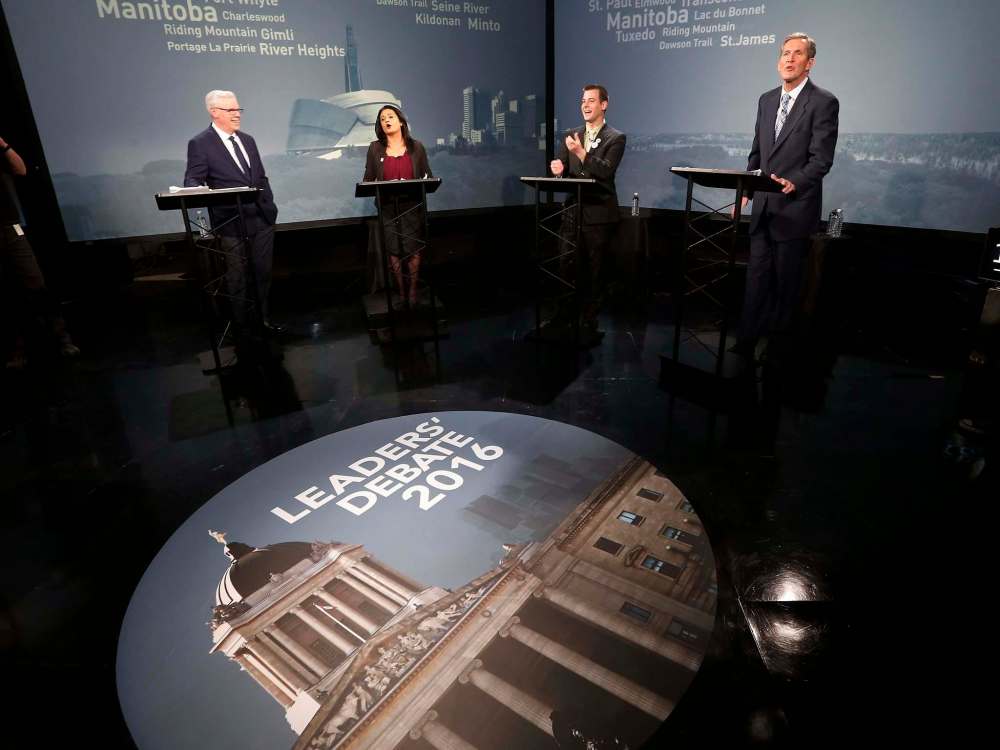
What he needed to do:
The front-running Pallister needed to use the debate as an opportunity to talk to Manitobans about the PC plan for lower taxes, a stronger economy and improved services, and demonstrate that it’s time for change, a Tory official said earlier in the day. “He’s also got to deal with the increasing desperation of Greg Selinger,” the official said, referring to “false and nasty” accusations this week that Pallister is homophobic.
What he accomplished:
Pallister, smiling and seemingly relaxed at the outset, had a target on his back all evening. The other party leaders used their one opportunity to grill another leader by directing their questions at him. He mainly deflected rather than responded to these queries, reverting to talking points. He did not suffer a major blow.
Best sound bite:
“Mr. Selinger knows what it is like to have caucus members leave who feel they are not being listened to. Frontline workers feel the same way,” he said when asked how the electorate can be inspired by his health care plan.
Post-debate spin:
“The difference between Mr. Selinger and I is obvious on this — every time he’s faced with a difficult challenge, choosing between value and taxes he chooses taxes… Manitobans should be rightfully concerned. If Mr. Selinger gets the opportunity again, he’ll raise taxes. There’s no doubt about that.”
When asked by reporters, Pallister repeated promised not to privatize Manitoba Hydro. “It is not happening.” But he didn’t rule out having the private sector supplying Manitobans with more health care services than it does now.
Greg Selinger (NDP)
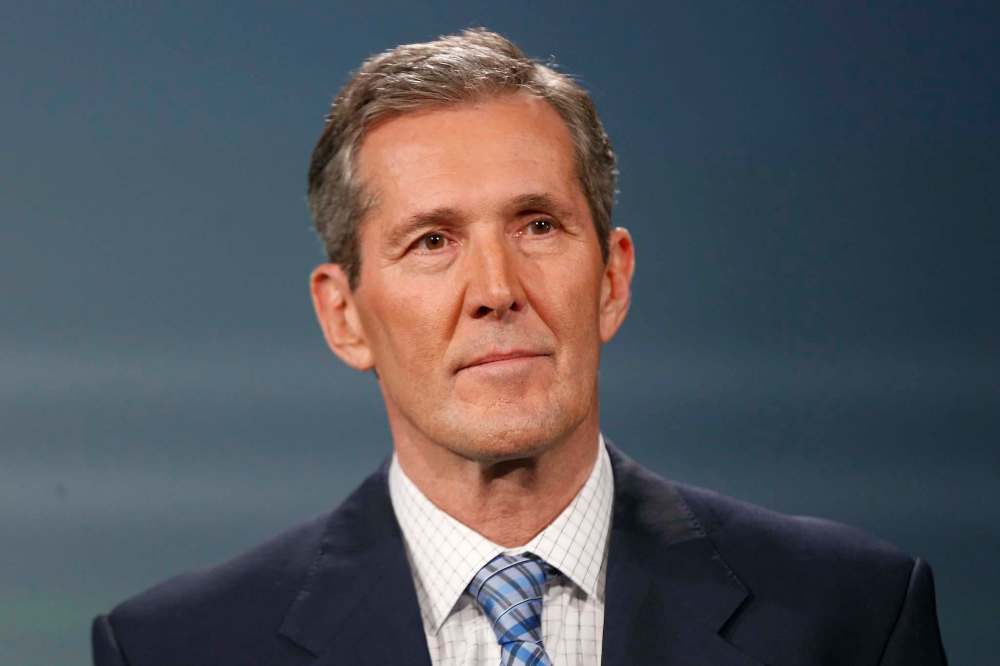
What he needed to do:
According to the NDP brain trust, Selinger needed to rise above the anticipated barrage of attacks from Pallister and Bokhari and speak about why his party has the best plan for Manitoba families. His aides say he needed to differentiate himself from Pallister, strike a statesmanlike demeanour and show that he remains he “a steady hand at the wheel.”
What he accomplished:
Selinger, looking solemn throughout, continually painted Pallister as a cost-cutter and a privatizer. Near the end of the debate he equated the PC leader with Canada’s outgoing prime minister. “Mr. Pallister has an agenda that would turn the clock back on Manitoba… back to a closed Stephen Harper style of government that Canadians and Manitobans have just rejected.”
Best sound bite:
“Just give us a straight yes or no — will you or will you not privatize any part of our health care system?” he asked Pallister.
Post-debate spin:
Selinger was asked afterwards whether he would raise the PST to nine per cent. He infamously promised not to boost the tax after a televised debate in the last election campaign. “I want to be absolutely clear. The conditions have changed,” he said, adding the province no longer faces massive bills for flood fighting. “We do not have to raise the PST again.”
Rana Bokhari (Liberal)
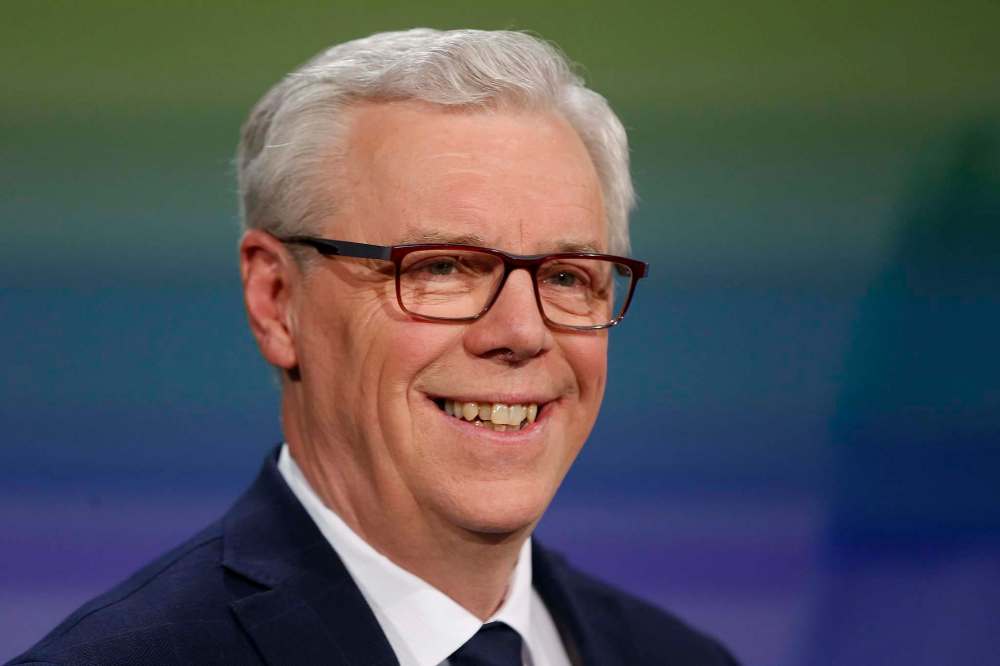
What she needed to do:
Bokhari needed a stellar performance to undo some of the damage done by campaign missteps and the Liberals’ failure to field a full slate of candidates. Her team was looking for her to demonstrate that she is the “voice of reason” and a rational alternative to Selinger and Pallister. They were concerned that she not be shut out of the debate — as occurred to some extent at a Brandon forum, where the NDP and PC leaders slugged it out.
What she accomplished:
Bokhari didn’t get a lot of opportunities to speak as the leaders focused their attention on Pallister and Selinger. She was effective when she challenged Pallister on his failure to participate in a telephone town hall debate sponsored by Manitoba Teachers’ Society. “You couldn’t pick up the phone?” she admonished him.
Best sound bite:
“As we move forward, Manitobans want a fresh voice, they want a party that recognizes the politics of possibility rather than the politics of power and that is what the Manitoba Liberal team represents.”
Post-debate spin:
On why she chose to question Pallister rather than Selinger: “I think the real question right now is Brian Pallister, because there seems to be a lot of unanswered questions. He seems to pivot away from questions. You see today any direct question posed to him you didn’t really get a direct answer. I just wanted Manitobans to see if we can get some answers out of him.”
James Beddome (Green)
What he needed to do:
With no budget to run election ads and having received little media coverage to date, the Green party leader needed to stand out as he did in the TV debate in 2011, when he was acknowledged as the best performer of the evening.
What he accomplished:
Although he appeared nervous at first, Beddome was again effective, aiming most his questions and comments at Pallister. He also argued effectively that a vote for the Greens is not a wasted vote, and that for years the party has been effective in lobbying for policies that were later adopted by government including the banning herbicides for cosmetic use.
Best sound bite:
“I can give you example after example where Greens have shown that we are the party of the future, today,” he said.
Post-debate spin:
“Brian Pallister, quite frankly, he is the one who is most likely going to be premier, if the polls are any kind of indication, and I wanted to get some promises from him,” Beddome said of his decision to target Pallister
kristin.annable@freepress.mb.ca
Related Articles
Meet your candidate: We invited would-be MLAs to introduce themselves to you





Advertisement Advertise With Us
Advertisement Advertise With Us