

‘I’m here for the Tina Fontaines’: Inside the INAC protest movement
Advertisement
Read this article for free:
or
Already have an account? Log in here »
To continue reading, please subscribe:

Digital Subscription
One year of digital access for only $205*
- Enjoy unlimited reading on winnipegfreepress.com
- Read the E-Edition, our digital replica newspaper
- Access News Break, our award-winning app
- Play interactive puzzles
*First annual payment billed as $205.00 + GST for one year. This annual subscription will automatically renew at $233.00 + GST every 52 weeks (10% off the regular annual price of $259.35). Offer available to new and qualified returning subscribers only. Cancel any time.
To continue reading, please subscribe:
Add Free Press access to your Brandon Sun subscription for only an additional
$1 for the first 4 weeks*
- Enjoy unlimited reading on winnipegfreepress.com
- Read the E-Edition, our digital replica newspaper
- Access News Break, our award-winning app
- Play interactive puzzles
*Your next Brandon Sun subscription payment will increase by $1.00 and you will be charged $17.95 plus GST for four weeks. After four weeks, your payment will increase to $24.95 plus GST every four weeks.
Read unlimited articles for free today:
or
Already have an account? Log in here »
Hey there, time traveller!
This article was published 26/04/2016 (3809 days ago), so information in it may no longer be current.
It’s been almost two weeks since the first of series of revolving sit-ins started inside federal Indigenous Affairs offices in Toronto, then Winnipeg, Regina, Gatineau, Que., and Vancouver.
Winnipeg is the only site where the occupation continues.
As word spread on social media under #OccupyINAC hashtags, the occupations cited the epidemic of youth suicides this winter in Attawapiskat and Pimicikamak, northern Cree First Nations in Ontario and Manitoba, respectively.
Indigenous leaders, elders and groups such as Black Lives Matter in Toronto and the Council of Canadians have offered supportive posts. Every sit-in was reportedly peaceful in nature and one by one the sit-ins disbanded — except for Winnipeg.
Tuesday, occupiers and supporters allowed a Free Press reporter and photographer inside the INAC regional headquarters for Manitoba and northwest Ontario on Hargrave Street, a visit set up through a series of messages sent back and forth over several days.
In Winnipeg, OccupyINAC is restricted to the second-floor waiting room of building. Workers are working in other other federally owned offices in the city and indications are Ottawa is simply waiting out the last sit-in.
Down the hall from the waiting room, with its chairs and a counter top of coffee fixings and donated food trays, are the office bathrooms, which are open to the occupiers. In Toronto, bathrooms were reportedly locked, triggering a flurry of accounts two weeks ago of slop pails being used instead.
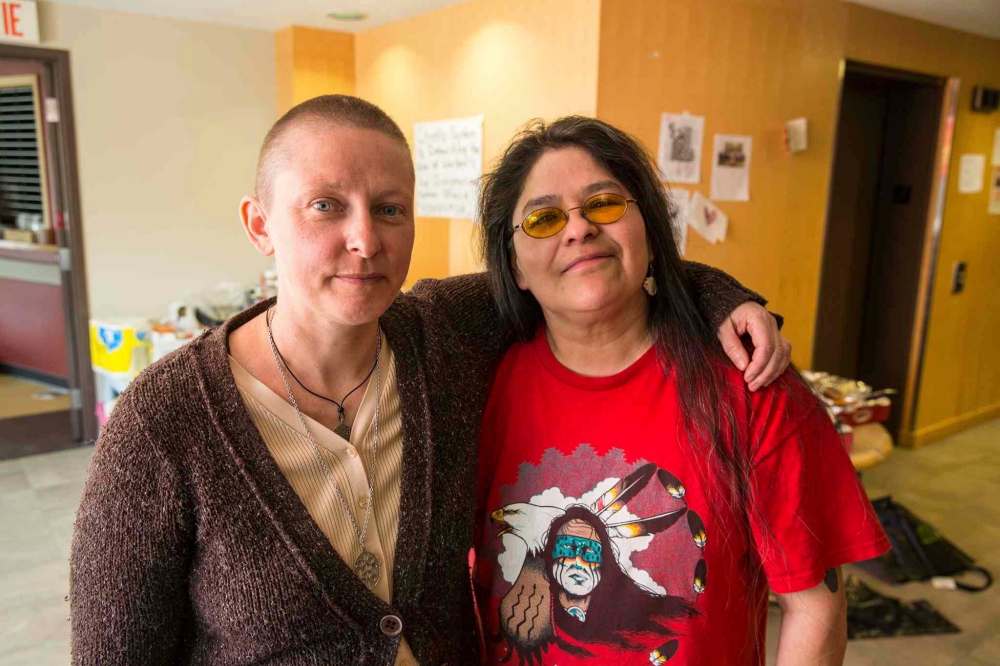
Half a dozen women in their 20s, 30s and 40s, and a few young men, were holding down OccupyINAC Winnipeg Tuesday. They said their time is divided between inside the building and outside, at a camp in the parking lot where a fire pit burns 24/7 for prayers. Inside, occupiers sing on hand drums at night, sometimes sparking an angry vocal backlash from neighbouring tenants outside on the street, they said. They sleep in an empty side room, where a row of blankets and pillows are neatly folded up.
Inside, one after another, the women spoke about why they keep the sit-in going, sharing a world of hurt in the process. Each woman took turns talking quietly, sometimes shedding tears.
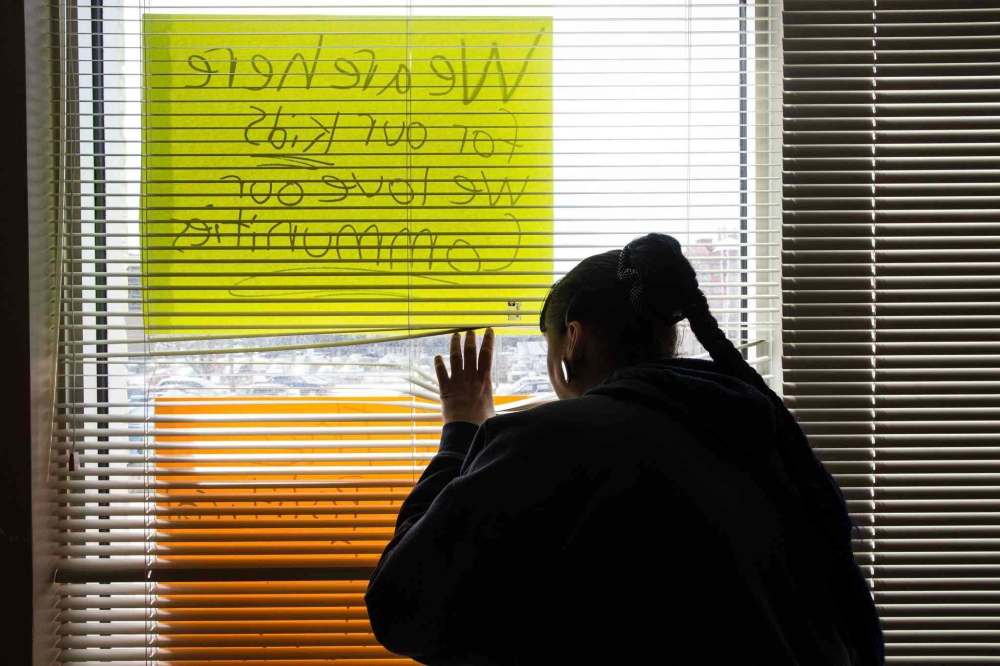
“I’m an older person,” said Geraldine McManus-Houle, a woman who appeared to be in her 40s. She’s lost nieces and nephews to suicide. “We’re here because of Attawapiskat. Something clicked with that… We’re tired of cutting our children down,” she said.
She spoke about a legacy of regulation under the Indian Act that she sees as driving needless wedges between indigenous people and other Canadians, dividing a humanity that should be shared.
“Idle No More helped wake everyone up and when I came here, I cried when I saw what everyone was doing. It made me feel so proud,” McManus-Houle said.
The winter of round dances, started under a movement called Idle No More in 2013, have swept back and forth across Canada like a tide. The sit-ins are the latest action in that wider phenomenon, said Crystal Greene, an indigenous videographer. “I feel we’re building bridges with all the people who come here,” she said.
“I’m here for the Tina Fontaines. We have a lot of missing and murdered women,” said another woman, the only one who used a pseudonym for the interview. Kateri Lark said she wanted a provincial inquiry into the 2014 murder of the Sagkeeng teen, found murdered in the Red River while under the care of Child and Family Services. She sees indigenous children as pawns of a political system she profoundly distrusts.
“I’m here for the two-spirited. My daughter is two-spirited,” said Lisa Strong. Two-spirited refers to LGBTQ, stigmatized on and off reserve alike. Strong said her mother and grandparents were residential school survivors and she was a child of the Sixties Scoop. For Strong, distrust of the system runs as deep as intergenerational trauma.
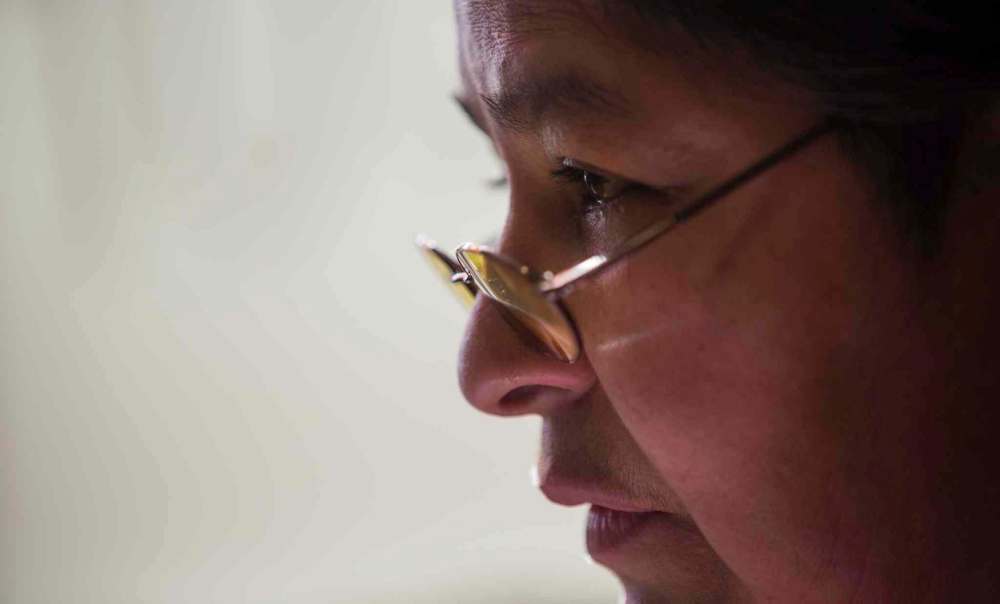
Tanya McFadyen calls herself a settler. Her ancestors were Scottish immigrants from an earlier era in Manitoba history. Her son is Métis. “I support bringing to light the epidemic of suicides on reserves and in urban areas, the lack of employment, the lack of mental-health services and recreational centres that other young people in this country take for granted,” she said.
The focus of her indigenous friends on finding their cultural roots has inspired her to appreciate the culture of her ancestors and that’s a real gift, she said.
No one said a word about when the sit-in would end.
alexandra.paul@freepress.mb.ca
Related Articles
Protesters remain camped outside Winnipeg INAC offices

Advertisement Advertise With Us
Advertisement Advertise With Us
History
Updated on Tuesday, April 26, 2016 8:21 PM CDT: Formatting
Updated on Tuesday, April 26, 2016 8:57 PM CDT: Corrects typo, turns off comments.