

In the steps of Dr. Death
Like it or not, we are now living in Jack Kevorkian's world
Advertisement
Read this article for free:
or
Already have an account? Log in here »
To continue reading, please subscribe:
Monthly Digital Subscription
$1 per week for 24 weeks*
- Enjoy unlimited reading on winnipegfreepress.com
- Read the E-Edition, our digital replica newspaper
- Access News Break, our award-winning app
- Play interactive puzzles
*Billed as $4.00 plus GST every four weeks. After 24 weeks, price increases to the regular rate of $19.95 plus GST every four weeks. Offer available to new and qualified returning subscribers only. Cancel any time.
Monthly Digital Subscription
$4.99/week*
- Enjoy unlimited reading on winnipegfreepress.com
- Read the E-Edition, our digital replica newspaper
- Access News Break, our award-winning app
- Play interactive puzzles
*Billed as $19.95 plus GST every four weeks. Cancel any time.
To continue reading, please subscribe:
Add Free Press access to your Brandon Sun subscription for only an additional
$1 for the first 4 weeks*
*Your next subscription payment will increase by $1.00 and you will be charged $16.99 plus GST for four weeks. After four weeks, your payment will increase to $23.99 plus GST every four weeks.
Read unlimited articles for free today:
or
Already have an account? Log in here »
Hey there, time traveller!
This article was published 18/05/2016 (3609 days ago), so information in it may no longer be current.
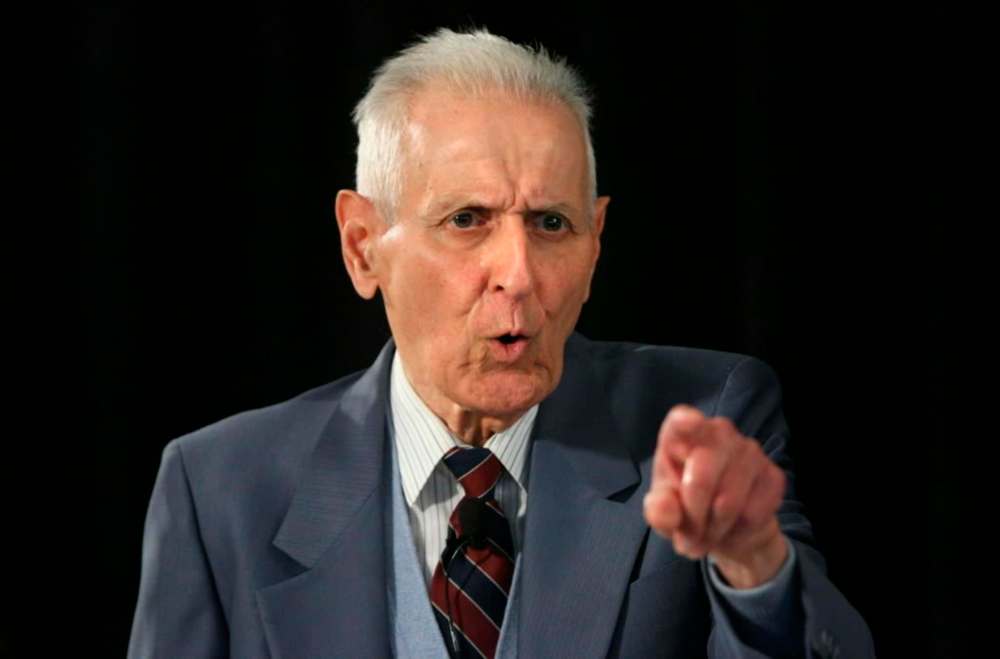
The late Dr. Jack Kevorkian was arguably the most controversial figure in the contemporary right-to-die movement. When he wrote Prescription: Medicide, the Goodness of Planned Death in 1991, Kevorkian claimed the principle of self-determination — the ability to decide for oneself the time, place and manner of one’s death — was sacrosanct. Consumed by a fervent belief in radical autonomy, he resorted to drastic measures that challenged the status quo prohibiting euthanasia and assisted suicide. Although his methods and core beliefs were once considered extremist, ironically, they have now become part of the mainstream.
In 1991, Kevorkian helped 54-year-old Janet Adkins die with the use of his infamous “Thanatron.” At Adkins’ own touch of a button, potassium chloride was released, and her heart stopped in minutes. What made the case particularly controversial was the fact Adkins was not terminally ill. She suffered from early-onset Alzheimer’s disease and wanted to die while she could still make a rational choice.
After participating in Adkins’ suicide, Kevorkian was labelled by his detractors as “Dr. Death,” someone who exploited the fears of the vulnerable for his own personal agenda. Today, however, aid in dying is legal in five American states, and like Adkins, the patient performs the final death-hastening act using medication prescribed by a doctor.
Even in Canada, aid in dying is not necessarily restricted to the terminally ill. In February 2016, the Report of the Special Joint Committee on Physician-Assisted Dying recommended assistance be made available to those with “terminal and non-terminal grievous and irremediable medical conditions that cause enduring suffering that is intolerable to the individual in the circumstance of his or her condition.” Following these criteria, Adkins would have made an ideal candidate. What was once considered unthinkable — providing the means for a non-terminally ill assisted suicide — has now become a project of the Canadian government.
In 1993, Kevorkian’s utilitarian position appeared even more unorthodox when he supported requests by death-row inmates to have their vital organs donated before execution. Kevorkian claimed that those waiting for transplants were dying needlessly, so his more “rational” solution involved “irreversible surgical depth anesthesia,” a procedure that placed felons in a deep sleep so their organs could be harvested. If the procedure was adopted, the physician would become the executioner.
Kevorkian even supported medical experimentation on anesthetized death-row inmates who had provided former consent. At the time, comparisons were made to Nazi eugenics. Nonetheless, prominent academics presently support Kevorkian’s so-called “ghoulish opportunism,” including Thomas L. Beauchamp, an acclaimed American professor and philosopher. Beauchamp believes non-sentient beings — that is, those who lack moral personhood — could be used as both human research subjects and as sources of needed organs. Undoubtedly, Kevorkian was in tune with the future of bioethics.
Although Kevorkian had already been involved in at least 130 cases of assisted suicide, in 1998 he pushed the envelope even further in the case of Thomas Youk, a man suffering from amyotrophic lateral sclerosis, or Lou Gehrig’s disease.
Kevorkian decided to administer a lethal injection himself, and two months later, a videotape of the procedure aired on 60 Minutes, sparking a national outcry. In March of 1999, Kevorkian was convicted of second-degree murder, and after serving eight years, he was released in 2007. Kevorkian’s last stand, however, was a sign of things to come. By 2002, euthanasia had become legal in both Holland and Belgium. In 2016, the province of Quebec reported its first case of euthanasia.

Due to Kevorkian’s tireless campaign for patient self-determination, the right to die became a vital part of the public discourse. Yet, it was the strength of his convictions that made Kevorkian both compelling and contentious. He was a hero to euthanasia advocates, a villain to prohibitionists. And no matter what role he may have played in the modern death and dying movement, one thing is certain: we have inherited his values and are now living in his world.
Stuart Chambers is a professor in the faculties of arts and social sciences at the University of Ottawa. His doctoral dissertation explored the death and dying debate in Canada. He can be reached at schamber@uottawa.ca.