

First female presidential candidate a “witch”
Advertisement
Read this article for free:
or
Already have an account? Log in here »
To continue reading, please subscribe:
Monthly Digital Subscription
$1 per week for 24 weeks*
- Enjoy unlimited reading on winnipegfreepress.com
- Read the E-Edition, our digital replica newspaper
- Access News Break, our award-winning app
- Play interactive puzzles
*Billed as $4.00 plus GST every four weeks. After 24 weeks, price increases to the regular rate of $19.95 plus GST every four weeks. Offer available to new and qualified returning subscribers only. Cancel any time.
Monthly Digital Subscription
$4.99/week*
- Enjoy unlimited reading on winnipegfreepress.com
- Read the E-Edition, our digital replica newspaper
- Access News Break, our award-winning app
- Play interactive puzzles
*Billed as $19.95 plus GST every four weeks. Cancel any time.
To continue reading, please subscribe:
Add Free Press access to your Brandon Sun subscription for only an additional
$1 for the first 4 weeks*
*Your next subscription payment will increase by $1.00 and you will be charged $16.99 plus GST for four weeks. After four weeks, your payment will increase to $23.99 plus GST every four weeks.
Read unlimited articles for free today:
or
Already have an account? Log in here »
Hey there, time traveller!
This article was published 10/08/2016 (3537 days ago), so information in it may no longer be current.
Many Republicans and zealous Bernie Sanders supporters would like nothing more than to “lock up” Hillary Clinton for all sorts of real and imagined transgressions. But there’s no chance of that. Clinton is the first woman to be designated as a presidential nominee by either major U.S. political party, and the odds are fairly good she is heading to the White House, rather than prison.
This was not the case for the first woman who ran as a candidate for the American presidency, who really was locked up.
On Nov. 2, 1872, three days before that year’s election, Victoria Woodhull, who was a candidate for the Equal Rights Party, was arrested and incarcerated in a New York City jail. Her crime: she published (and then violated state law by using the postal service to distribute) allegedly scandalous articles in her weekly newspaper. One of the articles was about an alleged affair between Rev. Henry Ward Beecher, a popular Brooklyn minister, and Elizabeth Tilton, the wife of Beecher’s friend, journalist Theodore Tilton (who wrote a fawning biography of Woodhull and in all probability had an affair with her).
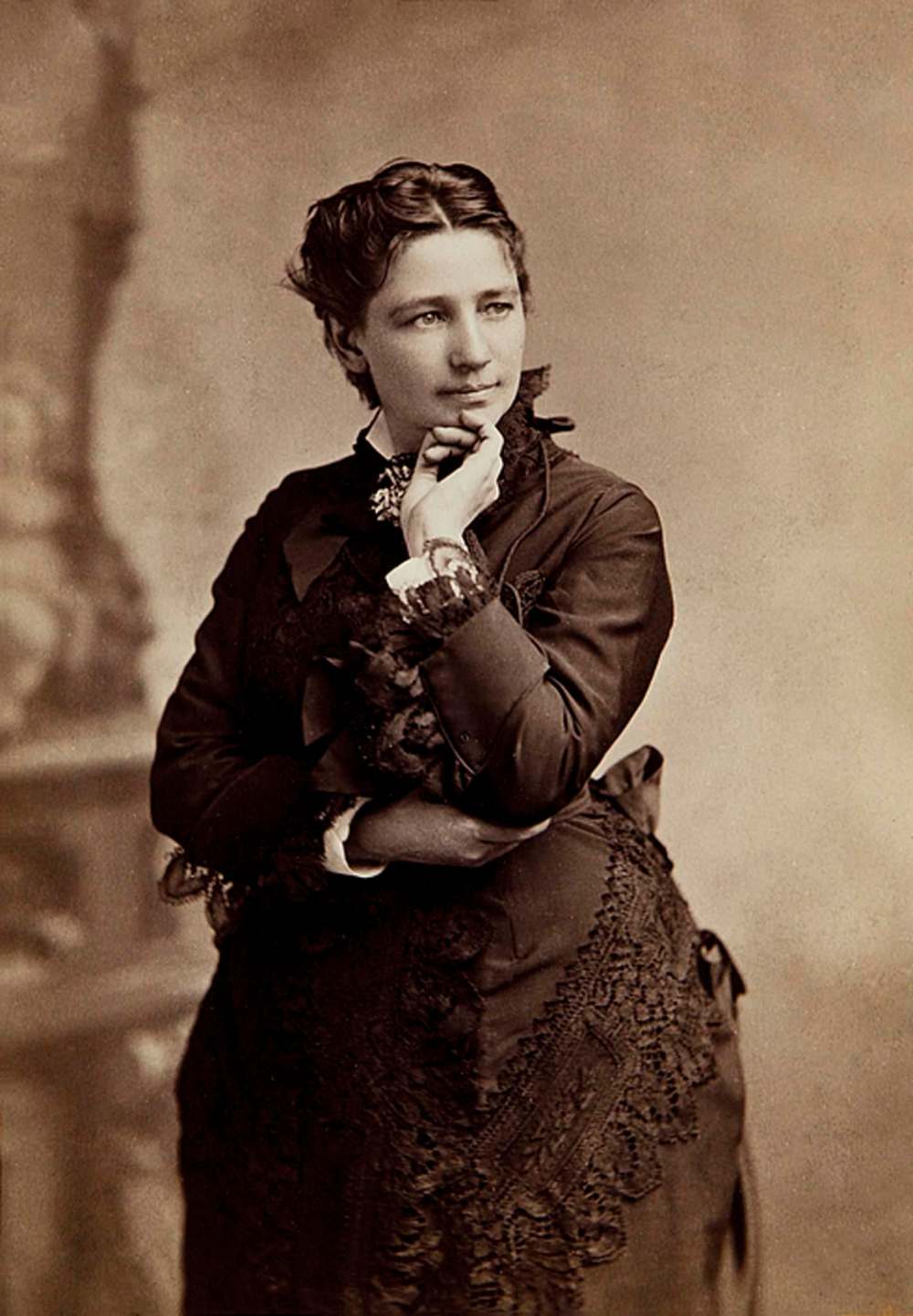
Born in 1838 to an impoverished Ohio family, Victoria Claflin was a precocious child who claimed she had supernatural abilities. Her parents eagerly exploited her. She travelled with her siblings as part of a medicine show in which her faith-healing and fortune-telling skills and spiritualist powers were honed and marketed. At 15, she married Dr. Canning Woodhull, a notorious drunk and womanizer who was 12 years her senior. The unhappy union, which produced two children, lasted until 1864. She kept the Woodhull name.
Accompanied by her younger sister, Tennie, Woodhull relocated to New York, where the two young women befriended the septuagenarian railway baron, Cornelius Vanderbilt. Depressed after the death of his wife, as well as losing millions of dollars to stock speculators, he was taken by them, especially 23-year-old Tennie, who offered him physical and spiritual comfort. By 1870, he had helped them to establish the first female brokerage house in New York and then supported their newspaper venture.
Woodhull was a provocative personality. She was a feminist, supporter of the suffrage movement and labour rights and a proponent of “free love.” Despite what her many detractors maintained, she did not promote “unbridled lechery,” as historians Edwin G. Burrows and Mike Wallace point out, but rather addressed women’s inferior and unequal status in marriage and in all aspects of life. In her newspaper and on the lecture circuit, she “took a positive view of sex” and campaigned for birth control and legalized prostitution — and did so while being fashionably avant-garde for the era. She kept her hair short, wore ankle-length skirts, and “mannish cut” jackets and neckties.
Early in 1871, she was invited to address the House of Representatives judiciary committee. She gave a convincing presentation that the recently adopted 14th and 15th Amendments to protect the civil and suffrage rights of African-Americans could be extended so women could be granted the right to vote. Though that was not to happen for close to 50 years, she attracted sufficient attention from the newly formed National Woman Suffrage Association. A year-and-half later at the NWSA’s convention in New York, the delegates formed the Equal Rights Party and selected Woodhull as their presidential candidate.
Like Clinton, Woodhull was insulted by her enemies in the press as a “witch” and portrayed in political cartoons as “Mrs. Satan.” In 1872, she was 34 and hence one year shy of the 35-year-old constitutional age requirement to be U.S. president. The Equal Rights Party had selected as her running mate Frederick Douglass, the former slave and abolitionist, except it had not bothered to ask him first. He ignored Woodhull and the party and campaigned for the Republican incumbent (and eventual winner), Ulysses S. Grant. And even if she had not been locked up on election day, she could not have voted for herself and neither could the women who supported her.
It is not known how many popular votes the Woodhull-Douglass ticket received, though the number was likely not much more than a few thousand. Nothing came of the obscenity charges against Woodhull.

Since 1872, many more women have run for U.S. president; some (such as Clinton in 2008) as contenders for Democratic and Republican parties, but the majority for third or fringe parties. As the 2016 Democratic party presidential nominee, Clinton has finally “broken the glass ceiling,” as she has alluded to it, with one more big challenge to come in November.
Victoria Woodhull, no doubt, would have been supportive and sympathetic.
“I announce myself as candidate for the presidency,” Woodhull said in 1872. “I anticipate criticism; but however unfavourable I trust that my sincerity will not be called into question.”
Despite all of the heavy political baggage Clinton is currently carrying around, that sentiment holds true for her, as well.
Now & Then is a column in which historian Allan Levine puts the events of today in a historical context.