

Pinawa prepares for big job loss after nuclear reactor decommission
Advertisement
Read this article for free:
or
Already have an account? Log in here »
To continue reading, please subscribe:

Digital Subscription
One year of digital access for only $205*
- Enjoy unlimited reading on winnipegfreepress.com
- Read the E-Edition, our digital replica newspaper
- Access News Break, our award-winning app
- Play interactive puzzles
*First annual payment billed as $205.00 + GST for one year. This annual subscription will automatically renew at $233.00 + GST every 52 weeks (10% off the regular annual price of $259.35). Offer available to new and qualified returning subscribers only. Cancel any time.
To continue reading, please subscribe:
Add Free Press access to your Brandon Sun subscription for only an additional
$1 for the first 4 weeks*
- Enjoy unlimited reading on winnipegfreepress.com
- Read the E-Edition, our digital replica newspaper
- Access News Break, our award-winning app
- Play interactive puzzles
*Your next Brandon Sun subscription payment will increase by $1.00 and you will be charged $17.95 plus GST for four weeks. After four weeks, your payment will increase to $24.95 plus GST every four weeks.
Read unlimited articles for free today:
or
Already have an account? Log in here »
Hey there, time traveller!
This article was published 12/12/2016 (3567 days ago), so information in it may no longer be current.
Beautiful new houses may one day back onto the Winnipeg River at the current site of Whiteshell Laboratories, if a new plan to bury the lab’s nuclear reactor goes ahead.
But in the near term, the Town of Pinawa must prepare for massive job losses should the research reactor be decommissioned on a new accelerated schedule. The atomic energy laboratory still employs 350 people.
“If we are not successful in developing another economy on that site, then those jobs will all be gone in 2024,” said Pinawa Mayor Blair Skinner.
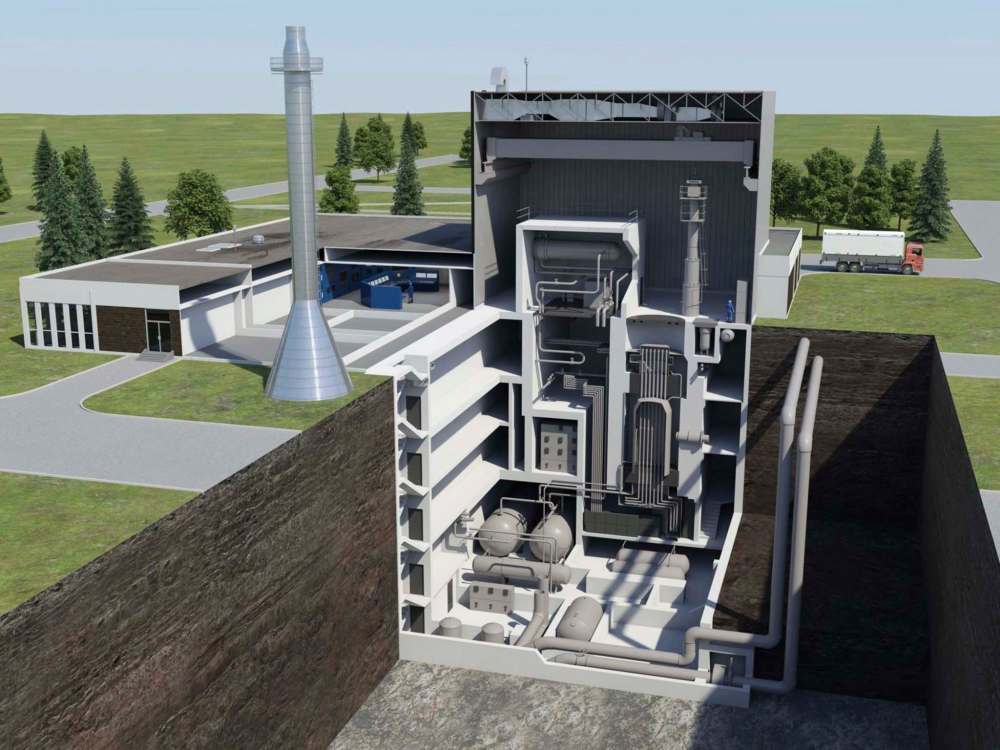
Whiteshell Laboratories is still a major force of employment for Pinawa, nestled in the Canadian Shield, 115 kilometres northeast of Winnipeg. It’s easily the largest employer in a town of about 1,500 people.
Not that the nuclear reactor research facility hasn’t suffered job losses in the past. The town was devastated by the loss of 700 jobs in the late 1990s during initial decommissioning the site.
Now Canadian Nuclear Laboratories (CNL) has been contracted to oversee decommissioning, and wants to bury Whiteshell Reactor #1 (WR-1) in concrete on site. Under the plan, CBL would entomb WR-1 in its five-story deep basement with a concrete grout.
The 11,000-acre Whiteshell Laboratories site, two-thirds of which never had any nuclear presence, has many advantages for an industrial park, said Skinner. For example, it has a difficult-to-obtain nuclear license, “an asset that sets us apart in Western Canada,” said Skinner.
As well, the town has a certain comfort level living next to nuclear power, with many of its residents either employed by the industry, or retired employees.
“There are nuclear opportunities that could be developed for the site,” maintained Skinner. One is to house a demonstration reactor for deployment of small modular reactors for remote, off-grid communities and mining sites.
Modular reactors are manufactured at a central location, and assembled at the site of usage. Makers say they require less space because they are smaller, and offer greater security of nuclear materials.
“We are having significant discussions with some vendors of modular reactors of this regard,” said Skinner.
The town will be looking at non-nuclear opportunities, as well. The site is beautifully landscaped into a kind of grass oasis surrounded by Canadian Shield rock. It has infrastructure like water from the Winnipeg River, a newly paved road leading to the site, and access to 10 megwatts of power.
“You have relatively inexpensive land, ample water, ample power, and you’re an hour and fifteen minutes from an international airport,” said Skinner.
It might even lead to building houses on the site some day, at least along the water’s edge about 500 metres from where the WR-1 would be buried. “There are some beautiful properties overlooking the river,” Skinner said.
People were initially reluctant to build near the nuclear energy station at Pickering, Ontario, which houses eight nuclear reactors, versus only one at Pinawa. “Now there are houses built right up to the site fence,” said Skinner.

A working group has been set up to look at development in the wake of the Whiteshell Laboratories decommissioining. The group is a partnership of five other municipalities in the area, three economic development organizations, as well as CNL and Atomic Energy of Canada Ltd.
As well, North Forge Technology Exchange in Winnipeg opened its first satellite centre in Pinawa last week. The company provides incubator service to help launch entrepreneurs in southeastern Manitoba.
The initial timetable for complete shutdown of the nuclear site was supposed to be 2028 but few people in the community thought that likely. Area residents are also skeptical CNL can meet its 2024 target date for decommissioning.
Workers at Whiteshell Laboratories are represented by at least four unions, including the Professional Institute of Public Service of Canada, and several trade unions. Representatives of the Professional Institute did not return messages.
bill.redekop@freepress.mb.ca
Related Articles
Cheap nuclear 'cleanup' dangerous
Advertisement Advertise With Us
Advertisement Advertise With Us