

Cleared for takeoff on runway 37
This weekend's well-oiled annual Boeing Classic track and field event gives young Manitoba athletes a helpful tailwind on their way to the next level; but organizers have fought through some turbulent years over nearly four decades

Advertisement
Read this article for free:
or
Already have an account? Log in here »
To continue reading, please subscribe:
Monthly Digital Subscription
$1 per week for 24 weeks*
- Enjoy unlimited reading on winnipegfreepress.com
- Read the E-Edition, our digital replica newspaper
- Access News Break, our award-winning app
- Play interactive puzzles
*Billed as $4.00 plus GST every four weeks. After 24 weeks, price increases to the regular rate of $19.95 plus GST every four weeks. Offer available to new and qualified returning subscribers only. Cancel any time.
Monthly Digital Subscription
$4.99/week*
- Enjoy unlimited reading on winnipegfreepress.com
- Read the E-Edition, our digital replica newspaper
- Access News Break, our award-winning app
- Play interactive puzzles
*Billed as $19.95 plus GST every four weeks. Cancel any time.
To continue reading, please subscribe:
Add Free Press access to your Brandon Sun subscription for only an additional
$1 for the first 4 weeks*
*Your next subscription payment will increase by $1.00 and you will be charged $16.99 plus GST for four weeks. After four weeks, your payment will increase to $23.99 plus GST every four weeks.
Read unlimited articles for free today:
or
Already have an account? Log in here »
Hey there, time traveller!
This article was published 27/02/2018 (2963 days ago), so information in it may no longer be current.
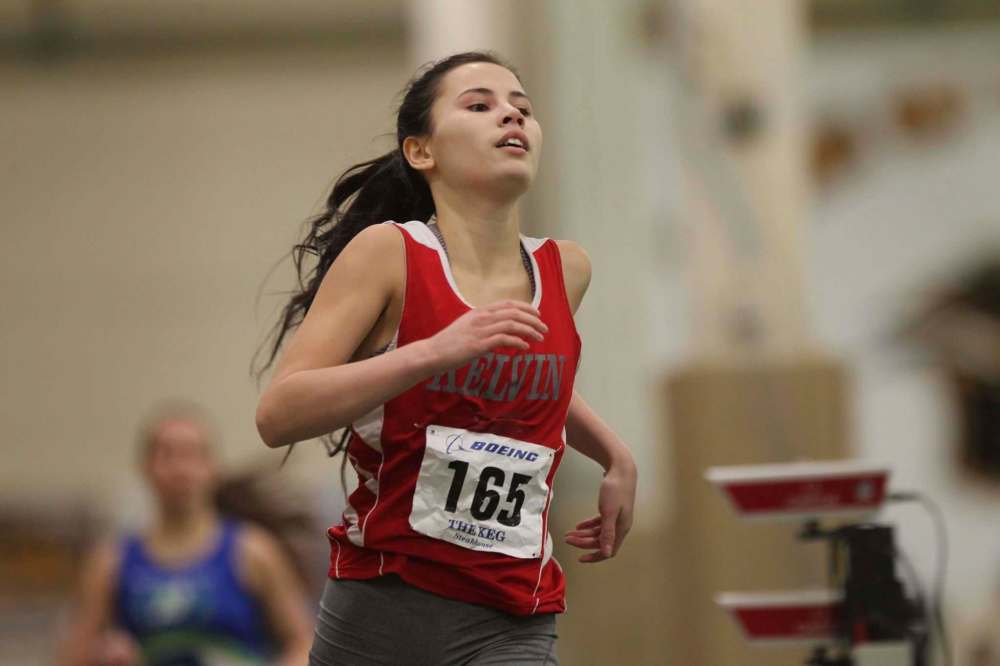
THIS weekend, sandwiched between the Canadian university conference and national circuits, Manitoba will mark the 37th year of the Boeing Classic, the province’s premier indoor track and field championships.
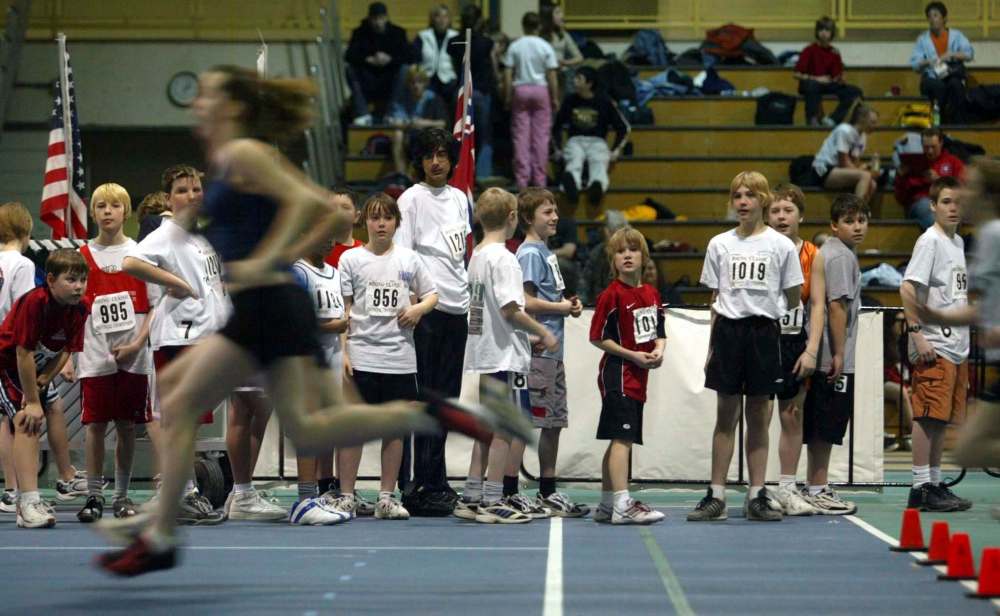
While the math doesn’t exactly add up — it’s been 38 years since the inaugural event in 1981 — there’s no disputing how far it has come from its early stages. From an event hosted outside of city limits, it’s grown to the glossy showcase that it is now, with thousands packing Max Bell Centre on the University of Manitoba campus.
Over the years, the Boeing classic has evolved into not only the biggest (local) stage for the province’s most promising athletes, but while doing so, it has also earned the reputation of providing a level of professionalism that rivals any indoor track meet in the country.
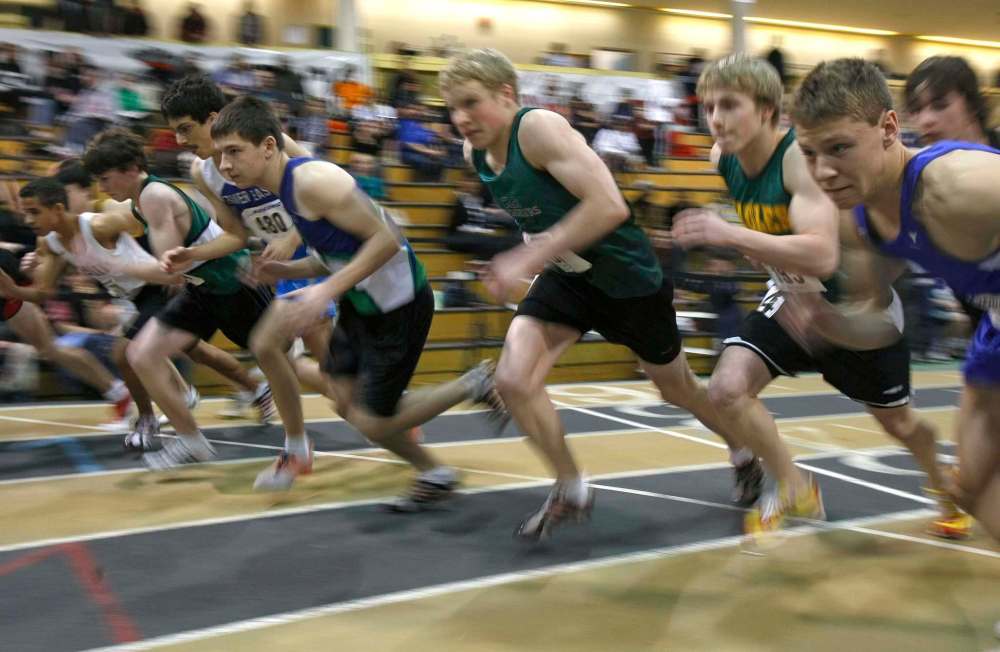
“There’s this innate thing of wanting the next kid to make their next team,” said Larry Switzer, founder of the Optimist Track Club, the group responsible for hosting the Boeing Classic, in an interview last week. “Certainly, we can be very happy to say the Boeing track meet has been very successful in helping a lot of athletes achieve their goals.”
Switzer, a former Winnipeg teacher and fixture in the Canadian track and field scene for the past 40 years, could only shrug at the awful luck he and the rest of the organizing committee faced many years ago. Of all the challenges that have arisen over the past four decades, it remains the lone hurdle the team was unable to clear.
“We were getting ready to put on the event at Minto Armouries, but at the last minute the army needed it,” he explained. “We were just told we couldn’t use it and there wasn’t time to book the Convention Centre or anything else. So although we started in 1981, it’s only our 37th time.”
Switzer can chuckle at the story now. Long gone are the problems organizers used to face in finding a home for the event. Since 1984, the Boeing Classic has been run in the Max Bell Centre, at the newly named Jim Daly Fieldhouse — the city’s lone regulation-size (200 metre) indoor track. The venue has never looked better, with a recent multimillion-dollar facelift in time for the Canada Summer Games in 2017.
But though most memories from those early days can be blurry, not all is lost on the founding fathers of the Boeing Classic.

Wayne McMahon, another long-standing presence in the Manitoba track scene, vividly recalls those humble beginnings, when the meet used to take place in an airport hangar in Gimli. McMahon, along with Switzer, Greg Hershman and former Olympian Jack Parrington, had only recently formed the Optimist Track Club when the idea of forming a meet was first discussed.
They had been training athletes in the hallways of schools across the city and in order to truly test how they were improving, they needed a place to gather tangible results.
(Fun fact: they also used the concourse at Winnipeg Arena for some training).
The only way the sport was going to thrive year-round, they thought, was if there were a chance to compete in the winter. From that need, the Boeing Classic was officially born. At first, the goal was simple: the organizers hoped by getting as many athletes involved as possible, and giving them an opportunity to compete, they would get the kind of exposure that other sports, such as hockey or soccer, were already used to.
It certainly didn’t hurt that at the time the city had just bought a new portable, wooden track. Once the hangar became available, and a sponsor came on board, it was a done deal.
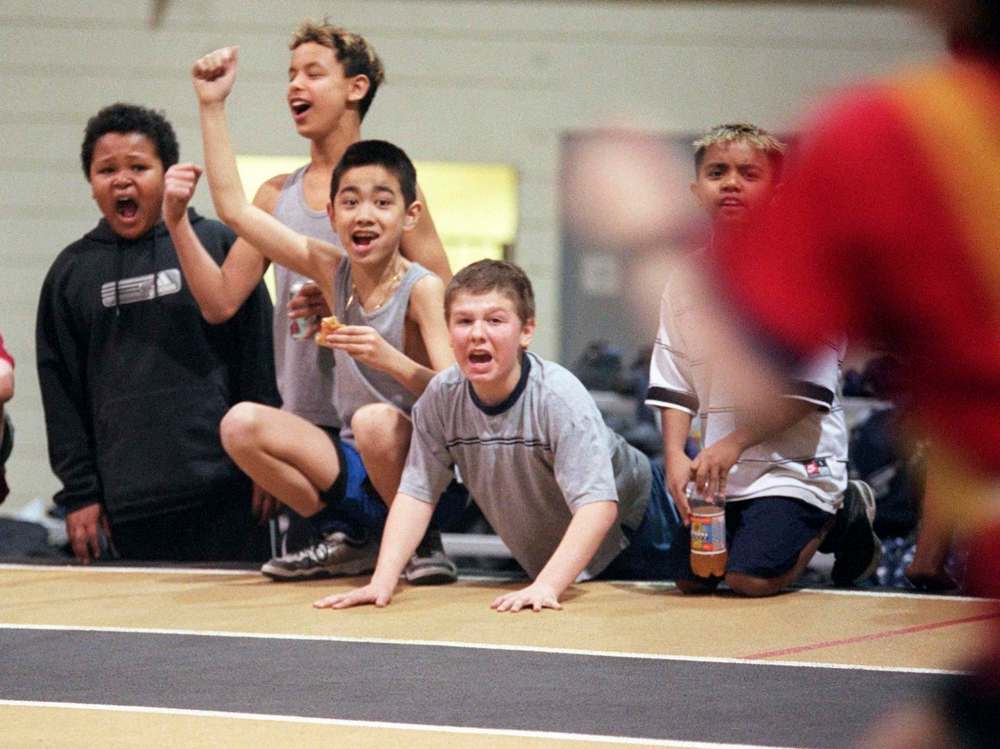
“Boeing had come in as a very small sponsor and we really started small,” said McMahon, adding the aerospace giant has been a strong supporter ever since. “I took a group of athletes and we hopped in two cars one weekend and we went out there, along with a few parents, and we cleaned the hangar and set up the track. Then we turned off the lights and the heat and came back in a few weeks and had (the event).”
While obstacles are inevitable, they have been strongly outnumbered by the successes. Growing a little more each year, the Boeing Classic has become the standard in the indoor track season in Manitoba, and across the country.
“It’s all been one big adventure, a lot of fun and great people to work with,” McMahon said. “That is what’s made me want to do this for all these years — the people.”
Perhaps the best measurement of just how far they’ve come, as in most sports, is by results. To see the effect the Boeing Classic has on track and field athletes in Manitoba, Switzer said look no further than the number of Olympians who have passed through on their way to representing Canada on its biggest stage. The list includes Courtney Brown, Angela Chalmers, Theresa Brick, Nicole Sifuentes and Erin Teschuk.
“This meet is a stepping stone to bigger things in their athletic careers,” he said. “What really gets me excited is when someone is going to make the national team, whether with our club or someone else’s club. We want everyone to be successful.”

Teschuk, 23, competed for Canada in the 3,000-metre steeplechase in the 2016 Summer Olympics in Rio de Janeiro, Brazil, after years running track at the University of North Dakota. Before that, she was a regular participant at the Boeing Classic. She said the event not only offered her a chance to compete against top-level competition at a young age, but it also prepared her for bigger events down the road.
“At Boeing, you got a taste for that higher-level meet and it made you excited to try more,” Teschuk said over the phone from her home in South Carolina. “Any meet where you can get yourself a little bit outside of your comfort zone, have some different and more challenging competition is just gong to be good for anyone who is competitive. It was an event that just kind of feeds that fire.
“It wasn’t that long ago that I was doing the same meets that these kids are doing right now, running the same time, doing a lot of the same things. If you can take advantage of these opportunities it will eventually pay off.”
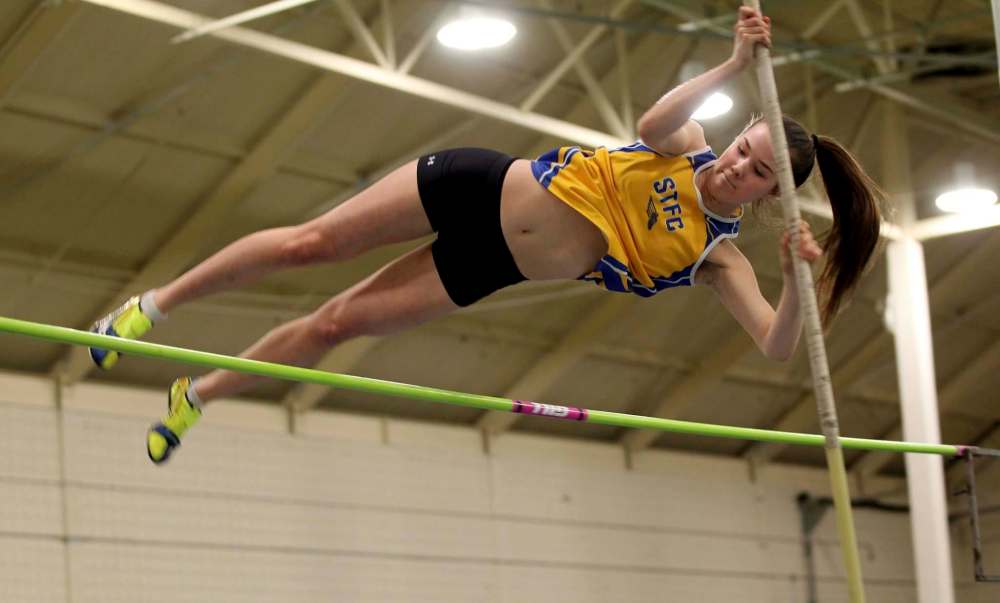
Like the sports itself, how you put on an event is also evolving. What used to work even 10 years ago often no longer applies to today’s track meet. Technology has played a major role in that, creating higher expectations from athletes and fans. That’s why it’s important for organizers to stay up to date.
In recent years, the Boeing Classic has added music between events and upgraded equipment. A major boost came last summer from hosting the Canada Games, with all the equipment used for the event, including a digital scoreboard, donated to the province. A spike in attendance is also expected, as is usually the case whenever you host a big meet on home turf.
Switzer said the group is constantly coming up with new ideas to improve, and that the support the track and field community received from the Canada Games will help make events like the Boeing Classic even better in the future. But he’s careful not to forget his roots, noting it was the guidance he received from former coaches and mentors, such as John Daly and Dave Lyon, that helped set the bar.
“They set the standard. People would ask, ‘Where did you get the idea to do some of these things?’ And we’d say, ‘Well, it’s what some people did for us and we carry that on,’” said Switzer. “It’s nice to see other people pick up the torch and move forward.”
Then there are the thousands who’ve volunteered over the years, including many from Boeing who return annually. Switzer said that it’s not only the athletes that are developing, but the many officials running the events, too. For example, Jane Edstrom, a longtime official at Boeing, was selected to be an official at the Rio Olympic Games.
“You don’t only train athletes to do well in the future, but you train volunteers to do well in the future,” said Switzer.
The future appears bright for Manitoba track and field athletes.
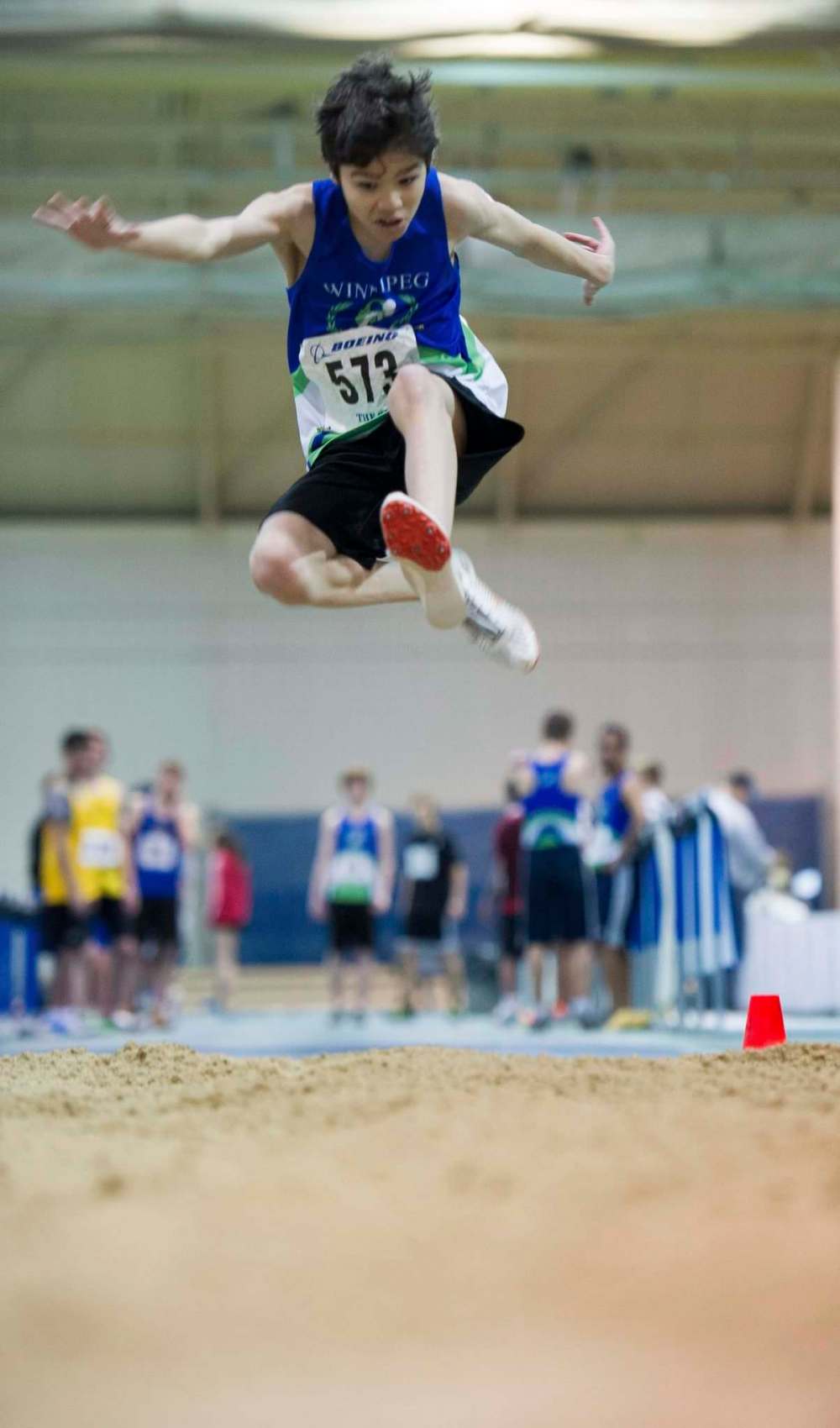
Among the most promising is Victoria Tachinski, who will be missing her first Boeing Classic in 10 years, ending a streak that began as a Grade 3 student at Whyte Ridge. Tachinski, 19, is in the middle of her freshman year at Penn State, and last week competed in her first the Big-10 Track and Field Championship, helping her school earn second in the distance medley relay.
Tachinski, who has travelled all over North America to compete, said the Boeing Classic was her favourite event and she spent a great deal of time preparing for it.
“I would enter every single event, from the 60 (metre) to the 800 (metre) – I would do them all,” she said. “I also played hockey and basketball and ringette growing up, but that (Boeing) weekend was the one weekend that I would miss all my over sports, just to run. I liked that. It was just that one track meet that I would look forward to, and I was exhausted because I would run in every single event — I love it.”
She recalled one year she swept every gold medal in track and earned another in long jump, while her sister claimed first in shot put. It’s going to be weird to miss it this year, but she cherishes the memories and friends she made along the way.
“It was the one meet that grade school kids got treated like they were important, like they were a professional runner,” said Tachinski. “There was a podium, there was a balloon arch above the podium and I remember I just loved that; it looked so cool.
“It does feel kind of different missing it this year. It’s definitely a huge change in my life, but sometimes change is good.”
jeff.hamilton@freepress.mb.ca
twitter: @jeffkhamilton
Jeff Hamilton
Multimedia producer
Jeff Hamilton is a sports and investigative reporter. Jeff joined the Free Press newsroom in April 2015, and has been covering the local sports scene since graduating from Carleton University’s journalism program in 2012. Read more about Jeff.
Every piece of reporting Jeff produces is reviewed by an editing team before it is posted online or published in print — part of the Free Press‘s tradition, since 1872, of producing reliable independent journalism. Read more about Free Press’s history and mandate, and learn how our newsroom operates.
Our newsroom depends on a growing audience of readers to power our journalism. If you are not a paid reader, please consider becoming a subscriber.
Our newsroom depends on its audience of readers to power our journalism. Thank you for your support.
The starting line
What: 37th Boeing Classic Track and Field Championship
When: Friday and Saturday (elementary school relays are Thursday)
Where: Jim Daly Field House — Max Bell Centre (University of Manitoba)
Who: 1,400 athletes ranging from youths to senior competitors
Jeff Hamilton
Multimedia producer
Jeff Hamilton is a sports and investigative reporter. Jeff joined the Free Press newsroom in April 2015, and has been covering the local sports scene since graduating from Carleton University’s journalism program in 2012. Read more about Jeff.
Every piece of reporting Jeff produces is reviewed by an editing team before it is posted online or published in print — part of the Free Press‘s tradition, since 1872, of producing reliable independent journalism. Read more about Free Press’s history and mandate, and learn how our newsroom operates.
Our newsroom depends on a growing audience of readers to power our journalism. If you are not a paid reader, please consider becoming a subscriber.
Our newsroom depends on its audience of readers to power our journalism. Thank you for your support.
Advertisement Advertise With Us
Advertisement Advertise With Us