

Ryan Adams allegations expose crass side of music industry

Advertisement
Read this article for free:
or
Already have an account? Log in here »
To continue reading, please subscribe:

Digital Subscription
One year of digital access for only $205*
- Enjoy unlimited reading on winnipegfreepress.com
- Read the E-Edition, our digital replica newspaper
- Access News Break, our award-winning app
- Play interactive puzzles
*First annual payment billed as $205.00 + GST for one year. This annual subscription will automatically renew at $233.00 + GST every 52 weeks (10% off the regular annual price of $259.35). Offer available to new and qualified returning subscribers only. Cancel any time.
To continue reading, please subscribe:
Add Free Press access to your Brandon Sun subscription for only an additional
$1 for the first 4 weeks*
- Enjoy unlimited reading on winnipegfreepress.com
- Read the E-Edition, our digital replica newspaper
- Access News Break, our award-winning app
- Play interactive puzzles
*Your next Brandon Sun subscription payment will increase by $1.00 and you will be charged $17.95 plus GST for four weeks. After four weeks, your payment will increase to $24.95 plus GST every four weeks.
Read unlimited articles for free today:
or
Already have an account? Log in here »
Hey there, time traveller!
This article was published 14/02/2019 (2788 days ago), so information in it may no longer be current.
In his 1895 novel Trilby, George du Maurier introduced us to Svengali, a man who seduces, exploits and dominates the titular young woman and transforms her, through hypnosis, into a famous singer. She cannot perform without him.
Over the hundred-plus years since Trilby‘s publication, “Svengali” has become shorthand for a certain kind of man — a man who uses his influence to control and exploit young, impressionable women to nefarious, ego-serving ends, often under the guise of “mentorship.” Svengalis can be found in every industry where the balance of power is tipped towards men, but the music industry is rife with them.
Svengali comes to mind following this week’s New York Times exposé of Ryan Adams, the prolific, critically acclaimed American singer/songwriter with plenty of industry influence and indie cred. Seven women told the Times that Adams offered to help establish and advance their careers while also taking a sexual interest in them, only to turn “domineering and vengeful” when his advances were rebuffed, subjecting women to verbal and emotional abuse, as well as harassment over text and on social media.
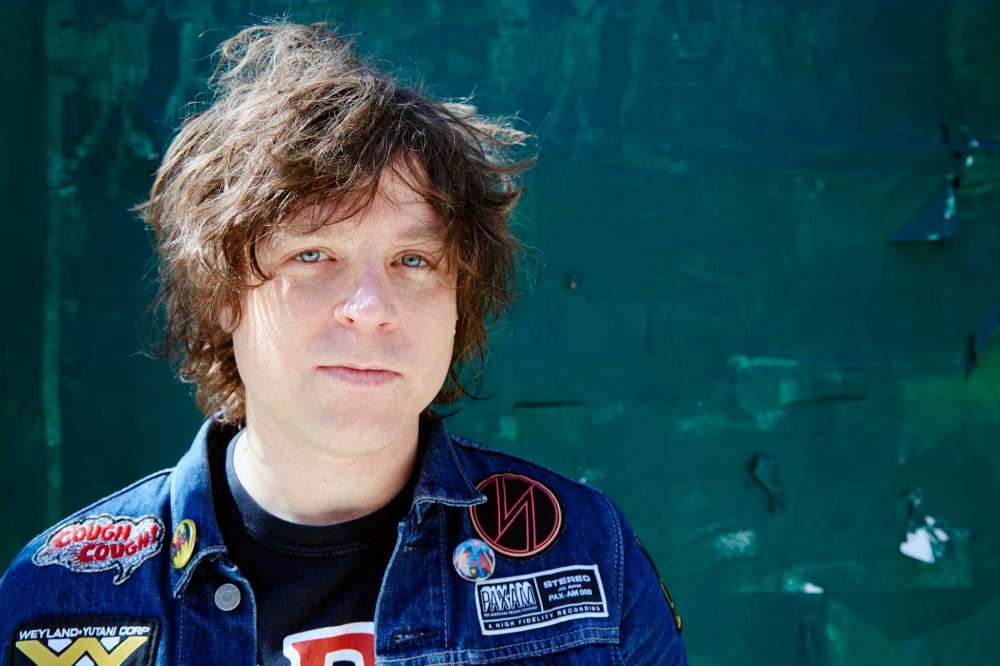
The story includes on-the-record comments from his ex-wife, singer and This Is Us star Mandy Moore, rising-star singer/songwriter Phoebe Bridgers, and others — including Ava, a 20-year-old woman who was just 14 when Adams began corresponding with her online. Per the NYT, their correspondence turned sexual, with Adams exposing himself on phone sex calls conducted via Skype. Adams denies the allegations.
Much of the dialogue around the #MeToo movement has focused on allegations of sexual assault and harassment. But emotional and psychological abuse is also a form of violence, an exertion of control. Bridgers, who was 20 when a 40-year-old Adams offered to mentor her, told the NYT that shortly into their brief relationship, Adams’ text messages turned obsessive, and he’d threaten suicide if she didn’t reply right away.
“Music was a point of control for him,” Moore told the NYT, saying that over the course of their six-year marriage, he’d constantly belittle her, telling her she wasn’t a real musician because she didn’t play an instrument.
Taken together, the accounts tell an all-too-familiar story of predation and power. Opportunities with strings that are yanked and twisted. The credit taken for women’s careers. The entitlement to female artists’ talent and bodies. All of it exists throughout the music industry. You can change the genre, but the chorus remains the same: Come on, baby, I’ll make you a star.
Still, it’s easy to understand why a young female artist trying to break out would attach herself to someone like Adams. Not only does he have influence and credibility in an industry in which men are still the gatekeepers, he styles himself as a champion of young artists — a serious and sincere musician, in it for the music.

And the narrative that Adams can put singer/songwriters on the map is then re-enforced by critics; when Bridgers, who was the highlight of the 2018 Winnipeg Folk Festival, started garnering attention, many were quick to credit Adams with her rise. (She took back her power with Motion Sickness, a biting song about her relationship with Adams.)
This, too, is also a man who covered Taylor Swift’s 1989 album in its entirety — a move that, under the cold light of these allegations, seems less of an earnest appreciation for her songwriting, and more of an assertion of dominance and ego. As though he, “a musical genius,” needed to swoop in and give her pop songs legitimacy and gravitas. One wonders how many people preferred his version just because it came from a man with a guitar.
Ava, the woman who was just a teenager when Adams struck up a relationship with her, told the NYT her interactions with Adams “just totally put me off to the whole idea” of becoming a musician. She was a promising talent who never played another gig. It’s heartbreaking to consider just how many potential careers — how many dreams — have been snuffed out by the Svengali who convinces women they are nothing without him.
jen.zoratti@freepress.mb.ca
Twitter: @JenZoratti
Jen Zoratti is a columnist and feature writer working in the Arts & Life department, as well as the author of the weekly newsletter NEXT. A National Newspaper Award finalist for arts and entertainment writing, Jen is a graduate of the Creative Communications program at RRC Polytech and was a music writer before joining the Free Press in 2013. Read more about Jen.
Every piece of reporting Jen produces is reviewed by an editing team before it is posted online or published in print – part of the Free Press‘s tradition, since 1872, of producing reliable independent journalism. Read more about Free Press’s history and mandate, and learn how our newsroom operates.
Our newsroom depends on a growing audience of readers to power our journalism. If you are not a paid reader, please consider becoming a subscriber.
Our newsroom depends on its audience of readers to power our journalism. Thank you for your support.
Jen Zoratti is a columnist and feature writer working in the Arts & Life department, as well as the author of the weekly newsletter NEXT. A National Newspaper Award finalist for arts and entertainment writing, Jen is a graduate of the Creative Communications program at RRC Polytech and was a music writer before joining the Free Press in 2013. Read more about Jen.
Every piece of reporting Jen produces is reviewed by an editing team before it is posted online or published in print – part of the Free Press‘s tradition, since 1872, of producing reliable independent journalism. Read more about Free Press’s history and mandate, and learn how our newsroom operates.
Our newsroom depends on a growing audience of readers to power our journalism. If you are not a paid reader, please consider becoming a subscriber.
Our newsroom depends on its audience of readers to power our journalism. Thank you for your support.
Advertisement Advertise With Us
Advertisement Advertise With Us