

Lung association sounds alarm after mystery U.S. illness linked to vaping

Advertisement
Read this article for free:
or
Already have an account? Log in here »
To continue reading, please subscribe:

Digital Subscription
One year of digital access for only $205*
- Enjoy unlimited reading on winnipegfreepress.com
- Read the E-Edition, our digital replica newspaper
- Access News Break, our award-winning app
- Play interactive puzzles
*First annual payment billed as $205.00 + GST for one year. This annual subscription will automatically renew at $233.00 + GST every 52 weeks (10% off the regular annual price of $259.35). Offer available to new and qualified returning subscribers only. Cancel any time.
To continue reading, please subscribe:
Add Free Press access to your Brandon Sun subscription for only an additional
$1 for the first 4 weeks*
- Enjoy unlimited reading on winnipegfreepress.com
- Read the E-Edition, our digital replica newspaper
- Access News Break, our award-winning app
- Play interactive puzzles
*Your next Brandon Sun subscription payment will increase by $1.00 and you will be charged $17.95 plus GST for four weeks. After four weeks, your payment will increase to $24.95 plus GST every four weeks.
Read unlimited articles for free today:
or
Already have an account? Log in here »
Hey there, time traveller!
This article was published 19/08/2019 (2559 days ago), so information in it may no longer be current.
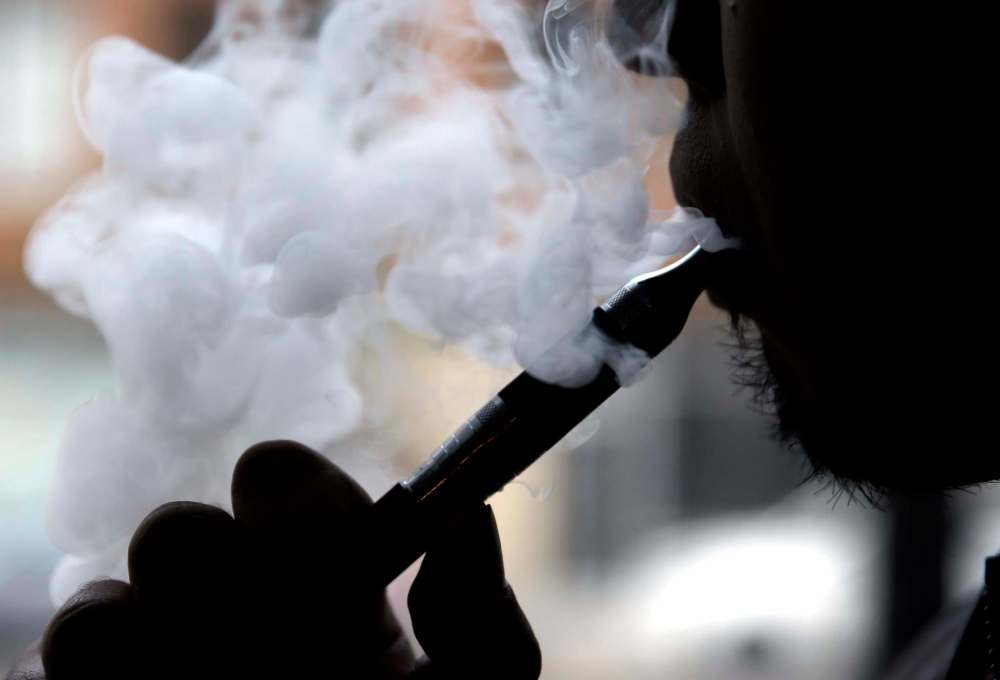
The Manitoba Lung Association is warning people to put down their vapes amid reports of a mysterious lung illness that has hospitalized dozens of e-cigarette users in the United States.
Almost 100 possible cases of a severe lung illness associated with vaping have been reported in 14 states over the last two weeks, according to the Centers for Disease Control and Prevention. Some patients, many of them young adults, have been put on ventilation to breathe properly.
Although a spokesperson for Health Canada said it is not aware of any similar incident reports in the country, the agency confirmed it has reached out to its U.S. counterparts to find out more about the illness. Public health officers with the Winnipeg Regional Health Authority had not heard of any cases in the city as of Monday.
“Short of going through chart by chart and assuming they told the doctor that they vape, it would be difficult to determine if someone’s lung-related illness would be due to vaping,” WRHA spokesman Cory Kolt said in a statement.
Symptoms of the unidentified illness include coughing, shortness of breath and fatigue that worsen over a period of days or weeks. some patients also reported experiencing fever, chest pain, weight loss, nausea and diarrhea.
In each case, patients reported using an e-cigarette in recent months. However, the CDC said more information is still needed to determine what, exactly, is causing it.
“Our lungs are made for clean, fresh air and when we inhale anything else, there could be significant damage and lungs don’t generally repair themselves; the damage is permanent,” said Neil Johnston, president and CEO of the Manitoba Lung Association.
E-cigarettes and other vaping devices heat a flavoured liquid — often containing nicotine — into a vapour for inhalation.
Johnston said he has been concerned about the potential health effects associated with the devices since they first appeared in the mid-2000s. And the CDC’s weekend press release, he said, only furthers his concerns about the lack of research into the side-effects of using a vape.
Research that suggests vaping is healthy or unhealthy is “murky” at best, Johnston added.
The federal government formally legalized vaping in May 2018. Health Canada’s stance is that “vaping is less harmful than smoking.”

Both Johnston and John McDonald, executive director of the Manitoba Tobacco Reduction Alliance, want the province to further crack down on vaping legislation.
Manitoba updated its laws in October 2017 to prohibit the sale of vaping products to minors and introduce advertising restrictions. But McDonald said it continues to be a “big issue” in the province that is especially concerning since youth users’ brains are still developing and the long-term health effects are largely unknown. He said he would like to see the minimum age reach 21.
Earlier this year, a team of researchers from the University of Waterloo found vaping among Canadian teens was up 74 per cent last year over 2017.
maggie.macintosh@freepress.mb.ca
Twitter: @macintoshmaggie
Maggie Macintosh
Education reporter
Maggie Macintosh reports on education for the Free Press. Originally from Hamilton, Ont., she first reported for the Free Press in 2017. Read more about Maggie.
Funding for the Free Press education reporter comes from the Government of Canada through the Local Journalism Initiative.
Every piece of reporting Maggie produces is reviewed by an editing team before it is posted online or published in print — part of the Free Press‘s tradition, since 1872, of producing reliable independent journalism. Read more about Free Press’s history and mandate, and learn how our newsroom operates.
Our newsroom depends on a growing audience of readers to power our journalism. If you are not a paid reader, please consider becoming a subscriber.
Our newsroom depends on its audience of readers to power our journalism. Thank you for your support.
Maggie Macintosh
Education reporter
Maggie Macintosh reports on education for the Free Press. Originally from Hamilton, Ont., she first reported for the Free Press in 2017. Read more about Maggie.
Funding for the Free Press education reporter comes from the Government of Canada through the Local Journalism Initiative.
Every piece of reporting Maggie produces is reviewed by an editing team before it is posted online or published in print — part of the Free Press‘s tradition, since 1872, of producing reliable independent journalism. Read more about Free Press’s history and mandate, and learn how our newsroom operates.
Our newsroom depends on a growing audience of readers to power our journalism. If you are not a paid reader, please consider becoming a subscriber.
Our newsroom depends on its audience of readers to power our journalism. Thank you for your support.
Related Articles
Province proposes law restricting youth access to flavoured vapes
Advertisement Advertise With Us
Advertisement Advertise With Us