

Iran women allowed at FIFA soccer match, first time in decades
Advertisement
Read this article for free:
or
Already have an account? Log in here »
To continue reading, please subscribe:

Digital Subscription
One year of digital access for only $205*
- Enjoy unlimited reading on winnipegfreepress.com
- Read the E-Edition, our digital replica newspaper
- Access News Break, our award-winning app
- Play interactive puzzles
*First annual payment billed as $205.00 + GST for one year. This annual subscription will automatically renew at $233.00 + GST every 52 weeks (10% off the regular annual price of $259.35). Offer available to new and qualified returning subscribers only. Cancel any time.
To continue reading, please subscribe:
Add Free Press access to your Brandon Sun subscription for only an additional
$1 for the first 4 weeks*
- Enjoy unlimited reading on winnipegfreepress.com
- Read the E-Edition, our digital replica newspaper
- Access News Break, our award-winning app
- Play interactive puzzles
*Your next Brandon Sun subscription payment will increase by $1.00 and you will be charged $17.95 plus GST for four weeks. After four weeks, your payment will increase to $24.95 plus GST every four weeks.
Read unlimited articles for free today:
or
Already have an account? Log in here »
Hey there, time traveller!
This article was published 10/10/2019 (2550 days ago), so information in it may no longer be current.
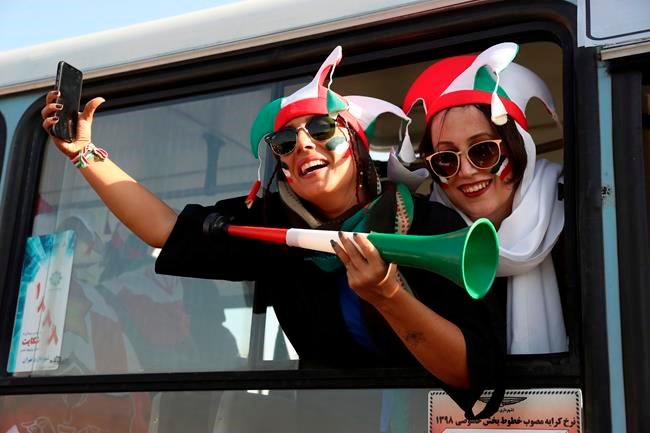
TEHRAN, Iran – Flag-draped Iranian women watched a FIFA soccer match from inside a Tehran stadium Thursday, the first time they’ve been freely allowed into a stadium in decades.
The 2022 World Cup qualifier between Team Melli and Cambodia at Tehran’s Azadi Stadium marks a decades-long push by Iranian women to be able to watch matches, something hard-liners in Iran’s Shiite theocracy to this day still oppose.
Iran allocated only 4,000 tickets for women in a stadium that seats about 80,000 people, keeping them separated from men and under the protection of female police officers. That’s even though face-painted Iranian women have cheered for their team abroad for years despite the 1981 ban that followed the country’s Islamic Revolution.
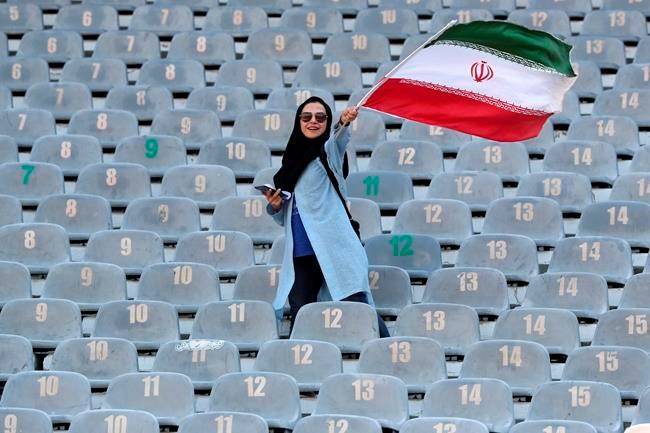
“We are so happy that finally we got the chance to go to the stadium. It’s an extraordinary feeling,” said Zahra Pashaei, a 29-year-old nurse who has only known soccer games from television. “At least for me, 22 or 23 years of longing and regret lies behind this.”
Iran scored in the game’s fifth minute with a long shot by midfielder Ahmad Nourollahi. On Iran’s conservatively controlled state television, which carried the match live, a shot of the cheering crowd included ecstatic women spectators. They followed with another goal in the 10th minute.
While Iran for years has considered letting women into soccer matches, the decision to allow them in Thursday came as part of intense pressure from FIFA, the world body governing the sport. Iran faced a potential ban if it didn’t allow women into the match.
That pressure has grown both with FIFA and Iran’s soccer-loving public since September, when an Iranian woman detained for dressing as a man to sneak into a soccer stadium to watch a match died after setting herself on fire upon learning she learned she could spend six months in prison.
The self-immolation death of 29-year-old Sahar Khodayari, who became known as the “Blue Girl” for her love of the Iranian team Esteghlal, shocked Iranian officials and the public, becoming an immediate hashtag trend across social media in the Islamic Republic.
Iran is the world’s last nation to bar women from soccer matches. Saudi Arabia recently began allowing women into soccer matches in the kingdom.
Hard-liners and traditional Shiite clerics, citing their own interpretation of Islamic law, believe in segregating men and women at public events, as well as keeping women out of men’s sports. They’ve maintained tight control on social mores in the times since the Islamic Revolution, which saw women required to cover their hair and also wear the black, all-encompassing chador while working in government jobs.
The effort to allow women back into stadiums has gone through fits and starts since the revolution. Iran even barred a woman from hold a sign for the country when it attends its first Summer Olympics in 1986 in South Korea. A group of Irish women received special permission to attend a qualifier between Iran and Ireland in Tehran in 2001.
In 2006, former hard-line President Mahmoud Ahmadinejad said he wanted women to attend matches to “improve soccer-watching manners and promote a healthy atmosphere.” However, Supreme Leader Ayatollah Ali Khamenei, who has final say on all matters of state, opposed the decision.
Then, last year, Iranian authorities allowed a select group of women into Azadi Stadium by invitation only to watch the Asian Champion League final.
Activist groups outside of Iran, however, remain suspicious of Tehran. Amnesty International called the decision “a cynical publicity stunt by the authorities intended to whitewash their image.”

“Instead of taking half-hearted steps to address their discriminatory treatment of women who want to watch football, the Iranian authorities should lift all restrictions on women attending football matches, including domestic league games, across the country,” said Philip Luther, Amnesty’s Middle East and North Africa research and advocacy director.
Still, many in Iran embraced the move, like shopkeeper Amir Ali Bagheri, who sold the nurse Pashaei a new Team Melli jersey ahead of the match.
“They (women) are so excited they are going to the stadium,” he said. “God willing, there will be freedom sooner so that they can attend all matches, not just the national team matches. That will be much better.”
___
Associated Press writer Jon Gambrell in Dubai, United Arab Emirates, contributed to this report.
Related Articles
Fanning the flames








Advertisement Advertise With Us
Advertisement Advertise With Us