

Proposed bus routes overhaul draws mixed reaction

Advertisement
Read this article for free:
or
Already have an account? Log in here »
To continue reading, please subscribe:

Digital Subscription
One year of digital access for only $205*
- Enjoy unlimited reading on winnipegfreepress.com
- Read the E-Edition, our digital replica newspaper
- Access News Break, our award-winning app
- Play interactive puzzles
*First annual payment billed as $205.00 + GST for one year. This annual subscription will automatically renew at $233.00 + GST every 52 weeks (10% off the regular annual price of $259.35). Offer available to new and qualified returning subscribers only. Cancel any time.
To continue reading, please subscribe:
Add Free Press access to your Brandon Sun subscription for only an additional
$1 for the first 4 weeks*
- Enjoy unlimited reading on winnipegfreepress.com
- Read the E-Edition, our digital replica newspaper
- Access News Break, our award-winning app
- Play interactive puzzles
*Your next Brandon Sun subscription payment will increase by $1.00 and you will be charged $17.95 plus GST for four weeks. After four weeks, your payment will increase to $24.95 plus GST every four weeks.
Read unlimited articles for free today:
or
Already have an account? Log in here »
Hey there, time traveller!
This article was published 30/10/2019 (2488 days ago), so information in it may no longer be current.
Winnipeg Transit riders and observers say proposed changes to the southwest network of bus routes signal a potential for service improvement — but only if city hall can deliver on promises behind the plan.
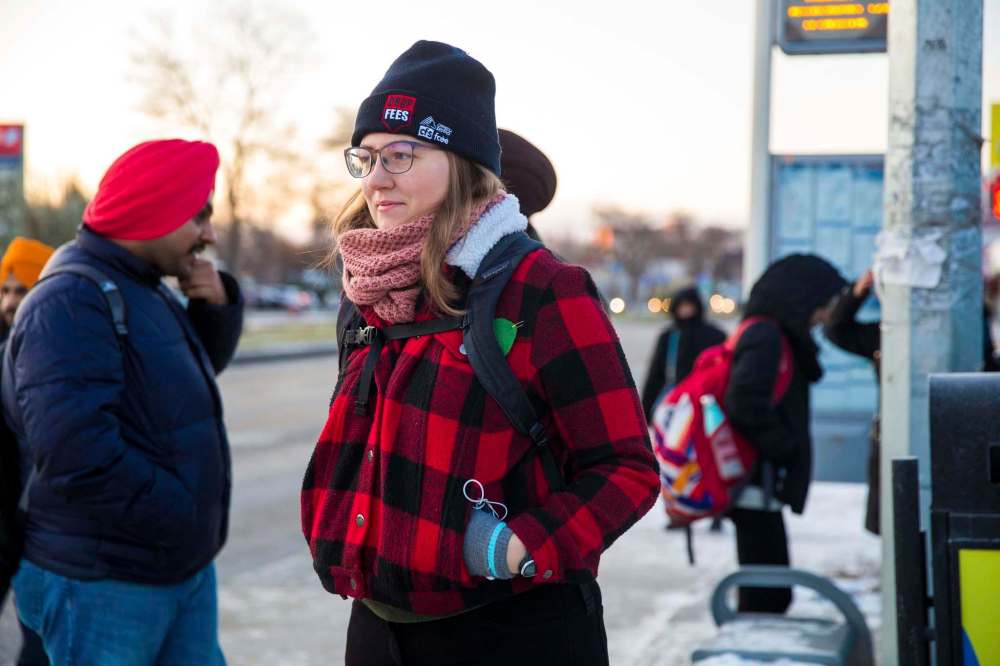
While some riders are uncertain about the likelihood of additional transfers needed to take advantage of the new southwest transit corridor, others — such as Liz Kessler, 29, who lives in Wolseley and works in the south end — said as long as there are more buses on the road and they show up more often, the changes will be seen as a winner.
“I think that’s what really matters — having more buses, having more drivers,” Kessler said while she waited for a southbound bus during Wednesday-morning rush hour at the corner of Pembina Highway and Windermere Avenue. “I take two buses. It takes about half-an-hour and I’m OK with that… At certain times of the day, there’s just not enough buses.”
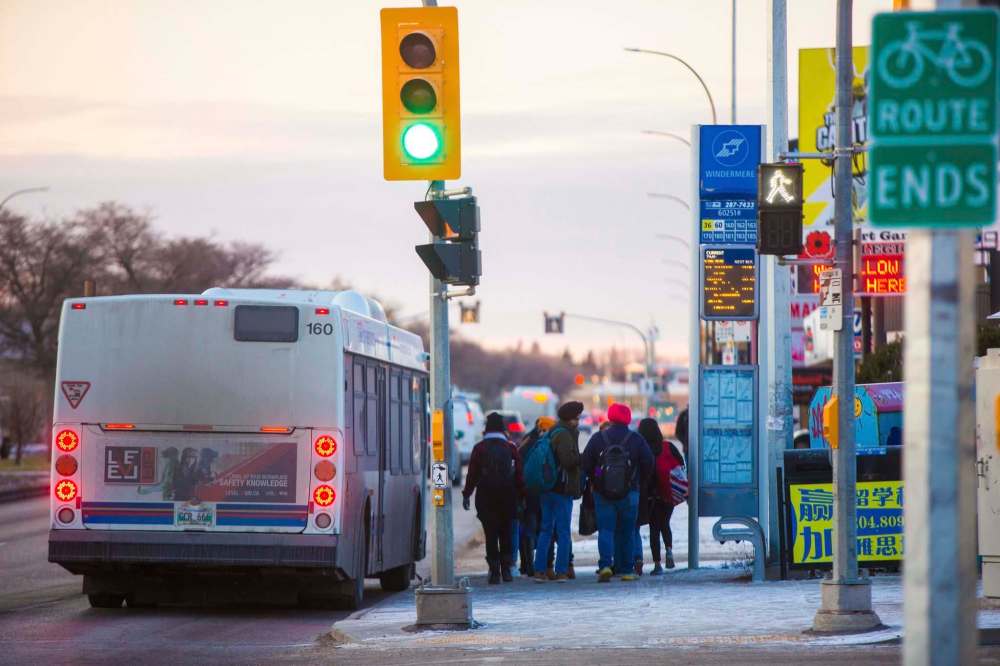
Winnipeg Transit has proposed replacing a multitude of single-destination, suburbs-to-downtown routes with a “spine and feeder” network: a series of mostly new east-west feeder routes connecting to the Blue Line route, which will run the 11-kilometre trek from downtown to St. Norbert, with most of that trip along the $420-million expansion of the southwest corridor.
The changes will involve the cancellation of 18 current routes, replacing them with 10 redrawn routes and 14 new ones.
The new network will add $2.55 million to Transit’s operating budget next year — a 1.2 per cent increase from the 2019 budget. In the years that follow, annual increases are projected to hover around the $3.5 million mark.
The city has championed the model, saying it will allow for faster and more frequent service and a reduction in the number of packed buses that result in “pass-ups.”
“The focus on frequent and straight routes with feeders routes is really the important step that should make the system a lot more approachable and satisfy people in the long run,” said Curt Hull, a professional engineer and project director with Climate Change Connection.
Hull said he expects there will be break-in period, when riders will have to become acquainted with the new routes and scheduling.
“I think once people get used to it and understands how it works, it’s not that complicated.”
Functional Transit Winnipeg has been a harsh critic of Winnipeg Transit over the years for its reluctance to embrace the “frequent service” model employed by transit authorities across North America. It sees the changes as a sign the local service is finally prepared to move in the right direction.
Derek Koop, FTW president, said the group is concerned, however, the higher frequency of bus service along the corridor isn’t being matched with the feeder route, which could mean a long wait for riders at the corridor stations between transfers.
Koop said the group is also concerned service in other parts of the city will suffer, explaining the proposed annual two per cent cap on Transit budget increases will result in few or no dollars left over to improve the service in other areas.
“It seems difficult how (the changes) will be implemented with Transit’s proposed budget,” Koop said, adding it has a history of focusing on one aspect of its service at the expense of others.
Orly Linovski, an assistant professor of city planning at the University of Manitoba, said funding will be key to the success.
“It all comes down to increasing resources,” Linovski said. “You need more buses, you need to make sure they’re more reliable and that all comes down to funding.”
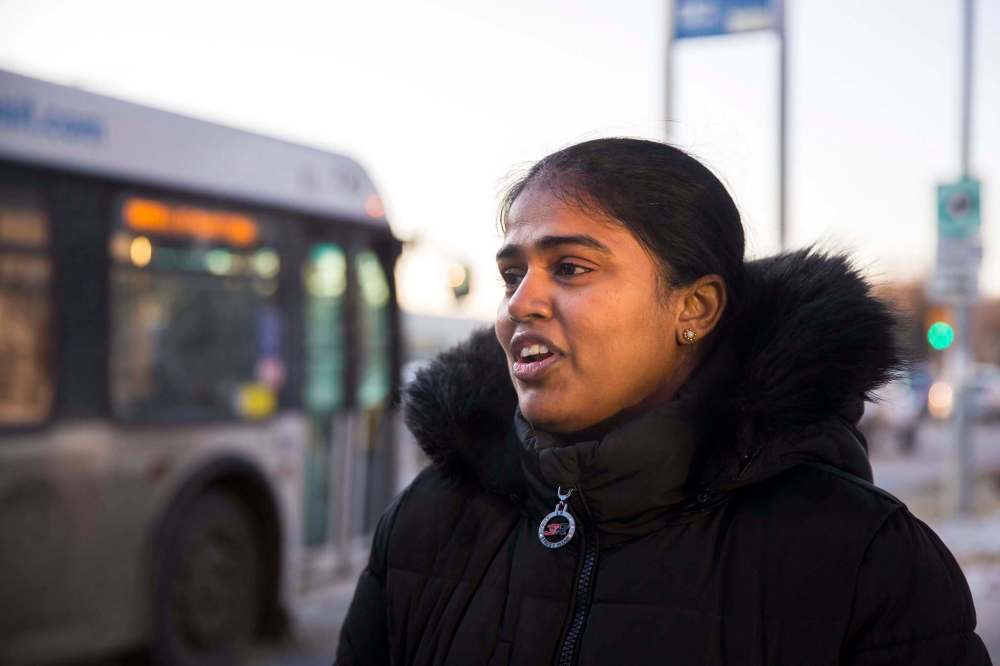
Kaushalya Athukorala and her two young children take the No. 162 bus daily, as she drops them off at school and then returns to her home in St. Norbert — a 40-minute round-trip. The new route system will cancel the No. 162, and Athukorala and her children will have to take a transfer. She fears a longer bus ride.

Jasmeet Singh, 20, was waiting for his second bus of the morning Wednesday, near Pembina and Windermere, to get to his college class.
He commutes to the south end from the Maples twice a day, on two buses to get to school and on three home. Come spring, Singh said he will have to take three buses to get to class — meaning he will have to set his alarm much earlier to account for walking to the stops, waiting and riding.
“If it’s going to change, I will have to wake up at 3 in the morning because (No. 180) will be changed,” he said.
maggie.macintosh@freepress.mb.ca
aldo.santin@freepress.mb.ca
Maggie Macintosh
Education reporter
Maggie Macintosh reports on education for the Free Press. Originally from Hamilton, Ont., she first reported for the Free Press in 2017. Read more about Maggie.
Funding for the Free Press education reporter comes from the Government of Canada through the Local Journalism Initiative.
Every piece of reporting Maggie produces is reviewed by an editing team before it is posted online or published in print — part of the Free Press‘s tradition, since 1872, of producing reliable independent journalism. Read more about Free Press’s history and mandate, and learn how our newsroom operates.
Our newsroom depends on a growing audience of readers to power our journalism. If you are not a paid reader, please consider becoming a subscriber.
Our newsroom depends on its audience of readers to power our journalism. Thank you for your support.
Maggie Macintosh
Education reporter
Maggie Macintosh reports on education for the Free Press. Originally from Hamilton, Ont., she first reported for the Free Press in 2017. Read more about Maggie.
Funding for the Free Press education reporter comes from the Government of Canada through the Local Journalism Initiative.
Every piece of reporting Maggie produces is reviewed by an editing team before it is posted online or published in print — part of the Free Press‘s tradition, since 1872, of producing reliable independent journalism. Read more about Free Press’s history and mandate, and learn how our newsroom operates.
Our newsroom depends on a growing audience of readers to power our journalism. If you are not a paid reader, please consider becoming a subscriber.
Our newsroom depends on its audience of readers to power our journalism. Thank you for your support.
Advertisement Advertise With Us
Advertisement Advertise With Us
History
Updated on Wednesday, October 30, 2019 5:11 PM CDT: Headlines fixed.